When a star reaches the end of its life cycle, it will blow off its outer layers in a fiery explosion known as a supernova. Where less massive stars are concerned, a white dwarf is what will be left behind. Similarly, any planets that once orbited the star will also have their outer layers blown off by the violent burst, leaving behind the cores behind.
For decades, scientists have been able to detect these planetary remnants by looking for the radio waves that are generated through their interactions with the white dwarf’s magnetic field. According to new research by a pair of researchers, these “radio-loud” planetary cores will continue to broadcast radio signals for up to a billion years after their stars have died, making them detectable from Earth.
The research was conducted by Dr. Dimitri Veras of the Center for Exoplanets and Habitability at the University of Warwick and Prof. Alexander Wolszczan, the famed exoplanet hunter from the Center for Exoplanets and Habitable Worlds at Pennsylvania State University. The study that details their findings was recently published in the Monthly Notices of the Royal Astronomical Society.
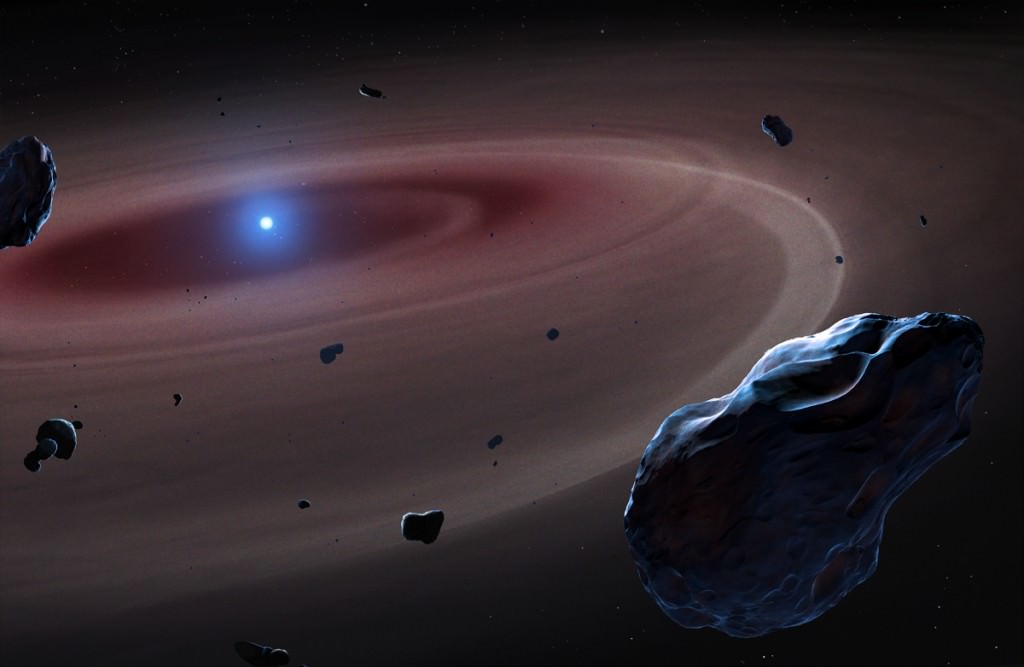
This method of detecting exoplanets is actually quite time-honored. In fact, it was used by Dr. Wolszcan himself in 1990 to detect the very first confirmed exoplanet around a pulsar. This is possible because of the way a white dwarf’s powerful magnetic field will interact with the metallic constitutions of an orbiting planetary core.
This causes the core to act as a conductor, which can lead to the formation of a unipolar inductor circuit. Radiation from this circuit is emitted as radio waves which can then be detected by radio telescopes on Earth. However, Veras and Wolszcan sought to find how long these cores can survive after being stripped of their outer layers (and hence, how long they can still be detected).
Put simply, planetary cores orbiting a white dwarf star will inevitably be dragged inward due to the influence of the white dwarf’s electrical and magnetic fields (a phenomenon known as Lorenz drift). Once they get close enough, the planetary remnants will be ripped apart by the powerful gravity of the white dwarf and consumed – at which point, they will no longer be detectable.
In previous models, astronomers calculated the survivability of planetary cores based on how long it would take for the cores to drift inwards. However, Veras and Wolszcan also incorporated the influence of gravitational tides into their model, which may represent an equal or dominant force.

They then conducted simulations using the entire range of observable white dwarf magnetic field strengths and their potential atmospheric electrical conductivities. In the end, their modelling revealed that in many cases, planetary cores could survive for over 100 million years and as long as a billion years. As Dr. Veras explained:
“There is a sweet spot for detecting these planetary cores: a core too close to the white dwarf would be destroyed by tidal forces, and a core too far away would not be detectable. Also, if the magnetic field is too strong, it would push the core into the white dwarf, destroying it. Hence, we should only look for planets around those white dwarfs with weaker magnetic fields at a separation between about 3 solar radii and the Mercury-Sun distance.”
“Nobody has ever found just the bare core of a major planet before, nor a major planet only through monitoring magnetic signatures, nor a major planet around a white dwarf. Therefore, a discovery here would represent ‘firsts’ in three different senses for planetary systems.”
The pair hope to use their results to inform future searches for planetary cores around white dwarfs. “We will use the results of this work as guidelines for designs of radio searches for planetary cores around white dwarfs,” said Prof. Wolszczan. “Given the existing evidence for a presence of planetary debris around many of them, we think that our chances for exciting discoveries are quite good.”
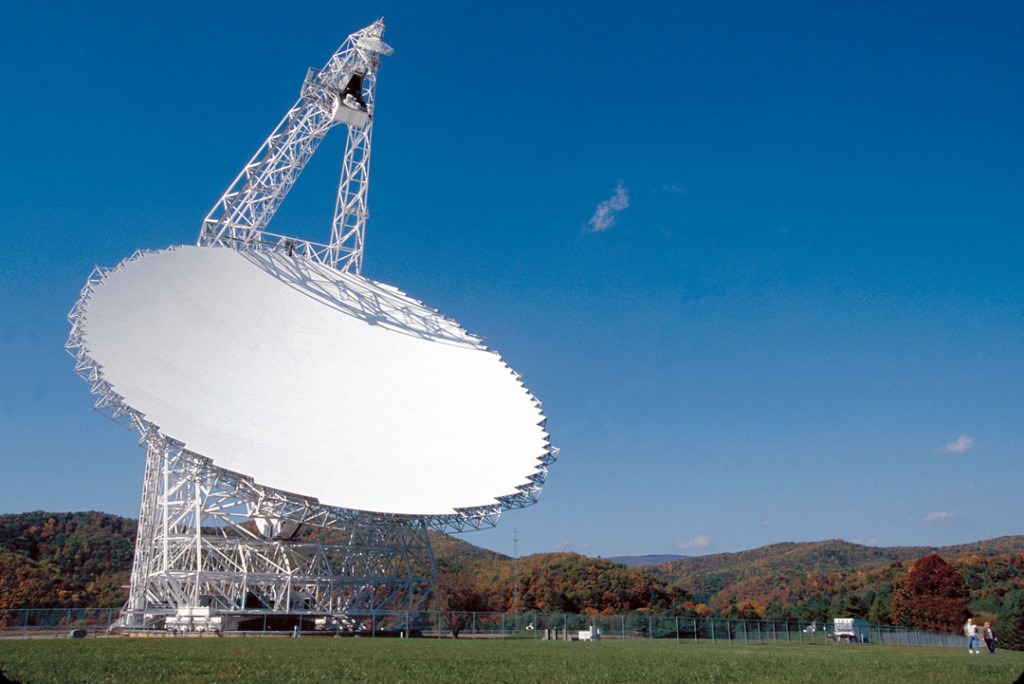
They hope to conduct these observations using radio telescopes like the Arecibo Observatory in Puerto Rico and the Green Bank Telescopein West Virginia. These advanced instruments will allow them to observe white dwarfs in the same parts of the electromagnetic spectrum that allowed for the breakthrough discovery made by Prof. Wolszczan and colleagues in 1990.
“A discovery would also help reveal the history of these star systems, because for a core to have reached that stage it would have been violently stripped of its atmosphere and mantle at some point and then thrown towards the white dwarf,” added Dr. Veras. “Such a core might also provide a glimpse into our own distant future, and how the solar system will eventually evolve.”
Billions of years from now, after our Sun goes supernova and the planets in the inner Solar System are scorched balls of metal, it is somewhat encouraging to know that extra-terrestrial civilizations (or possibly our descendants) will still be able to study what remains of Earth.

Când o stea ajunge la sfârșitul ciclului său de viață, își va expulza straturile exterioare într-o explozie de foc cunoscută sub numele de supernova. În cazul stelelor mai puțin masive, ceea ce va rămâne în urmă este o pitică albă. În mod similar, planete care orbitau steaua vor avea, de asemenea, straturile exterioare cojite de explozia violentă, lăsând în urmă doar miezurile mai dure.
Timp de zeci de ani, oamenii de știință au reușit să detecteze aceste rămășițe planetare căutând undele radio care sunt generate prin interacțiunile lor cu câmpul magnetic al piticei albe. Conform noilor cercetări efectuate de o echipă de cercetători, aceste nuclee planetare „radio-puternice” vor continua să emită semnale radio până la un miliard de ani după ce stelele lor au murit, ceea ce le fac detectabile de pe Pământ.
Cercetarea a fost realizată de dr. Dimitri Veras de la Centrul pentru Exoplanetele și Habitabilitatea de la Universitatea din Warwick și prof. Alexander Wolszczan, renumitul vânător de exoplanete de la Centrul pentru Exoplanete și Lumile Habitate de la Universitatea de Stat din Pennsylvania. Studiul care detaliază descoperirile lor a fost publicat recent în Avizele lunare ale Royal Astronomical Society.
Această metodă de detectare a exoplanetelor are state vechi de serviciu. De fapt, a fost folosită chiar de Dr. Wolszcan în 1990 pentru a detecta prima exoplanetă confirmată în jurul unui pulsar. Acest lucru este posibil datorită modului în care puternicul câmp magnetic a piticei albe va interacționa cu constituenții metalici ai unui nucleu planetar care se rotește.
Acest lucru face ca miezul să acționeze ca un conductor, ceea ce poate duce la formarea unui circuit inductor unipolar. Radiația din acest circuit este emisă ca unde radio care pot fi apoi detectate de radiotelescoape pe Pământ. Cu toate acestea, Veras și Wolszcan au căutat să găsească cât timp aceste nuclee pot supraviețui după ce au fost dezbrăcate de straturile lor exterioare (și, prin urmare, cât mai pot fi detectate).
Simplu, nucleele planetare care orbitează o stea pitică albă vor fi în mod inevitabil târâte spre interior, datorită influenței câmpurilor electrice și magnetice ale piticei albe (fenomen cunoscut sub numele de derivă Lorenz). După ce se vor apropia suficient de mult, rămășițele planetare vor fi smulse de gravitatea puternică a piticei albe, înghițite și nu vor mai fi detectabile.
În modelele anterioare, astronomii au calculat supraviețuirea nucleelor planetare în funcție de cât timp va dura ca nucleele să se abată spre interior. Cu toate acestea, Veras și Wolszcan au încorporat, de asemenea, influența valurilor gravitaționale în modelul lor, care poate reprezenta o forță egală sau dominantă.
Apoi au efectuat simulări folosind întreaga gamă de forțe observabile ale câmpului magnetic al piticei albe și conductivitățile electrice potențiale ale acestora. În cele din urmă, modelarea lor a dezvăluit că, în multe cazuri, nucleele planetare ar putea supraviețui de la 100 de milioane de ani și până la un miliard de ani. După cum a explicat Dr. Veras:
„Există un loc dulce pentru detectarea acestor nuclee planetare: un nucleu prea aproape de piticul alb ar fi distrus de forțele de maree, iar un nucleu prea îndepărtat nu ar putea fi detectat. De asemenea, dacă câmpul magnetic este prea puternic, ar împinge miezul în pitica albă, distrugându-l. Prin urmare, ar trebui să căutăm doar planete în jurul acelor pitice albe, cu câmpuri magnetice mai slabe, la o distanță între aproximativ 3 raze solare și distanța Mercur-Soare. ”
„Nimeni nu a găsit niciodată doar miezul gol al unei planete majore înainte și nici o planetă majoră doar prin monitorizarea semnăturilor magnetice și nici o planetă majoră din jurul unei pitice albe. Prin urmare, o descoperire aici ar reprezenta „primele” în trei sensuri diferite pentru sistemele planetare. ”
Echipa speră să își folosească rezultatele pentru căutările viitoare de nuclee planetare din jurul piticelor albe. „Vom folosi rezultatele acestei lucrări ca ghid în proiectarea căutărilor radio pentru nucleele planetare din jurul piticelor albe”, a spus prof. Wolszczan. „Având în vedere dovezile existente pentru prezența resturilor planetare în jurul multor dintre ele, credem că șansele noastre de descoperiri interesante sunt destul de bune.”
Ei speră să efectueze aceste observații folosind radiotelescoape precum Observatorul Arecibo din Puerto Rico și Telescopul Băncii Verzi din Virginia de Vest. Aceste instrumente avansate le vor permite să observe piticele albe în aceleași părți ale spectrului electromagnetic care au permis descoperirea descoperitoare făcută de prof. Wolszczan și colegii săi în 1990.
„O descoperire ar contribui, de asemenea, la dezvăluirea istoriei acestor sisteme stelare, pentru că un nucleu ar fi ajuns în acea etapă ar fi fost dezbrăcat violent de atmosfera și mantaua la un moment dat și apoi aruncat spre pitica albă”, a adăugat dr. Veras . „Un astfel de nucleu ar putea oferi, de asemenea, o privire asupra viitorului nostru îndepărtat și modul în care sistemul solar va evolua în cele din urmă.”
Peste miliarde de ani, când Soarele nostru va fi o supernovă și planetele din Sistemul Solar interior bile de metal înroșite, este oarecum încurajator să știm că civilizațiile extraterestre (sau, eventual, urmașii noștri) vor putea încă să studieze ce rămâne din Pământ.
***

 Mihail stories
Interesant !
ApreciazăApreciat de 1 persoană