God-Fearing Family Hid Impressive Ichthyosaurus Fossil For Over A Century
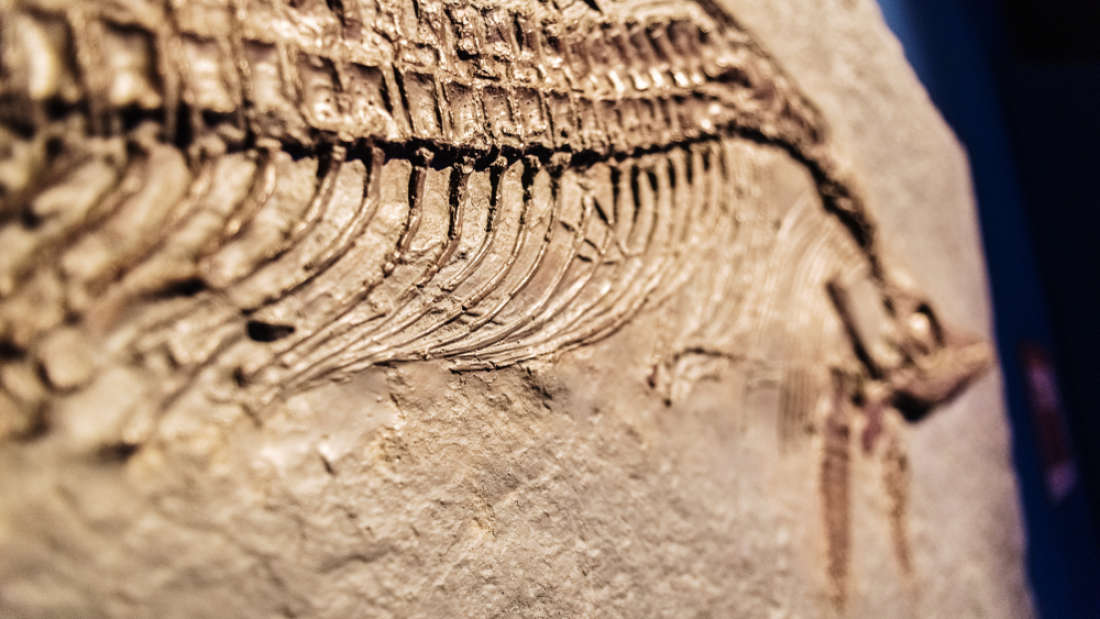
A God-fearing family in Victorian England buried a giant Ichthyosaurus fossil out of concern it could threaten their Christian beliefs. Now, after some 150 years and a change of heart, the family has unearthed the stunning prehistoric fossil.
The Ichthyosaurus fossil was discovered in 1850 by the family of cider brandy maker Julian Temperley in Somerset, England. Local paper Burnham & Highbridge Weekly News reports the family were builders’ merchants at the time and unearthed the relic while digging in a quarry.
After returning the fossil to their home, the family decided to bury it as they didn’t want to feel they were “denying God” and the creation story by displaying it. After all, this was several years before Charles Darwin published the bible of evolution by natural selection, On the Origin of Species.
Temperley recalls regularly unearthing the fossil as a child with his family, however, it was always reburied after they caught a good glimpse. When the Somerset Levels were hit by severe flooding in the winter of 2013 to 2014, he finally decided it was time to unearth the beast for good.
„Whenever we visited Somerset as kids, we dug it up and were generally amazed,” Temperley told Western Morning News.
One of the most famous ichthyosaurus fossils – Mary Anning’s ichthyosaurus – on display at the Natural History Museum in London. salajean/Shutterstock
„But after the flooding of 2013-14 we realized it was not a good idea to leave it buried and I thought we ought to look after it.”
He employed the help of professional fossil collector Chris Moore to excavate the fossil and clear it up. By all accounts, it’s a pretty impressive specimen. An image of the so-called Temperley Ichthyosaurus is also set to get on the label of Temperley’s cider brandy.
Ichthyosaurus, meaning “fish lizard”, is a genus of ichthyosaur, a diverse group of extinct marine reptile that resembled a dolphin-like lizard. Some of the earliest fossils were discovered in the early 19th century by the English palaeontologist and fossil-finding maestro Mary Anning. The largest discovered specimen of an Ichthyosaurus, unearthed in the mid-1990s, measured between 3 and 3.5 meters (10 and 11.5 feet) in length, although most species were small.
The ichthyosaurs were arguably one of the most successful lineages ever. They occupied a wide variety of niches and were very widely distributed, leaving behind fossil remains that span most of the Mesozoic Era (251 million to 65.5 million years ago).
O familie cu teamă de Dumnezeu din Anglia victoriană a îngropat o fosilă gigantă Ichthyosaurus din cauza îngrijorării, că asta ar putea amenința credința lor creștină. Acum, după aproximativ 150 de ani și o schimbare de atitudine, familia a redescoperit uimitoarea fosilă preistorică.
Fosila Ichthyosaurus a fost descoperită în 1850 de familia producătorului de țuică din cidru Julian Temperley din Somerset, Anglia. Ziarul local Burnham & Highbridge Weekly News informează că la acea vreme membrii familiei erau furnizori de materiale de construcție și au dezgropat oasele în timp ce săpau într-o carieră.
După ce au adus fosila acasă, familia a decis să o îngroape, întrucât nu doreau să se zică despre ei că-l „neagă Dumnezeu” și povestea creației, expunând-o public. La urma urmei, acestea se întâmplau cu câțiva ani înainte ca Charles Darwin să publice On the Origin of Species by Means of Natural Selection, Or the Preservation of Favoured Races in the Struggle for Life.
Temperley își amintește că în mod regulat dezgropa fosila pe când era copil, iar apoi o îngropa la loc urmare unor priviri dojenitoare. Când Somerset a fost lovit de inundații severe în iarna din 2013 până în 2014, el a decis că în sfârșit este timpul ca bestia să fie dezgropată definitiv.
„Ori de câte ori am vizitat Somerset ca și copii, am dezgropat-o și am fost în general uimiți”, a spus Temperley pentru Western Morning News.
Foto – Una dintre cele mai cunoscute fosile de ichthyosaurus – Iththosaosa Mary Anning – expusă la Muzeul de Istorie Naturală din Londra. Salajean / Shutterstock
„Dar după inundațiile din 2013-14 ne-am dat seama că nu este o idee bună să lăsăm fosila îngropată și am crezut că trebuie să avem grijă de ea.”
El s-a folosit de ajutorul colecționarului de fosile profesionist Chris Moore pentru a excava fosila și a o examina. După cum se pare, este un exemplar destul de impresionant. O imagine a așa-numitului Temperley Ichthyosaurus a fost pusă, de asemenea, pe eticheta coniacului de cidru Temperley.
Ichthyosaurus, care înseamnă „șopârlă de pește”, este un gen de ihtiozaur, un grup divers de reptile marine dispărute care seamănă cu o șopârlă, asemănătoare cu delfinii. Unele dintre cele mai vechi fosile au fost descoperite la începutul secolului al XIX-lea de paleontologul englez Mary Anning. Cel mai mare exemplar de Ichthyosaurus, descoperit la mijlocul anilor 1990, măsura între 3 și 3,5 metri (10 și 11,5 picioare) în lungime, deși majoritatea speciilor sunt mai mici.
Ichthyosaurus au fost probabil unul dintre cele mai reușite specimene de până acum. A ocupat o mare varietate de nișe ecologice distribuite pe întregul glob pământesc, lăsând în urmă resturi fosile care se întind pe cea mai mare parte a erei mezozoice (acum 251 milioane până la 65.5 milioane de ani).
Fiind geamăn cu ascendant în săgetător sunt un extrovertit spre coleric de o curiozitate excesivă, perfecționist păgubos, împrăștiat, superficial, agnostic... și nimic din ce-i omenesc nu mi-e străin.
Being a Twin with ascendant in Sagittarius I am an extrovert up the choleric, of an excessive curiosity, a to the bitter end perfectionist, scattered, superficial, agnostic... and nothing that is human is foreign to me.
Vezi toate articolele lui Mihail



 Mihail stories