The future had arrived. There was only one problem: it was deafening.
In the 1960s, the development of supersonic passenger aircraft promised to revolutionise the concept of international travel, teasing flights from New York to Paris in under 3.5 hours – less than half the duration of conventional subsonic jaunts.
With the famed Concorde, that incredible travel time became a luxurious reality for rich jetsetters, but the extreme noise pollution of
sonic booms unleashed by aircraft breaking the speed of sound helped ground the supersonic dream.
Now, NASA has a bold plan to bring supersonic transport (SST) back to life: the X–59.
The
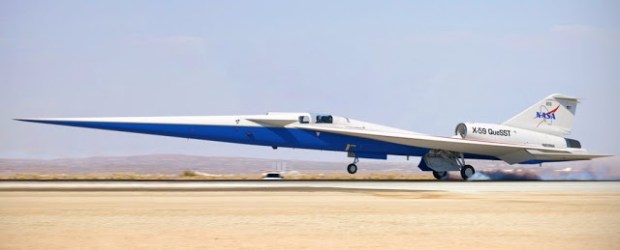
X–59 Quiet SuperSonic Technology (QueSST), to give it its full name, is an experimental jet being developed by the space agency, with a specific aeronautic design intended to cut down on sonic booms when the aircraft reaches supersonic speed.
What that means is that the X–59 is on track to have its first test flight in 2021, the details of which will be confirmed and approved next year.
The jet, which will still produce sonic boom shockwaves – but much quieter ones, expected not to disturb civilians on the ground – is currently being built by Lockheed Martin, in a project costing close to US$250 million.
When it’s complete, we’ll get a chance to see whether all that high-tech R&D delivers on its whisper-quiet promise, and if it does, supersonic transportation could once again get its chance to soar across the skies.

Viitorul sosise. Avea o singură problemă: era asurzitor.
În anii ’60, dezvoltarea aeronavelor de pasageri supersonice a promis să revoluționeze conceptul de călătorie internațională, efectuând zboruri de la New York la Paris în mai puțin de 3,5 ore – mai puțin de jumătate din durata călătorilor subsonice convenționale.
Cu faimosul Concorde, acel timp de călătorie incredibil a devenit o realitate de lux pentru jetsetters-uri bogate, dar poluarea fonică extremă a boom-urilor sonice dezlănțuite de aeronavele care rup viteza sunetului nu au ajutat la întemeierea visului supersonic.
Acum, NASA are un plan îndrăzneț de a readuce la viață transportul supersonic (SST): X – 59.
X-59 Quiet SuperSonic Technology (QueSST), pentru a-i da numele complet, este un jet experimental dezvoltat de agenția spațială, cu un design aeronautic specific destinat să reducă boom-urile sonice atunci când aeronava atinge viteza supersonică.
Proiectul ambițios este rezultatul multor ani de cercetare și dezvoltare, iar designul tocmai a trecut un obstacol tehnic major în această săptămână, primind liber pentru montajul final, așa cum anunță NASA.
Ceea ce înseamnă că X-59 este pe cale să aibă primul său zbor de testare în 2021, detaliile cărora vor fi confirmate și aprobate anul viitor.
Jet-ul, care va produce în continuare undele de șoc sonor boom – dar altele mult mai liniștite, se așteaptă să nu deranjeze civilii pe teren – este construit în prezent de Lockheed Martin, într-un proiect care costă aproape 250 de milioane de dolari SUA.
Când va fi complet, vom avea ocazia să vedem dacă toată acea R&D de înaltă tehnologie își îndeplinește promisiunea în șoaptă și, dacă o va face, transportul supersonic ar putea avea din nou șansa de a se transpune pe cer.
***
Publicat de Mihail
Fiind geamăn cu ascendant în săgetător sunt un extrovertit spre coleric de o curiozitate excesivă, perfecționist păgubos, împrăștiat, superficial, agnostic... și nimic din ce-i omenesc nu mi-e străin.
Being a Twin with ascendant in Sagittarius I am an extrovert up the choleric, of an excessive curiosity, a to the bitter end perfectionist, scattered, superficial, agnostic... and nothing that is human is foreign to me.
Vezi toate articolele lui Mihail

 Mihail stories