NASA’s X-Plane Program has been around for 70 years. Over the course of those decades, the agency has developed a series of airplanes and rockets to test out various technologies and design advances. Now NASA has cleared the newest one, the X-59, for final assembly.
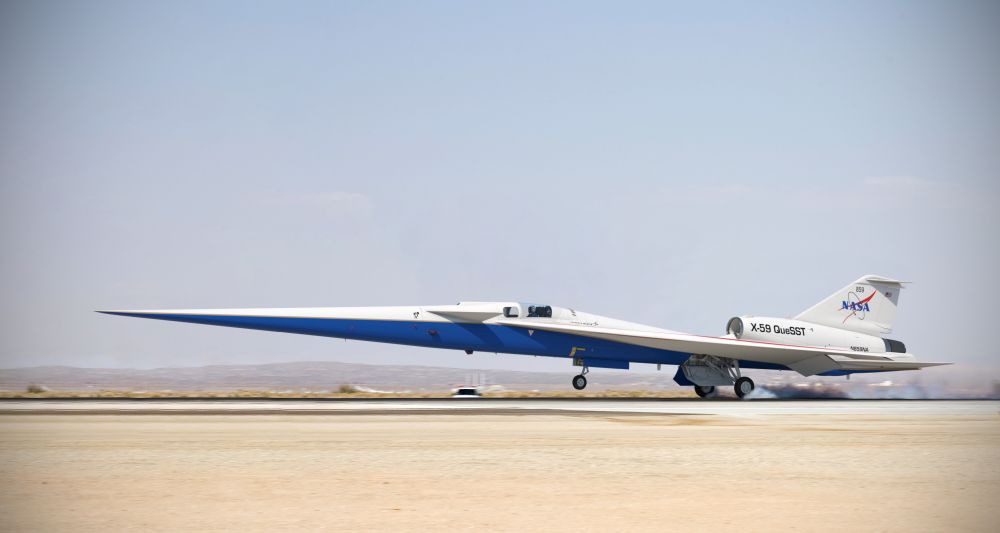
The X-59 is a supersonic aircraft design. Its full name is the X-59 Quiet SuperSonic Technology (QueSST) aircraft. Rather than pushing for greater speeds or higher altitudes like some previous X-Plane’s, the X-59 is designed to break the sound barrier without the sonic boom. The X-59 will produce no more than a loud thump, if anything at all, when it passes the sound barrier.
Preliminary design for the X-59 began in February 2016. NASA wanted to develop a supersonic aircraft that eliminated the sonic boom. Supersonic aircraft have been around for a while, and have served as commercial airline aircraft. The Concorde was in service until 2003, but the tell-tale sonic boom that the Concorde created is problematic: the Concorde was only allowed on ocean-crossing flights as the noise was too much for populated areas.
But the speed of supersonic aircraft is hard to resist. Designers believed that the shape of an aircraft could be modified to eliminate the sonic boom, and bring supersonic aircraft back into service. One early test aircraft, the Northrop F5-E, had a specially-shaped nose that designers hoped would reduce or eliminate the sonic boom.
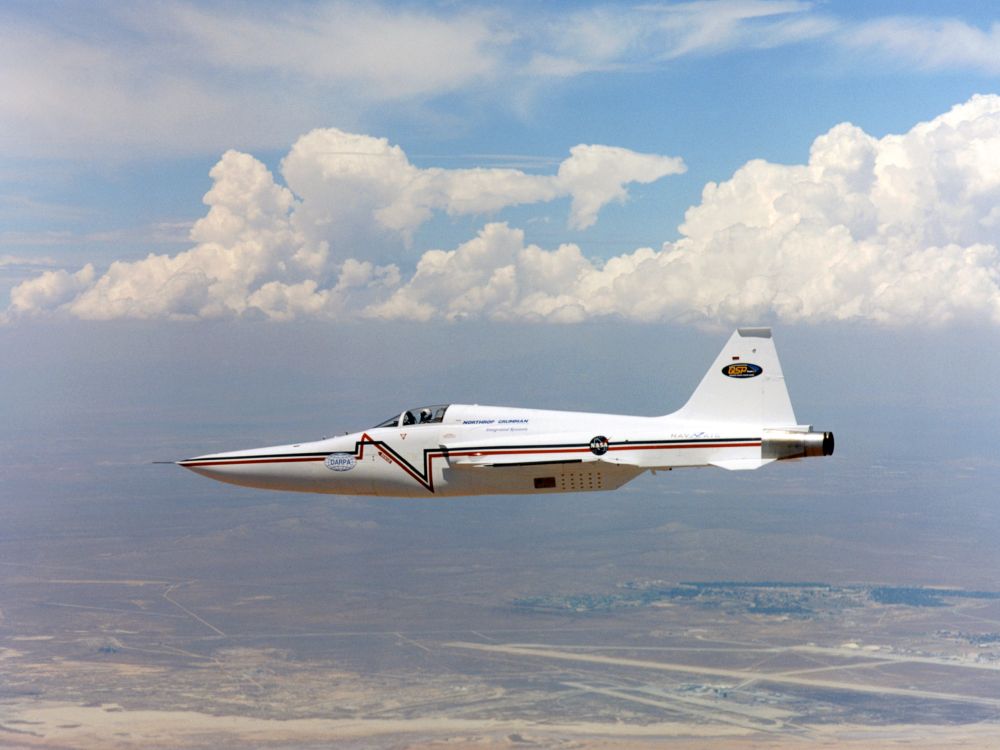
“This modification, which made the front of the F-5E somewhat resemble a pelican’s beak, was carefully shaped to change the pattern of shock waves it would generate while flying faster than the speed of sound,” said Lawrence R. Benson, the author of “Quieting the Boom,” a book about supersonic aircraft design.
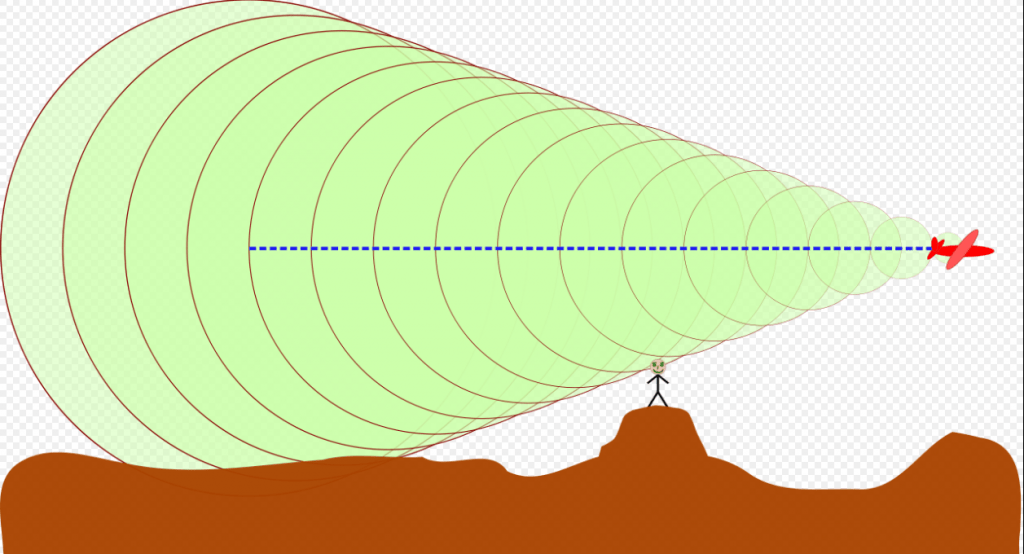
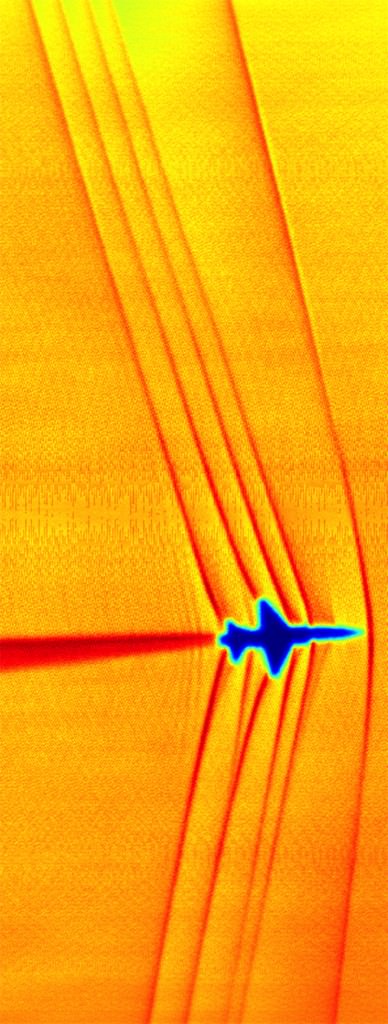
The sonic boom that jets emit has nothing to do with the engine. The boom comes from shock waves that coalesce together in the wake of an aircraft when it breaches the sound barrier. And though it sounds to an individual observer like the boom is a single event, that’s not the case. The boom is continuous as long as the aircraft travels faster than the speed of sound.
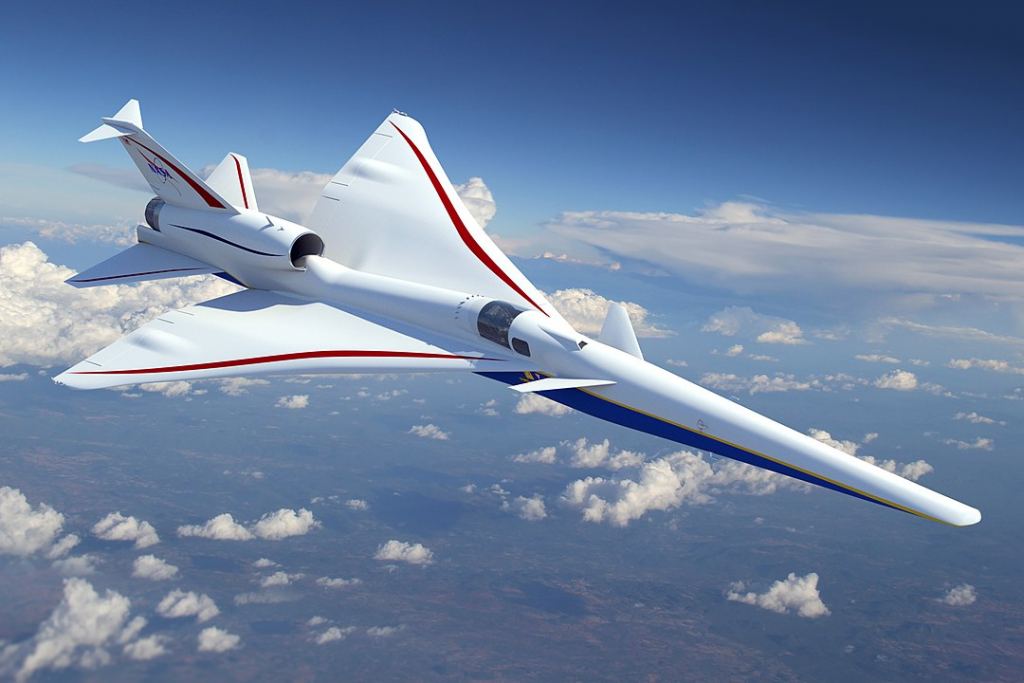
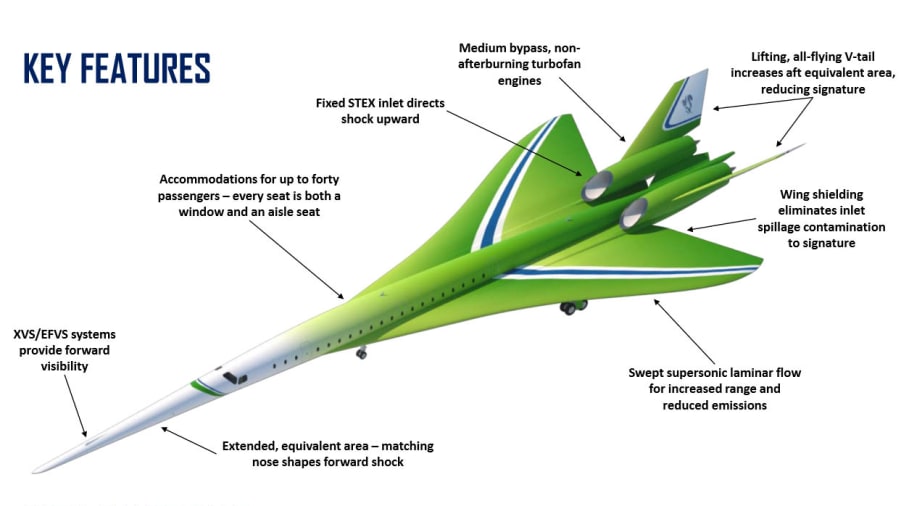
The X-59 achieves its reduced noise level with the help of what are called “canards.” Canards are small fore-wings that sit ahead of the primary wings. They shape the shock waves and prevent them from coalescing behind the aircraft. Along with the long narrow air-frame of the X-59, the canards should reduce the noise from the aircraft to the equivalent of a car door closing.
One of the design concessions of the X-59 is that the cockpit has limited forward visibility. To get around this, the aircraft will have be equipped with the eXternal Visibility System (XVS.) The XVS is a system of sensors, computing, and display technologies that will overlay important flight information on cockpit displays, including visual aids for airport approaches, takeoffs, and landings. The result is a kind of “virtual reality” or augmented reality of the aircraft’s forward line of sight.
Now NASA has announced that the X-59 has passed the critical Key Decision Point-D (KPD-D), a kind of final review before assembly. Once the aircraft is ready for test flights, NASA officials will meet again in late 2020 to approve the airplane’s first flight in 2021.
“With the completion of KDP-D we’ve shown the project is on schedule, it’s well planned and on track. We have everything in place to continue this historic research mission for the nation’s air-traveling public,” said Bob Pearce, NASA’s associate administrator for Aeronautics, in a press release.
Once it’s flying, it will be tested rigorously with the help of civilian observers on the ground. It’ll be flown above selected communities in the US who will report their observations of the aircraft’s sound. This is to gauge the public’s perception of the aircraft, and to assist in developing new flight guidelines for future supersonic aircraft.
NASA has employed a unique method of visualizing the sound waves generated by supersonic aircraft. It’s called “Schlieren Photography” and it was first developed in 1864 to photograph the flow of fluids. NASA made great strides using it to image aircraft shock waves, and it’s been a key part of the development of the X-59.
The X-59 is being built by Lockheed-Martin at their Skunk Works facility in California. The aircraft is expected to cost about $250 million. By later 2020, final assembly should be complete.
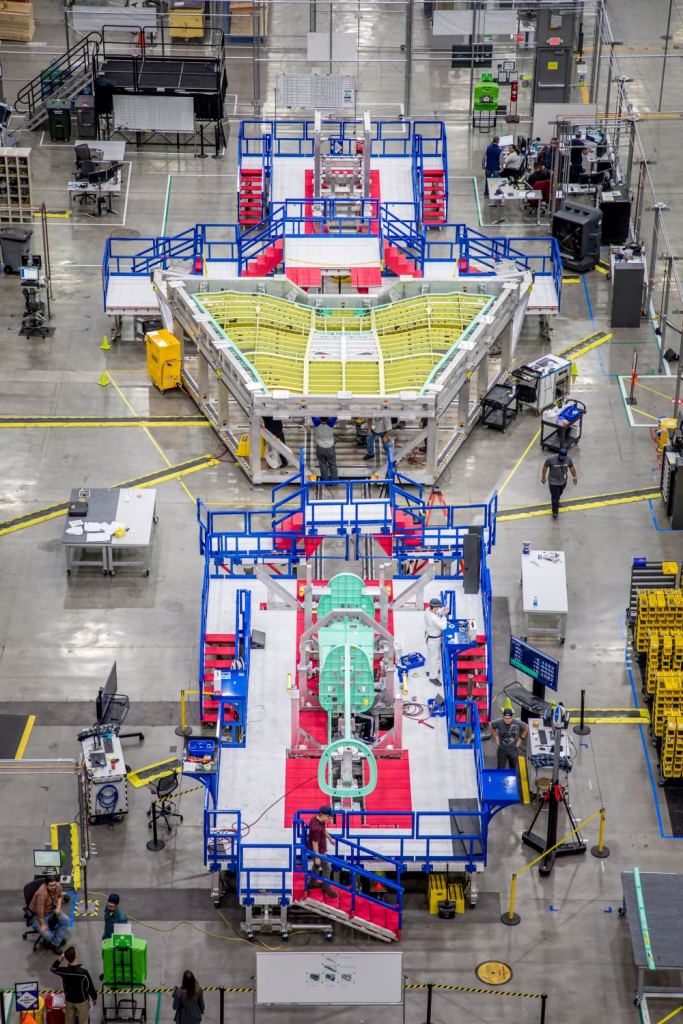
Credits: Lockheed Martin

Programul X-Plane al NASA are aproximativ 70 de ani. De-a lungul acestor decenii, agenția a dezvoltat o serie de avioane și rachete pentru a testa diverse tehnologii și design de avangardă. Acum, NASA a aprobat cel mai nou tip de avion, X-59, pentru asamblarea finală.
X-59 este un proiect de aeronavă supersonică. Numele său complet este aeronava X-59 Quiet SuperSonic Technology (QueSST). În loc să forțeze la viteze mai mari și altitudini mai mari, cum au fost unele planuri X anterioare, X-59 este proiectat pentru a rupe bariera sonoră fără boomul sonic. X-59 nu va produce un zgomot puternic, când trece bariera sonoră.
Proiectarea preliminară pentru X-59 a început în februarie 2016. NASA a dorit să dezvolte o aeronavă supersonică care să elimine boomul sonic. Aeronavele supersonice există de ceva vreme și au servit ca avioane de linie aeriană comercială. Concorde a fost în funcțiune până în 2003, dar boom-ul sonic care era creat de Concorde a fost problematic: deoarece zgomotul era prea mare pentru zonele populate Concorde a fost folosit doar pentru zborurilr transatlantice.
Dar este greu de rezistat provocării când vine vorba de viteza aeronavelor supersonice. Proiectanții credeau că forma unei aeronave poate fi modificată pentru a elimina boomul sonic și pentru a readuce în funcțiune aeronavele supersonice. Un avion de testare timpuriu, Northrop F5-E, avea un nas în formă specială, cu care designerii sperau să reducă sau să elimine boomul sonic.
Northrop F5-E este un fel de precursor pentru X-59. Nasul său în formă de pelican a fost conceput pentru a reduce boomul sonic simțit și auzit de oamenii de pe pământ.
„Această modificare, care a făcut ca partea din față a F-5E să semene oarecum cu ciocul unui pelican, a fost atent modelată pentru a schimba modelul undelor de șoc pe care le va genera în timp ce va zbura mai repede decât viteza sunetului”, a spus Lawrence R. Benson, autorul „Liniștește-l pe Boom”, o carte despre proiectarea aeronavelor supersonice.

Boomul sonic nu are nicio legătură cu motorul. Boom-ul provine din valuri de șoc care se împletesc în urma unei aeronave atunci când depășește bariera sonoră. Și deși pentru un observator individual pare că boom-ul este un eveniment unic, nu este cazul. Boom-ul este continuu, atât timp cât aeronava călătorește mai repede decât viteza sunetului. X-59 atinge un nivel redus de zgomot cu ajutorul a ceea ce se numesc „canardi”. Canardurile sunt mici aripi anterioare care stau înaintea aripilor primare. Ele modelează undele de șoc și le împiedică să ocolească în spatele aeronavei. Împreună cu rama lungă de aer îngust a X-59, canardele ar trebui să reducă zgomotul din aeronavă la echivalentul unei închideri a ușilor mașinii.

Una dintre concesiunile de design ale X-59 este aceea că cockpit-ul are o vizibilitate limitată înainte. Pentru a evita acest lucru, aeronava va fi echipată cu Sistemul de vizibilitate exterior (XVS.) XVS este un sistem de senzori, tehnologii de calcul și afișare, care va suprapune informații importante despre zbor pe afișele de cabină, inclusiv ajutoare vizuale pentru abordările aeroportului, decolări și aterizări. Rezultatul este un fel de „realitate virtuală” sau realitate mărită a liniei de vizionare a aeronavei.
Acum, NASA a anunțat că X-59 a trecut de punctul critic -D (KPD-D), un fel de revizuire finală înainte de asamblare. După ce aeronava va fi pregătită pentru zboruri de testare, oficialii NASA se vor întâlni din nou la sfârșitul anului 2020 pentru a aproba primul zbor al avionului în 2021.

„Odată cu finalizarea KDP-D, am arătat că proiectul este prevăzut, este bine planificat și este pe cale de execuție. Avem totul la dispoziție pentru a continua această misiune de cercetare istorică.”, a declarat Bob Pearce, administratorul asociat al NASA pentru Aeronautics, într-un comunicat de presă.
După ce va zbura, va fi testat riguros cu ajutorul observatorilor civili de pe teren. Va fi arătat deasupra comunităților selectate din SUA, care își vor raporta observațiile despre sunetul aeronavei. Acest lucru este pentru a evalua percepția publică asupra aeronavei și pentru a ajuta la elaborarea de noi linii directoare de zbor pentru viitoarele aeronave supersonice.
NASA a folosit o metodă unică de vizualizare a undelor sonore generate de aeronave supersonice. Se numește „Schlieren Photography” și a fost dezvoltat pentru prima dată în 1864 pentru a fotografia fluxul de lichide. NASA a făcut pași mari folosind-o pentru a imagina valurile de șoc ale aeronavelor și a fost o parte cheie a dezvoltării X-59.
X-59 este construit de Lockheed-Martin la instalația lor Skunk Works din California. Aeronava ar trebui să coste aproximativ 250 de milioane de dolari.
Credite: Lockheed Martin

 Mihail stories