What’s behind the burst pattern?
SCIENCE AND NATURE
Pentru a doua oară, astronomii au detectat un tipar într-o misterioasă explozie radio rapidă care venea din spațiu.
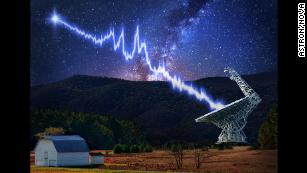
Exploziile radio rapide , sau FRB, sunt rafale de unde radio cu durate de câteva milisecunde, iar astronomii au reușit să le urmărească până în galaxiile lor de origine.
Nu s-au stabilit, încă, cauza reală a exploziilor.
Explozirile radio individuale emit o dată și nu se repetă. Dar se repetă exploziile rapide de radio, care trimit unde radio scurte și energice de mai multe ori.
Observațiile anterioare au arătat că, de obicei, atunci când se repetă, sunt sporadice sau într-un grup.
Toate acestea s-au schimbat la începutul acestui an, când astronomii au descoperit că FRB 180916.J0158 + 65 a avut un tipar de explozii care au loc la fiecare 16.35 de zile. Pe parcursul a patru zile, semnalul va elibera o explozie sau două în fiecare oră. Apoi, ar fi tăcut pentru încă 12 zile.
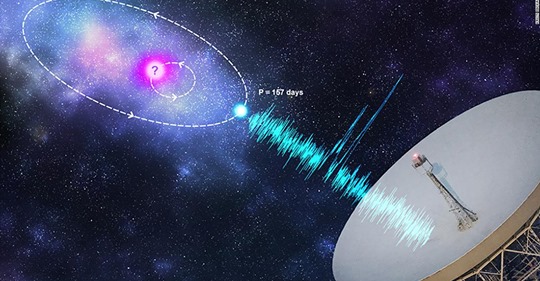
Acum, au detectat un model într-o a doua explozie radio repetată, cunoscută sub denumirea de FRB 121102. În timpul acestui tipar ciclic, exploziile radio sunt emise pe o fereastră de 90 de zile, urmată de o perioadă silențioasă de 67 de zile. Acest model se repetă la fiecare 157 de zile.
FRB 121102 este cunoscut ca o explozie radio rapidă repetată din 2016. Acum, ei știu că are un model.
Semnalul misterios din spațiu se repetă la fiecare 16 zile
„Până acum, doar un alt FRB care se repetă arăta un astfel de model în activitatea sa izbucnită”, a spus Kaustubh Rajwade, autorul studiului principal și cercetător postdoctoral în astronomie la Universitatea din Manchester, într-un e-mail. „Găsirea unui astfel de model dezvăluie indicii importante despre ceea ce ar putea [fi] progenitorul FRB. O periodicitate ne spune că obiectul care produce FRB este probabil pe o orbită cu un alt corp astrofizic.”
Studiul publicat duminică în jurnalul lunar Notices of the Royal Astronomical Society.
Studiul spune că exploziile rapide misterioase au ajutat la detectarea materiei lipsă din univers
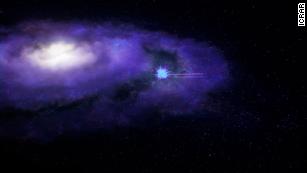
FRB 121102 a fost prima explozie radio rapidă care a fost urmărită la sursa sa, legată de o mică galaxie pitică aflată la mai mult de 3 miliarde de ani lumină distanță, în 2017.
Faptul că acest model de repetare rapidă este de cel puțin 10 ori mai lung decât cel care se repetă la fiecare 16,4 zile arată o gamă largă potențială pentru o astfel de activitate, au spus cercetătorii.
Ce se ascunde în spatele modelului?
Care ar putea fi cauza modelului extins al FRB 121102? Cercetătorii au crezut că aceste explozii puternice s-ar putea datora orbitei unei stele masive, a unei găuri negre sau a unei stele dense de neutroni.
Misterios repetarea exploziei radio rapide a fost urmărită în galaxia din apropiere
O posibilă explicație pentru repetarea exploziilor radio rapide a fost precesia, sau mișcarea de vârf oscilând, a axei unei stele neutronice foarte magnetizate. Dar asta s-ar putea să nu explice ce văd astronomii pentru această explozie, deoarece durează atât de mult, au spus cercetătorii. Acest model poate fi mai potrivit pentru explozii care se repetă peste câteva săptămâni.
Mergând mai departe, cercetătorii doresc să găsească alte explozii radio rapide care se repetă, să determine dacă au și modele și să vadă dacă acestea două reprezintă gama de modele. Ei doresc, de asemenea, să observe FRB 121102 mai mult pentru a vedea dacă modelele se schimbă în timp.
„Răspunsul la aceste întrebări ne va duce mai aproape de adevărata sursă de FRBs,” Rajwade a spus.
Ce trimit misterioasele explozii radio rapide în spațiu?
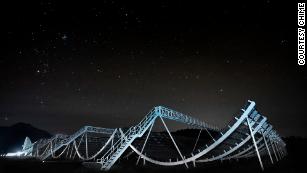
Modelul exploziilor radio din acest studiu a fost detectat în timp ce folosea telescopul Lovell la Observatorul Jodrell Bank din Regatul Unit pe parcursul a patru ani. Telescopul este sensibil la semnalele radio slabe și este capabil să monitorizeze în mod regulat exploziile radio rapide care au fost deja identificate.
Exploziile radio rapide au fost descoperite abia în 2007, urmate de descoperirea că unele dintre ele s-au repetat în 2016. Acum, cercetătorii știu că pot avea modele.
„Această descoperire interesantă evidențiază cât de puțin știm despre originea FRB” a declarat Duncan Lorimer, coautor de studiu, decan asociat pentru cercetare și profesor de fizică și astronomie la Universitatea din Virginia de Vest. „Vor fi necesare observații suplimentare asupra unui număr mai mare de FRB pentru a obține o imagine mai clară despre aceste surse periodice și pentru a elucida originea lor.”

 Mihail stories