Sergei Pavlovich Koroliov was the Soviet chief engineer and designer during the space race between the United States and the Soviet Union in the 1950s and 1960s. He designed the R-7 rocket, the launch vehicle for the first artificial satellite Sputnik and the first man in space, Yuri Gagarin.

Serghei Pavlovici Koroliov (n. 30 decembrie1906/12 ianuarie1907, Jîtomîr, gubernia Volînia, Imperiul Rus – d. 14 ianuarie1966, Moscova, RSFS Rusă, URSS) a fost inginerul şi proiectantul şef sovietic în timpul cursei spaţiale dintre Statele Unite şi Uniunea Sovietică în anii 1950 şi 1960. El a proiectat racheta R-7, vehiculul de lansare pentru primul satelit artificial Sputnik şi pentru primul om în spaţiu, Iuri Gagarin.
Koroliov a fost o victimă a epurărilor staliniste din 1938 şi s-a aflat timp de 6 ani în detenţie.

Koroliov has been a victim of Stalinist purges since 1938 and has been in detention for six years.
Datorită pregătirii, Koroliov a început să lucreze la Biroul de Proiectări Aeronautice OPO-4, Secția Experimentală Nr. 4, condusă de francezul Paul Richard, formată fiind din cei mai capabili proiectanți sovietici. În acest grup nu s-a făcut remarcat, dar, odată cu activitatea în cadrul acestui birou, lucra în particular la mai multe proiecte personale. Unul era proiectul unui planor acrobatic. Înainte de 1930 devenise inginer șef responsabil cu construirea unui bombardier proiectat de Tupolev: TB-3.
Koroliov a obținut licența de pilot în 1930. În anul următor s-a căsătorit cu Xenia Vincentini. Aceasta dorea mai de mult căsătoria, dar Koroliov a tot amânat pentru a-și putea continua studiile. În 1930 a început să se intereseze de posibilitățile motoarelor racheta cu combustibil lichid. În 1931, împreună cu Friedrich Zander, un entuziast al zborurilor spațiale, a participat la formarea Grupului de Cercetare a Propulsiei cu Reacție (GIRD), unul din centrele pentru cercetarea și construirea de rachete finanțate de stat. În mai 1932, Koroliov a fost numit șef al grupului.
În anii următori, GIRD a realizat trei sisteme de propulsie diferite. În 1932, armata a început să se intereseze de proiectele grupului și a participat la finanțare. În același an, GIRD a reușit prima lansare a unei rachete cu propulsie lichidă, GIRD-09 (la numai șapte ani de la prima lansare a unei rachete, realizată de americanul Robert Goddard). În 1934, Koroliov a publicat într-o carte (Zborul în stratosferă) rezultatele muncii de cercetare la motoarele-rachetă.
Datorită importanței militare a cercetărilor, conducerea sovietică a dispus în 1933 fuzionarea celor două centre de cercetare, GIRD și Laboratorul de Dinamică a Gazului (GDL) din Leningrad înființând Institutul de Cercetare a Propulsiei cu Reacție (RNII), condus de inginerul militar Ivan Klimenov. Din grup făceau parte unii dintre cei mai pasionați adepți ai zborului spațial, între care și Valentin Glușko. Koroliov a fost numit director adjunct al institutului, conducând secțiunea de studiu și dezvoltare a rachetelor navale pentru crucișătoare. Tot sub conducerea sa a fost realizat un studiu privind construirea unui planor cu reacție.
La 10 aprilie 1935 soția lui Koroliov a născut o fetiță, Natașa. În 1936 s-au mutat din casa părinților lui Koroliov, în propriul apartament. La acea dată Koroliov ajunsese să fie șeful RNII-ului. Institutul a continuat perfecționarea rachetelor, mai ales detaliile privind stabilitatea și controlul. Au fost create sisteme de stabilizare automată cu giroscoape, care permiteau zborul stabil pe o traiectorie programată. Koroliov era un lider carismatic, care se impunea fără efort.

Due to his training, Koroliov started working at the OPO-4 Aeronautical Design Office, Experimental Section No. 4, led by the Frenchman Paul Richard, consisting of the most capable Soviet designers. He was not noticed in this group, but, along with his activity in this office, he worked in particular on several personal projects. One was the design of an acrobatic glider. Before 1930 he had become chief engineer responsible for the construction of a bomber designed by Tupolev: TB-3.
Koroliov obtained his pilot’s license in 1930. The following year he married Xenia Vincentini. She wanted marriage more, but Koroliov kept postponing it so that she could continue her studies. In 1930 he became interested in the possibilities of rocket engines with liquid fuel. In 1931, together with Friedrich Zander, a space flight enthusiast, he participated in the formation of the Reaction Propulsion Research Group (GIRD), one of the centers for research and construction of state-funded missiles. In May 1932, Koroliov was appointed head of the group.
In the following years, GIRD developed three different propulsion systems. In 1932, the army became interested in the group’s projects and participated in funding. In the same year, GIRD successfully launched the first liquid-propelled rocket, GIRD-09 (only seven years after the first rocket launch, by the American Robert Goddard). In 1934, Koroliov published in a book (Flight in the Stratosphere) the results of research work on rocket engines.
Due to the military importance of the research, the Soviet leadership in 1933 ordered the merger of the two research centers, GIRD and the Gas Dynamics Laboratory (GDL) in Leningrad, setting up the Reaction Propulsion Research Institute (RNII), headed by military engineer Ivan Klimenov. The group included some of the most passionate followers of space flight, including Valentin Glușko. Koroliov was appointed deputy director of the institute, leading the study and development section of naval missiles for cruisers. Also under his leadership, a study was conducted on the construction of a jet glider.
On April 10, 1935, Koroliov’s wife gave birth to a baby girl, Natasha. In 1936 they moved from Koroliov’s parents’ house to their own apartment. At that time Koroliov had become the head of the RNII. The institute continued to refine the missiles, especially the details of stability and control. Automatic stabilization systems with gyroscopes were created, which allowed stable flight on a programmed trajectory. Koroliov was a charismatic, effortless leader.

La 22 iunie 1938, în timpul marii epurări, agenţi NKVD l-au arestat. A fost acuzat de diversiune, ocupându-se mai mult de aeronave propulsate cu combustibil lichid şi nu solid, cheltuind astfel bani pentru un proiect neprioritar. Koroliov nu a avut parte de un proces real, fiind torturat până a recunoscut tot. A fost condamnat la zece ani de închisoare. Mai târziu, peste ani, a aflat cu amărăciune că a fost denunţat de colegul său, Gluşko, care era invidios pe succesele lui Koroliov. După luni de călătorie în trenuri pentru animale şi multe abuzuri, a ajuns în sfârşit în lagărul Kolâma din Siberia. Condiţiile din lagăr erau inumane, dure, lipseau mâncarea şi hainele groase, adecvate climei siberiene. Lagărul era renumit pentru indicele mare de mortalitate, aprox. 10.000 de deţinuţi pe an. Aproape toţi membrii RNII au fost trimişi în lagăre, fiind arestat chiar şi şeful grupului militar. Orice persoană care a ocupat o funcţie de conducere în cadrul institutului a fost executată între 1937-1938, făcând din Koroliov un norocos supravieţuitor. Din acest motiv programul de cercetare şi producţie a rachetelor a fost abandonat mulţi ani, Rusia comunistă rămânând mult în urma Germaniei naziste la capitolul rachete. Demenţa lui Stalin a lăsat astfel armata fără lideri capabili, slăbită, dezorganizată şi prost înarmată şi echipată exact înainte de invazia germană din anul 1941. Koroliov a supravieţuit lagărului, dar cu sechele precum pierderea dinţilor, o fractură de mandibulă şi o suferinţă cardiacă. A stat cinci luni în lagăr, făcând munca grea într-o mină de aur. Între timp, forţaţi de evenimente, şefii de la Kremlin i-au redeschis cazul. Ca urmare a acestei decizii, a fost urcat într-un tren cu destinaţia Moscova. În timpul acestei călătorii s-a îmbolnăvit de scorbut, în urma căruia a fost la un pas de moarte. După redeschiderea cazului sentinţa i-a fost redusă la opt ani. În acel moment, mai multe personalităţi din Rusia au intervenit în favoarea sa, prin urmare nu a fost retrimis în Siberia. A ajuns într-o închisoare pentru intelectuali, numita Saraska. Aceasta era de fapt un lagăr de muncă pentru cercetători şi ingineri unde aceştia lucrau la proiecte comandate de partidul comunist, sub stricta supraveghere a NKVD, prin intermediul Biroului Central de Proiecte, K. B. -29, T. K. B. -29. Aici munceau inginerii lui Tupolev, vechiul mentor al lui Koroliov. Pe parcursul celui de al doilea război mondial, în această Saraska au fost proiectate bombardierele Tupolev T. U. -2 şi avionul de vânătoare Iliuşin I. I. -2. Grupul a fost mutat de mai multe ori pe parcursul războiului, pentru a nu fi capturat de inamic, motivau temnicerii. În anul 1942 Koroliov a fost mutat în altă Saraska, ca subordonat al inginerului de motoare Gluşko. Aici se proiectau piese pentru motoarele avioanelor cu reacţie.

On June 22, 1938, during the Great Purge, NKVD agents arrested him. He was accused of diversion, dealing more with liquid and non-solid fuel propelled aircraft, thus spending money on a non-priority project. Koroliov did not have a real trial, being tortured until he admitted everything. He was sentenced to ten years in prison. Later, years later, he learned bitterly that he had been denounced by his colleague, Gluko, who was envious of Koroliov’s successes. After months of traveling in animal trains and many abuses, he finally arrived in the Kolâma camp in Siberia. The conditions in the camp were inhumane, harsh, there was a lack of food and thick clothes, suitable for the Siberian climate. The camp was famous for its high mortality rate, approx. 10,000 detainees per year. Almost all RNII members were sent to the camps, and even the head of the military group was arrested. Anyone who held a leadership position at the institute was executed between 1937-1938, making Koroliov a lucky survivor. For this reason, the missile research and production program was abandoned for many years, with Communist Russia lagging far behind Nazi Germany in terms of missiles. Stalin’s dementia left the army without capable leaders, weakened, disorganized and poorly armed and equipped just before the German invasion of 1941. Koroliov survived the camp, but with sequelae such as tooth loss, a jaw fracture and heart disease. He spent five months in the camp, working hard in a gold mine. Meanwhile, forced by events, Kremlin leaders reopened his case. As a result of this decision, he was boarded a train bound for Moscow. During this trip he fell ill with scurvy, after which he was on the verge of death. After the case was reopened, his sentence was reduced to eight years. At that time, several Russian personalities intervened in his favor, so he was not sent back to Siberia. He ended up in a prison for intellectuals called Saraska. This was in fact a labor camp for researchers and engineers where they worked on projects commissioned by the Communist Party, under the strict supervision of the NKVD, through the Central Bureau of Projects, K. B. -29, T. K. B. -29. This was where Tupolev’s engineers, Koroliov’s old mentor, worked. During World War II, the Tupolev T. U. -2 bombers and the Ilushin I. I. -2 fighter jet were designed in this Saraska. The group was moved several times during the war, so as not to be captured by the enemy, the jailers said. In 1942 Koroliov was moved to another Saraska, as a subordinate of the engine engineer Gluko. Parts for jet aircraft engines were designed here. Koroliov stayed here, isolated from his family until 1944, living permanently in fear of being killed because of the military secrets he knew. It was also marked by the passage through the camp. For this reason he was always reserved and cautious. On June 27, 1944, Koroliov, along with Tupolev and others, was released by a special government decree, acquitted of all charges. The design office was transferred from the NKVD to the Government Aeronautical Industry Commission. Koroliov worked at the Design Office for many years under the leadership of Gluko, studying and carrying out missile projects.

Koroliov a stat aici, izolat de familie până în 1944, trăind permanent cu teama de a fi ucis datorită secretelor militare pe care le ştia. Era de asemenea marcat de trecerea prin lagăr. Din acest motiv a fost mereu rezervat şi precaut. Pe 27 iunie 1944, Koroliov, împreuna cu Tupolev şi alţii a fost eliberat printr-un decret special al guvernului, fiind absolvit de orice vină. Biroul de proiectare a fost transferat de la NKVD la Comisia de Industrie Aeronautică a Guvernului. Koroliov a lucrat la Biroul de Proiectare mulţi ani, sub conducerea lui Gluşko, studiind şi realizând proiecte de rachete.

Koroliov stayed here, isolated from his family until 1944, living permanently in fear of being killed because of the military secrets he knew. It was also marked by the passage through the camp. For this reason he was always reserved and cautious. On June 27, 1944, Koroliov, along with Tupolev and others, was released by a special government decree, acquitted of all charges. The design office was transferred from the NKVD to the Government Aeronautical Industry Commission. Koroliov worked at the Design Office for many years, under the leadership of Gluko, studying and carrying out missile projects.
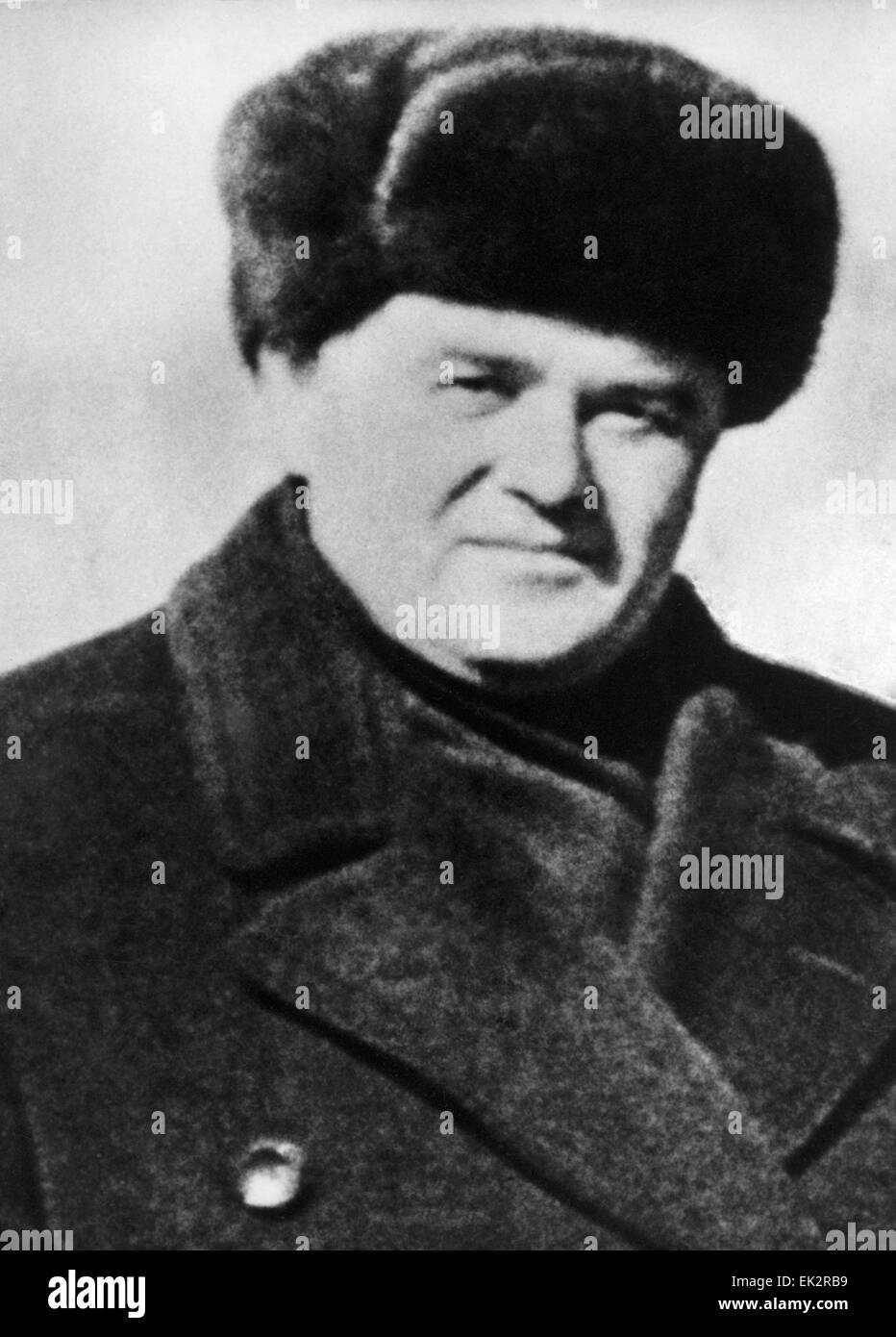
În anul 1945 Koroliov a primit prima sa Medalie de Onoare, pentru munca lui în dezvoltarea motoarelor de rachete pentru aeronavele militare. În acelaşi an a fost numit colonel în Armata Roşie. Împreună cu alţi experţi, a zburat în Germania pentru studia date despre racheta germană V-2. Ruşii considerau de primă importanţă refacerea documentaţiei pierdute a rachetei V-2, studiul pieselor găsite la faţa locului, precum şi preluarea instalaţiilor de fabricare. În 1946 au fost aduşi în URSS 5.000 de muncitori germani. Stalin a făcut din cercetarea şi producţia de rachete balistice o prioritate naţională, aşa că prizonierii germani au fost grupaşi într-un nou institut, creat special pentru ei, N. I. I-88. Studiul şi perfecţionarea rachetelor balistice a trecut sub controlul militar al lui Dimitri Ustinov, avându-l pe Koroliov proiectant principal de rachete cu rază lungă de acţiune. Koroliov a dovedit pricepere în utilizarea noilor instalaţii, organizând totul foarte bine. Germanii care lucrau la instalaţie erau ţinuţi ca într-o închisoare, fiind înconjuraţi de garduri de sârmă ghimpată şi gardieni înarmaţi. Cu documentaţia refăcută, în parte şi datorită rachetelor V-2 demontate, s-a început construirea unei replici funcţionale a rachetei. Aceasta a fost numită R-1 şi a fost testată pentru prima oară în octombrie 1947. Au fost lansate unsprezece, cinci dintre ele atingându-şi obiectivul. Aceste reuşite erau comparabile cu ale germanilor, demonstrând slaba fiabilitate a rachetei. Sovieticii au folosit muncitori germani la acest proiect până în anul 1952, când primele grupuri au început a fi repatriate, pentru ca în 1954 utilizarea de specialişti străini la acest program să fie sistată.
În 1947 grupul NII-88, sub conducerea lui Koroliov, a început lucrul la proiecte mai avansate, mărind raza de acţiune şi greutatea utilă a rachetelor. R-2 avea raza de acţiune de două ori mai mare decât V-2 şi a fost prima rachetă care avea focos separat. Următoarea racheta a fost R-3, cu o rază de acţiune de 3.000 de km, putând atinge obiective în Marea Britanie.
Grupul condus de Gluşko (care avea acelaşi tip de activitate ca al lui Koroliov) nerealizând motoare destul de puternice, a pierdut finanţarea în anul 1952, fiind desfiinţat. În acelaşi an, Koroliov a început lucrul la modelul R-5 (numele de cod în cadrulNATO: SS-3 Shyster), cu o rază medie de acţiune: 1.200 de km. A fost testată cu succes în 1953.
Primul ICMB sovietic a fost R-7 (nume-cod la NATO: SS-Sapwood). Aceasta avea două trepte, putând transporta o încărcătură utilă de 5.400 kg, suficientă pentru a duce bomba atomică sovietică la 7.000 de km distanţă. După mai multe eşecuri, prima lansare reuşită a avut loc în august 1957, cu această ocazie fiind transportată o încărcătură pasivă până în peninsula Kamceatka.
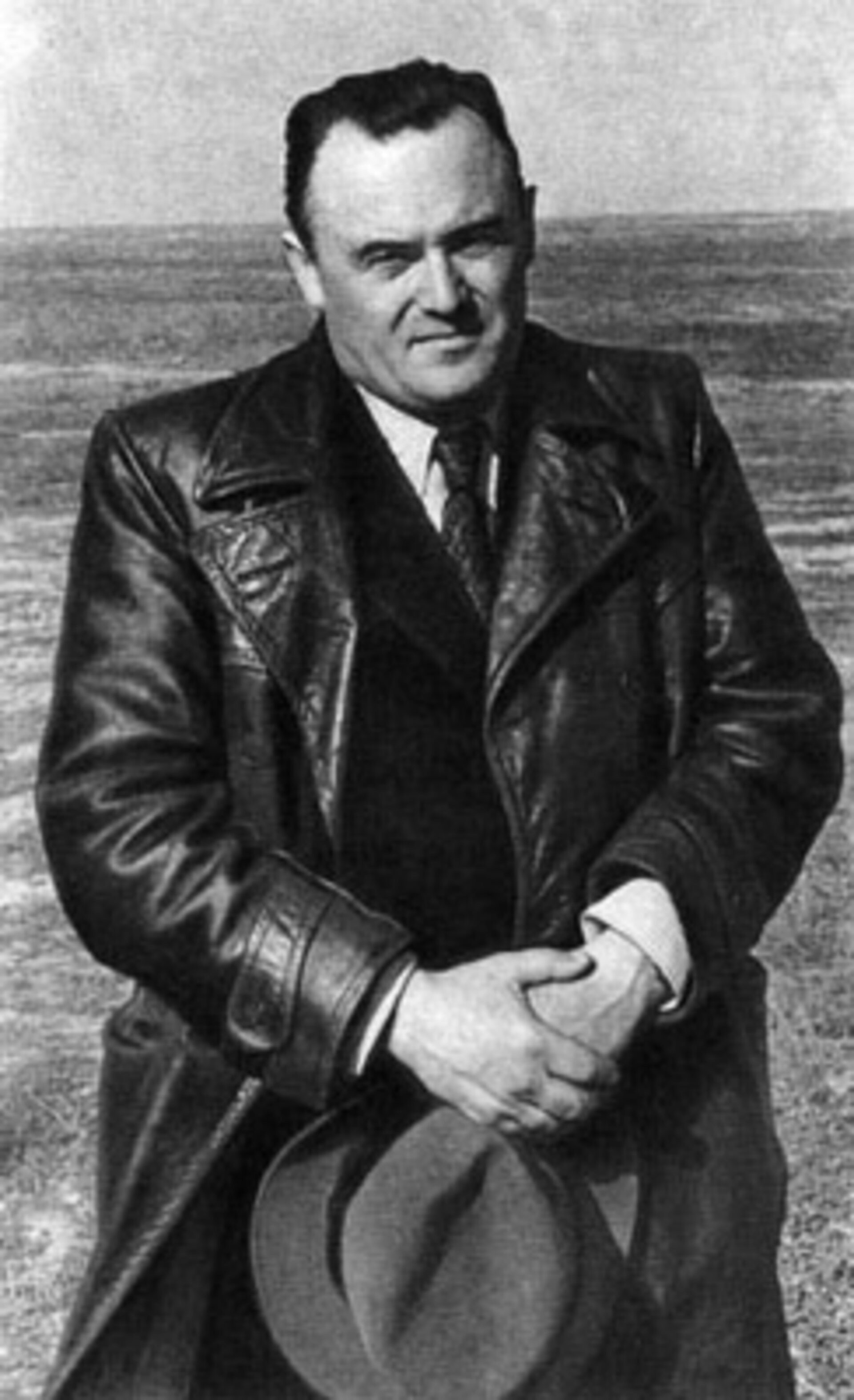
In 1945 Koroliov received his first Medal of Honor for his work in developing missile engines for military aircraft. In the same year he was appointed colonel in the Red Army. Together with other experts, he flew to Germany to study data on the German V-2 missile. The Russians considered it important to restore the lost documentation of the V-2 missile, to study the parts found on the spot, as well as to take over the manufacturing facilities. In 1946, 5,000 German workers were brought to the USSR. Stalin made ballistic missile research and production a national priority, so German prisoners were grouped into a new institute created especially for them, N. I. I-88. The study and improvement of ballistic missiles came under the military control of Dmitry Ustinov, with Koroliov as the main designer of long-range missiles. Koroliov showed skill in using the new facilities, organizing everything very well. The Germans working on the plant were kept in a prison, surrounded by barbed wire fences and armed guards. With the documentation redone, partly due to the dismantled V-2 missiles, the construction of a functional replica of the missile began. It was named R-1 and was first tested in October 1947. Eleven were launched, five of them reaching their target. These successes were comparable to those of the Germans, demonstrating the poor reliability of the missile. The Soviets used German workers for this project until 1952, when the first groups began to be repatriated, so that in 1954 the use of foreign specialists in this program was stopped.
In 1947 the NII-88 group, under Koroliov’s leadership, began work on more advanced projects, increasing the range and payload of the missiles. The R-2 had twice the range of the V-2 and was the first rocket to have a separate warhead. The next rocket was the R-3, with a range of 3,000 km, able to reach targets in the UK.
The group led by Gluko (which had the same type of activity as Koroliov’s) did not produce enough powerful engines, lost funding in 1952, and was disbanded. In the same year, Koroliov began work on the R-5 (NATO code name: SS-3 Shyster), with an average range: 1,200 km. It was successfully tested in 1953.
The first Soviet ICMB was R-7 (NATO code-name: SS-Sapwood). It had two stages, capable of carrying a payload of 5,400 kg, enough to carry the Soviet atomic bomb 7,000 km away. After several failures, the first successful launch took place in August 1957, on which occasion a passive cargo was transported to the Kamchatka Peninsula.

Koroliov nu a fost interesat numai de tehnologia balistică. A fost mereu sedus de ideea utilizării acestei tehnologii în călătoriile spaţiale. În anul 1953 a propus folosirea rachetei R-7 pentru lansarea pe orbită a unui satelit. A reuşit să impună aceasta idee Academiei Ruse de Ştiinţă, mai mult, a propus trimiterea unui câine în spaţiu. A fost nevoit să învingă rezistenţa militarilor şi a partidului. În anul 1957, în timpul Anului Geofizic Internaţional, ideea lansării unui satelit a început să apară în presa americană. Guvernul american nu era însă dispus să investească milioane de dolari în aşa ceva, lăsând acest proiect la nivelul discuţiilor. Koroliov a intuit că în aceste condiţii Rusia putea depăşi America. În cele din urmă a primit sprijinul guvernului. Kremlinul a înţeles ce valoare propagandistică imensă ar avea întâietatea lansării unui satelit, şi cât de umilită ar fi America. Satelitul Sputnic a fost realizat în mai puţin de o lună. Avea o construcţie simplă, care consta dintr-o sferă şlefuită, în interiorul căreia se afla un emiţător radio, câteva instrumente pentru măsurat temperatura şi bateriile de alimentare. Koroliov a supravegheat personal montarea satelitului. Munca la acesta a fost tensionată. În sfârşit, pe 4 octombrie 1957 a fost lansată racheta şi satelitul a ajuns pe orbită. Evenimentul a avut un efect imediat şi răsunător, implicaţiile politice fiind cele aşteptate. Nikita Hrusciov încântat de succes, a hotărât că trebuie făcută o nouă lansare, cu ocazia celei de a-40-a aniversări a Revoluţiei din Octombrie. Lucru care s-a şi întâmplat pe trei noiembrie, Sputnik 2 fiind pregătit pentru lansare în mai puţin de o lună. Sputnik 2 era o cabină spaţială care cântărea de şase ori cât Sputnik 1, având în interior un pasager, căţeluşa Laika. A fost complet proiectată în doar patru săptămâni, nefiind testată înaintea lansării, din lipsă de timp. A fost pusă pe orbită la 3 noiembrie. Laika a supravieţuit lansării, dar a murit puţin după aceea, datorită căldurii mari din interiorul cabinei. A urmat apoi Sputnik 3. Nava a fost lansată pe 15 mai 1958. Din păcate, din cauza unui defect la sistemul de colectare a datelor nu a putut transmite informaţii despre centura Van Allen, aşa cum ar fi dorit cei care au construit-o. Acest lucru va fi făcut mai târziu de sonda nordamericană Explorer 4 în luna iunie a aceluiaşi an. Dar Sputnik 3 a demonstrat, indubitabil, capacitatea tehnologiei balistice a URSS

Koroliov was not only interested in ballistic technology. He has always been seduced by the idea of using this technology in space travel. In 1953 he proposed the use of the R-7 rocket to launch a satellite into orbit. He managed to impose this idea on the Russian Academy of Sciences, moreover, he proposed sending a dog into space. He had to overcome the resistance of the military and the party. In 1957, during the International Geophysical Year, the idea of launching a satellite began to appear in the American press. However, the US government was not willing to invest millions of dollars in such a thing, leaving this project at the level of discussions. Koroliov sensed that under these conditions Russia could overtake America. He eventually received government support. The Kremlin understood the immense propaganda value of the priority of launching a satellite, and how humiliated America would be. The Sputnik satellite was completed in less than a month. It had a simple construction, which consisted of a polished sphere, inside which was a radio transmitter, several instruments for measuring temperature and power batteries. Koroliov personally oversaw the installation of the satellite. His work was tense. Finally, on October 4, 1957, the rocket was launched and the satellite went into orbit. The event had an immediate and resounding effect, the political implications being as expected. Delighted by Nikita Khrushchev, he decided that a new launch should be made on the occasion of the 40th anniversary of the October Revolution. This happened on November 3, with Sputnik 2 ready for launch in less than a month. Sputnik 2 was a space cabin that weighed six times as much as Sputnik 1, with a passenger inside, the puppy Laika. It was completely designed in just four weeks, not being tested before launch, due to lack of time. It was launched into orbit on November 3. Laika survived the launch, but died shortly thereafter due to the high heat inside the cabin. Then came Sputnik 3. The ship was launched on May 15, 1958. Unfortunately, due to a defect in the data collection system, it could not transmit information about the Van Allen belt, as those who built it would have wanted. This will be done later by the North American Explorer 4 spacecraft in June of the same year. But Sputnik 3 has undoubtedly demonstrated the ballistic technology capability of the USSR

Planul lui Koroliov pentru o misiune cu echipaj a început în anul 1957, când au fost realizate proiecte de studiu ale viitoarei nave Vostok. Avea un singur pasager echipat cu un costum spaţial şi era complet automată. Capsula dispunea de un mecanism de protecţie pentru eventualele probleme de dinaintea lansării şi un sistem de aterizare lină şi de ejectare în timpul recuperării echipajului. La 15 mai 1960 un prototip fără echipaj a realizat 64 de ocoluri ale Terrei, dar s-a distrus la reintrarea în atmosferă. Au mai fost făcute 4 lansări cu câini în interior, două dintre ele complet reuşite. După obţinerea aprobării guvernului, o versiune modificata a lui R-7 a fost folosită pentru trimiterea pe orbita a lui Yuri Gagarin, pe 12 aprilie 1961, aceasta fiind prima ieşire a unui om în spaţiu.
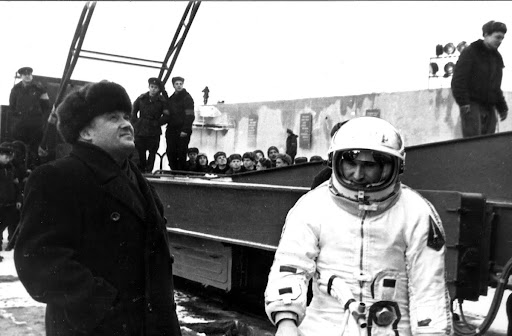
Koroliov’s plan for a manned mission began in 1957, when study projects of the future Vostok were completed. It had a single passenger equipped with a spacesuit and was fully automatic. The capsule had a protection mechanism for possible pre-launch problems and a smooth landing and ejection system during crew recovery. On May 15, 1960, an unmanned prototype made 64 detours around the Earth, but was destroyed when it re-entered the atmosphere. There were 4 more launches with dogs inside, two of them completely successful. After obtaining government approval, a modified version of the R-7 was used to send Yuri Gagarin into orbit on April 12, 1961, the first man to enter space.

Emigrantul rus Leonid Vladimirov ne spune cum îl descria Gluşko pe Koroliov: de statură mică, robust, cu gâtul scurt, cu ochi căprui strălucind de inteligenţă. Era un sceptic, un cinic şi un pesimist, care avea o viziune melancolică asupra viitorului.
„Toţi ne ducem fără să lăsăm vreo urmă”, îi plăcea să spună. Koroliov bea rar vodcă sau altă băutură alcoolică, iar stilul lui de viaţă era auster. În preajma anului 1946 căsătoria lui Serghei şi a Xeniei a început să scârţâie. Xenia era mai tot timpul ocupată cu munca, iar Koroliov s-a încurcat cu o femeie mai tânără, Nina Ivanovna Kotenkova. Jignită de infidelitate, Xenia a cerut divorţul în 1948. S. Koroliov şi Nina s-au căsătorit în anul 1949, dar Koroliov a mai cunoscut şi alte femei după căsătoria cu Nina.
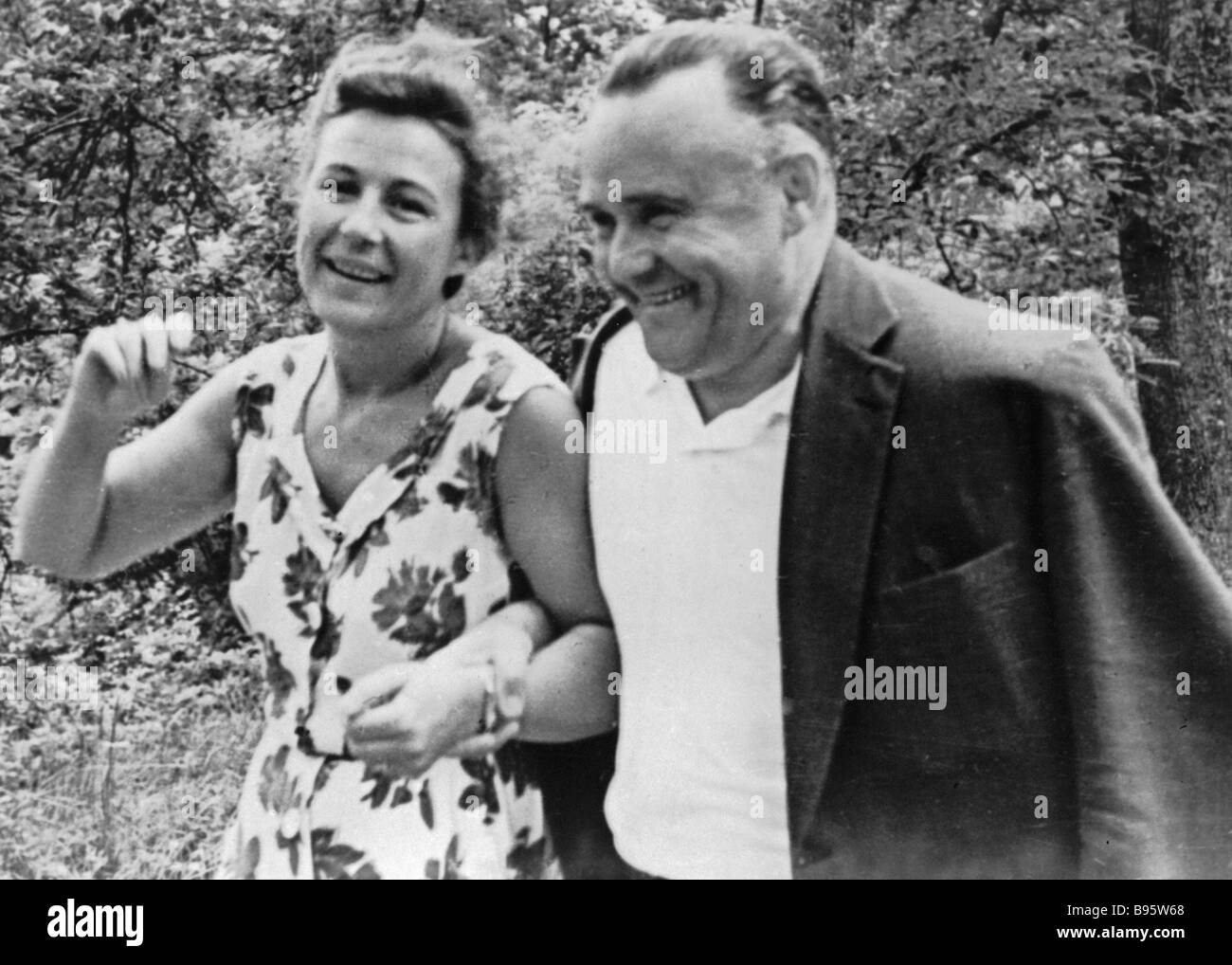
The Russian emigrant Leonid Vladimirov tells us how Gluko described Koroliov: small, robust, with a short neck, with brown eyes shining with intelligence. He was a skeptic, a cynic and a pessimist, who had a melancholy vision of the future.
„We all leave without a trace,” he liked to say. Koroliov rarely drank vodka or other alcoholic beverages, and his lifestyle was austere. Around 1946, Serghei and Xenia’s marriage began to squeak. Xenia was always busy with work, and Koroliov became entangled with a younger woman, Nina Ivanovna Kotenkova. Offended by infidelity, Xenia filed for divorce in 1948. S. Koroliov and Nina married in 1949, but Koroliov also met other women after marrying Nina.
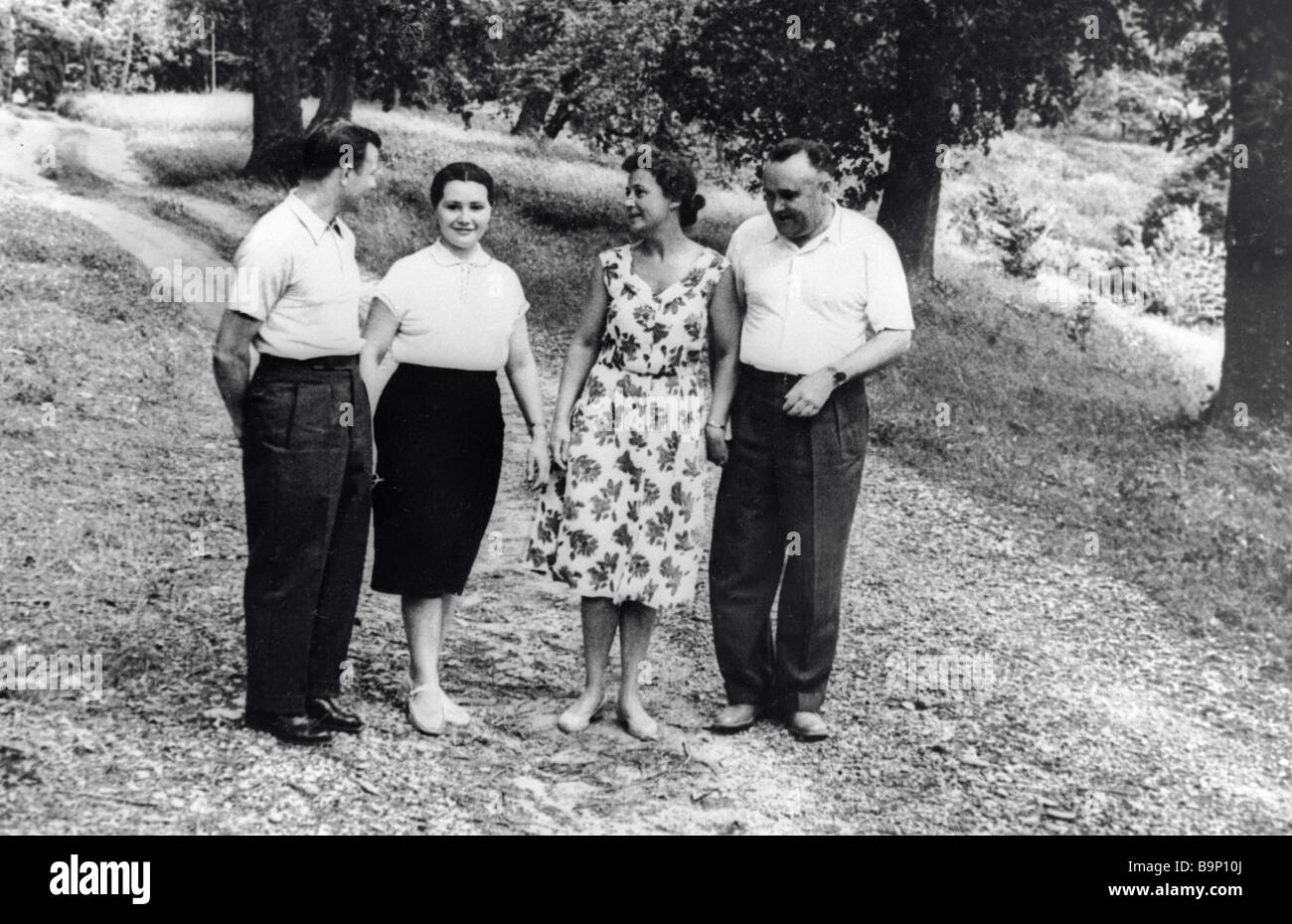
Pe 30 decembrie 1960 Koroliov a suferit primul infarct miocardic. În timpul convalescenţei medicii i-au descoperit şi o afecţiune a rinichilor, datorată, probabil anilor de închisoare. A fost avertizat de medici că ritmul intens de muncă îl va ucide. Dar Koroliov ştia că dacă americanii câştigă cursa spaţială, Hruşciov va bloca finanţarea programului spaţial. Prin urmare a început activitatea cu şi mai multă râvnă.
Începând din anul 1962 problemele de sănătate ale lui Koroliov au început să se agraveze, provocându-i mai multe afecţiuni: o sângerare intestinală care l-a băgat în spital, o aritmie cardiacă depistată de medici în 1964, o infecţie la fiere, şi, probabil ca urmare a numeroaselor teste de rachete la care a participat, a început să surzească.
Circumstanţele reale ale morţii sale rămân încă necunoscute. În decembrie 1965 s-a presupus că are un polip sângerând în colon. A fost internat pe 5 ianuarie 1966 pentru extirparea polipului. Operaţia trebuia să fie una de rutină. Noua zile mai târziu murea, aparent în urma unor complicaţii apărute în timpul operaţiei.
În declaraţia oficială a guvernului se spunea că a decedat datorită unei tumori canceroase de mari dimensiuni pe care ar fi avut-o în abdomen(?)nu la stomac, nu la intestin. Dar mai târziu Gluşko a divulgat adevărata cauză a morţii lui Koroliov: acesta ar fi decedat în urma unei banale operaţii de hemoroizi, prost făcută. Problemele pe care le avea cu inima au complicat şi mai mult situaţia. După unele surse, însuşi Petrovski, ministrul sănătăţii de atunci, a hotărât să-l opereze pe Koroliov, deşi nu era expert în acest tip de afecţiune.
În timpul operaţiei a descoperit câteva tumori de colon, dar a continuat să opereze fără ajutor, fără echipament adecvat ori supliment de sânge. Operaţia, de 5 ore, s-a soldat cu moartea lui Koroliov pe masa de operaţie. Potrivit aceloraşi surse, Koroliov ar fi fost asasinat deoarece ar fi comis erori grave în ultima perioadă a activităţii, ca şef al programului spaţial.

On December 30, 1960, Koroliov suffered his first heart attack. During his convalescence, doctors also discovered a kidney disease, probably due to years in prison. He was warned by doctors that the intense pace of work would kill him. But Koroliov knew that if the Americans won the space race, Khrushchev would block funding for the space program. Therefore, he started the activity with even more zeal.
From 1962 onwards, Koroliov’s health problems began to worsen, causing several ailments: an intestinal bleeding that took him to the hospital, a cardiac arrhythmia detected by doctors in 1964, an infection with the gallbladder, and probably as a result of the numerous missile tests in which he participated, he began to deafen.
The real circumstances of his death are still unknown. In December 1965 he was thought to have a bleeding polyp in his colon. He was hospitalized on January 5, 1966 for the removal of the polyp. The operation had to be routine. Nine days later, he died, apparently from complications during the operation.
The official government statement said he died of a large cancerous tumor in his abdomen (?), Not in his stomach, not in his intestines. But later, Gluko revealed the true cause of Koroliov’s death: he died of a trivial hemorrhoid operation, which was badly done. His heart problems further complicated the situation. According to some sources, Petrovski himself, the then Minister of Health, decided to operate on Koroliov, although he was not an expert in this type of condition.
During the operation he discovered several colon tumors, but continued to operate without help, without proper equipment or blood supplementation. The 5-hour operation resulted in Koroliov’s death on the operating table. According to the same sources, Koroliov was allegedly assassinated because he had committed serious mistakes in his last period of activity, as head of the space program.

Koroliov a primit de două ori titlul de Erou al Muncii Socialiste, în anii 1956 şi 1961. De asemenea, i-a fost decernat Premiul Lenin în anul 1957 şi Ordinul Lenin de 3 ori. În anul 1958 a fost numit membru al Academiei Ruse de Ştiinţă. În timpul cât Nikita Hruşciov a fost la cârma URSS lui Koroliov i-a fost decernat premiul Nobel, ca o recunoaştere internaţională a muncii sale, dar Hruşciov a interzis ca numele genialului inginer să fie folosit la ceremonie, afirmând că mai degrabă premiul ar trebui oferit poporului sovietic şi orânduirii socialiste pentru aceste succese. În anul 1966 o stradă din oraşul natal a primit numele marelui om, Strada Academician Koroliov, iar în 1975 a fost amenajat un muzeu în casa în care a locuit din 1959 până în 1966. În 1996, Boris Elţân a dat oraşului Kaliningrad, regiunea Moscova, numele Koroliov. Aici este sediul celei mai mari companii spaţiale ruse, Koroliov and Space Corporation Energia. Un crater de pe faţa întunecată a Lunii a primit numele Koroliov şi altul pe planeta Marte. Există şi un asteroid cu acelaşi nume, 1855-Koroliov. În anul 2005 postul de televiziune britanic BBC a realizat o emisiune numita Cursa Spaţială centrată pe munca lui Koroliov la motoarele rachetă şi la programul spaţial, făcând şi o paralelă cu activitatea similară a rivalului său din Statele Unite ale Americii, Wernher von Braun.
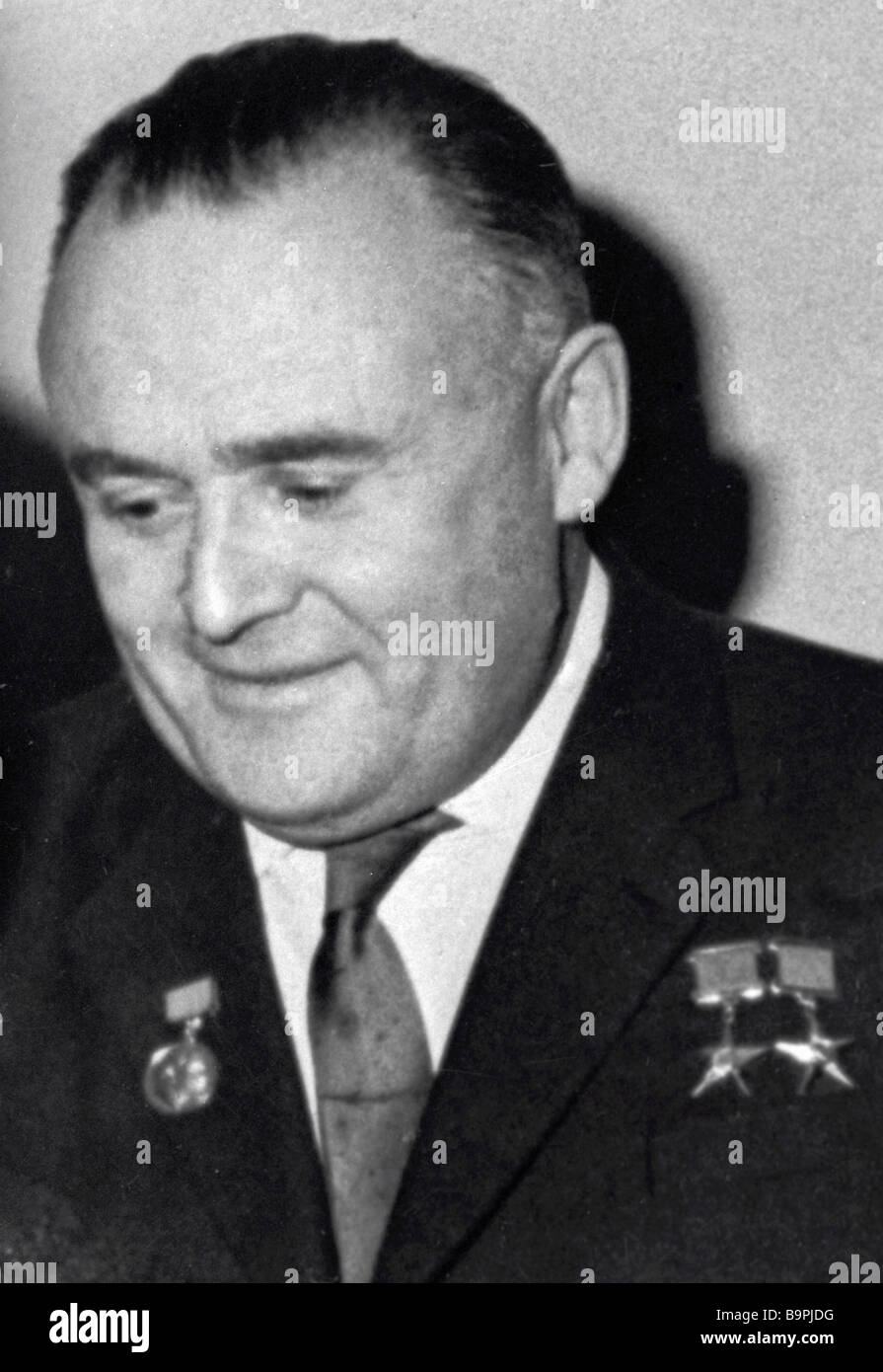
Koroliov twice received the title of Hero of Socialist Labor in 1956 and 1961. He was also awarded the Lenin Prize in 1957 and the Lenin Order three times. In 1958 he was appointed a member of the Russian Academy of Sciences. While Nikita Khrushchev was at the helm of the USSR, Koroliov was awarded the Nobel Prize in international recognition for his work, but Khrushchev forbade the use of the genius engineer’s name at the ceremony, saying the prize should be given to the Soviet people. and the socialist order for these successes. In 1966 a street in his hometown was named after the great man, Academician Koroliov Street, and in 1975 a museum was set up in the house where he lived from 1959 to 1966. In 1996, Boris Yeltsin gave the city of Kaliningrad, Moscow region. , name Koroliov. Here is the headquarters of the largest Russian space company, Koroliov and Space Energy Corporation. One crater on the dark side of the moon was named Koroliov and another on Mars. There is also an asteroid of the same name, 1855-Koroliov. In 2005, the British BBC broadcast a show called * Space Race * focusing on Koroliov’s work on rocket engines and the space program, drawing a parallel with the similar activity of his rival in the United States, Wernher von Braun.
Surse: Internet.

 Mihail stories