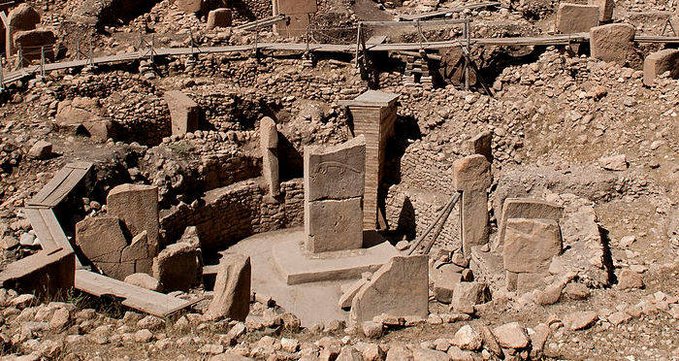
„GOBEKLI CHANGES EVERYTHING.” AND IT’S NOT AN EXAGGERATION: WHEN GOBEKLI TEPE WAS UNCOVERED IN 1994, IT CHANGED HOW WE UNDERSTAND THE RISE OF HUMAN CIVILIZATIONS.
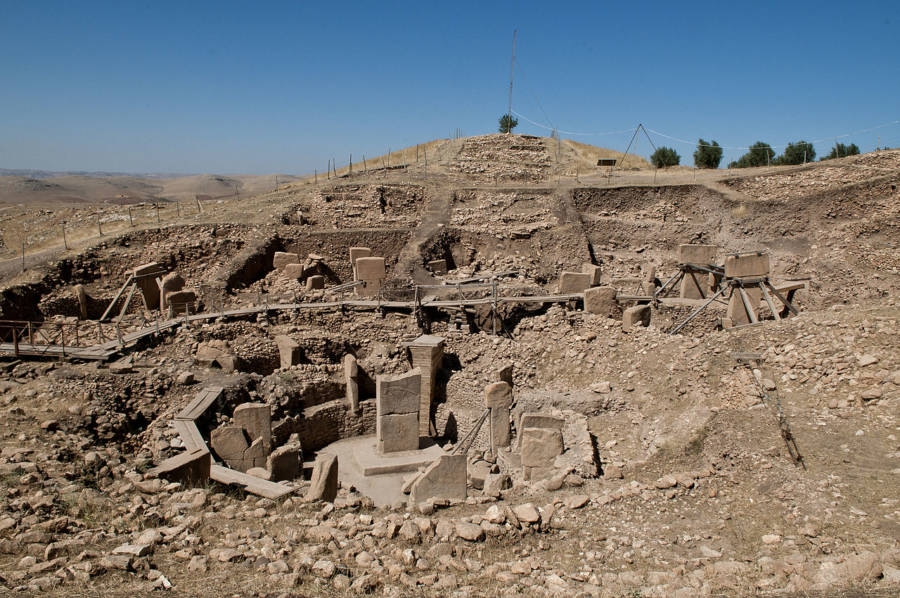 Wikimedia CommonsThe Gobekli Tepe dig site. May 13, 2012.“Gobekli changes everything,” says Ian Hodder, an anthropologist at Stanford University.It’s not an exaggeration. When Gobekli Tepe was uncovered in 1994, it changed everything we thought we knew about human history.Gobekli Tepe is a massive, ancient temple found in Turkey, built out of pillars organized into great stone rings. The pillars are decorated with intricate sculptures of lions, scorpions, and vultures, twisting around their sides, but they’re more than just beautiful works of art. They’re the foundations to a structure, holding upheaving blocks that, some of which weight more than 10 tons.The artwork and engineering is incredible. That anyone could have lifted up 10-ton stones and placed them atop a foundation strong enough to hold them in place is an incredible feat in any time.But what makes Gobekli Tepe so unbelievable is that it was built in 10th millennia BC – more than 11,500 years ago – and is actually the oldest temple in the world.
JUST HOW LONG AGO WAS 9,500 BC?
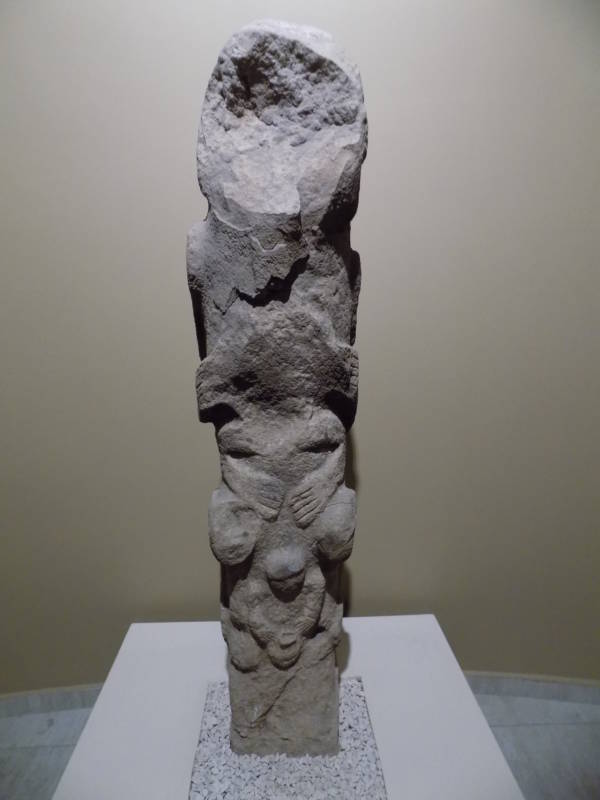 Wikimedia CommonsAn intricately sculpted totem pole from Gobekli Tepe. March 11, 2017.Let’s put that in perspective. Stonehenge was built in 3000 BC, and the oldest signs of human writing were created in Sumer in 3,300 BC. That means that Gobekli Tepe isn’t just older than written language. More time passed from the construction of Gobekli Tepe to the invention of the written word than from Sumer to today.Even agriculture didn’t exist yet – or, at least, certainly not in that area. There are, admittedly, some small signs of people growing crops before 9,500 BC, but it’s doubtful that there were any full-fledged communities with farms.The people who built Gobekli Tepe were what we’d call cavemen. They were hunters and gatherers working with tools made out of stone. And they managed to build something that should have been impossible.
KLAUS SCHMIDT’S DISCOVERY OF GOBEKLI TEPE
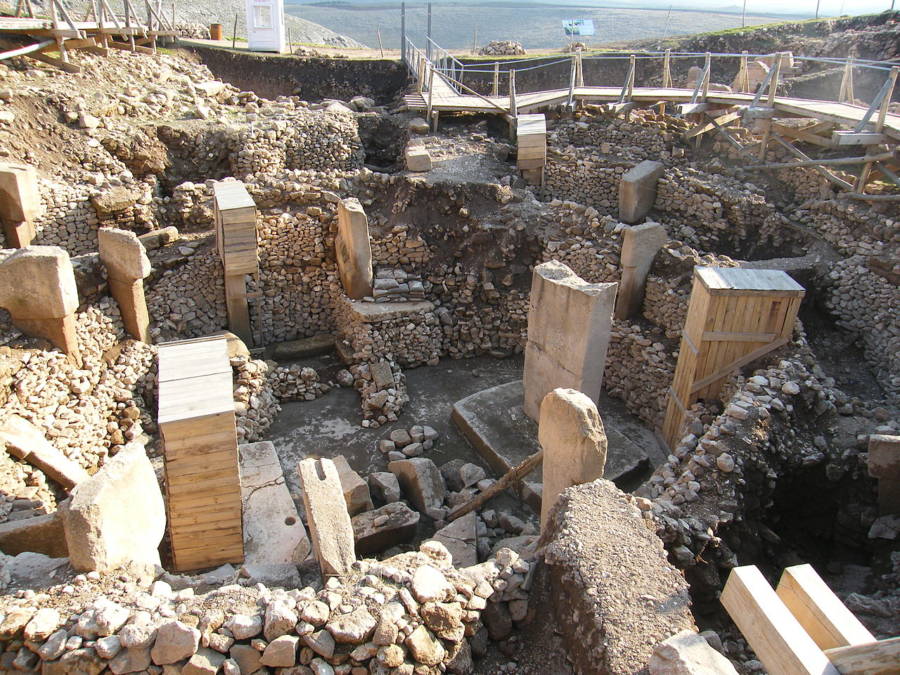 Wikimedia CommonsThe Gobekli Tepe Archaeological site. March 9, 2012.The archaeologists who first found Gobekli Tepe in the 1960s didn’t think it was anything more than a medieval graveyard. They had found a hill with broken slabs of limestone and didn’t bother looking further, sure there’d be nothing more than a few bones laid to rest a couple of centuries before.It wasn’t until 1994 that the truth came out. Klaus Schmidt, a German archaeologist, visited the site and realized immediately that there was something massive hidden underneath that hill. “Within a minute of first seeing it, I knew I had two choices,” Schmidt would later say: “go away and tell nobody, or spend the rest of my life working here.”He decided to stay, and he’s been working on the site ever since. It was worth it. Radiocarbon dating has confirmed that this temple really was built 11,500 years ago, making it easily one of the most significant archaeological discoveries in recent history.
A STONE AGE TEMPLE
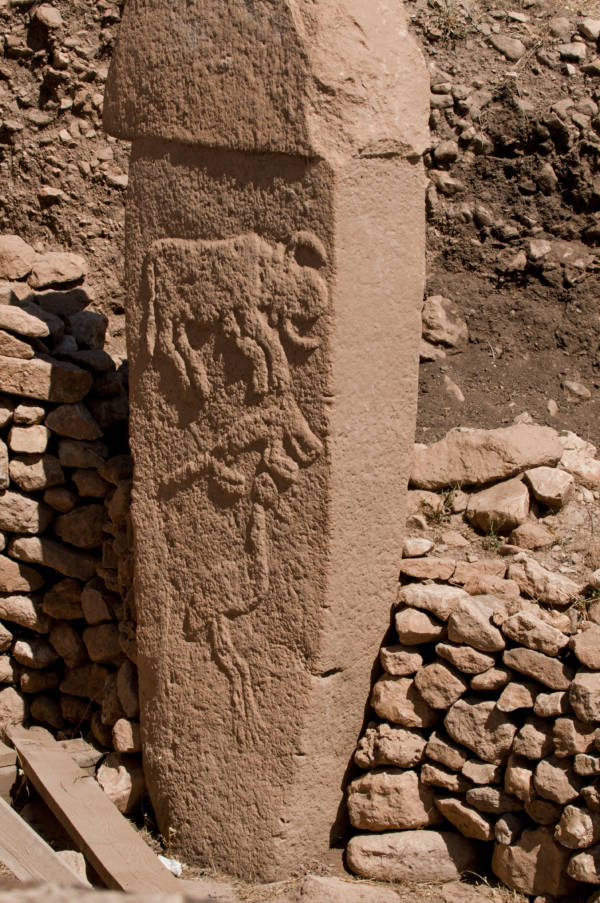 Wikimedia CommonsA close-up view of one of Gobekli Tepe’s pillars. September 6, 2011.It’s hard to say anything for sure about how a place as old as Gobekli Tepe was used. Schmidt is convinced, though, that it was built as a temple.There are no cooking hearths, houses, trash pits, or farms to suggest that anyone ever settled down and started a town around it. Instead, it seems that the people who used it were constantly on the move. They were nomadic hunters who couldn’t stay in one place for long.“It’s a landmark,” says Jens Notroff, an archaeologist who works on the site. “Back then people would have to meet regularly to keep the gene pool fresh and exchange information… It’s no accident they gathered there.”They would have massive feasts inside. That’s something we know for sure because they left countless animal bones behind. The animals they ate, though, were all wild animals like gazelle, deer, birds, and aurochs. They were animals that were hunted and carried off to the site for a meeting that must have held a deep, spiritual significance.There’s a good chance they got drunk during these meetings, too. Massive, stone jars were left behind at the temple site, big enough to hold more than 40 gallons of liquid. There’s no way to know for sure but the archaeologists suspect that liquid was an early type of beer.
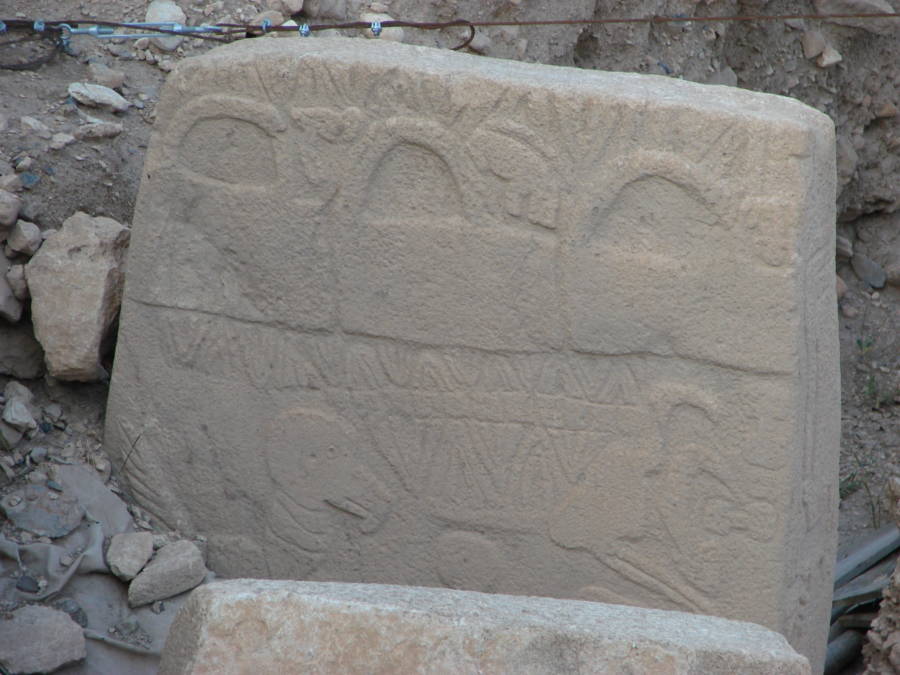 Wikimedia CommonsA close-up of one of the pillars, depicting what’s believed to be an image of an ancient god. June 12, 2011.People came from incredible distances to visit Gobekli Tepe.According to Schmidt, people from Israel and even as far as modern Egypt would have made the pilgrimage up to Gobekli Tepe – a trip that, if he’s right, would’ve required them to travel up to 1,500 kilometers.For anyone to travel that far, it would’ve had to have been the mandate of the gods. That’s part of the reason why the archaeological team is convinced that this was an ancient temple and that the carvings on the pillars are a glimpse into an ancient, Stone Age idea of the gods.“I think here we are face to face with the earliest representation of gods,” Schmidt says. “They have no eyes, no mouths, no faces. But they have arms and they have hands. They are makers. In my opinion, the people who carved them were asking themselves the biggest questions of all. What is this universe? Why are we here?”
GOBEKLI TEPE: A CHALLENGE TO HUMAN HISTORY
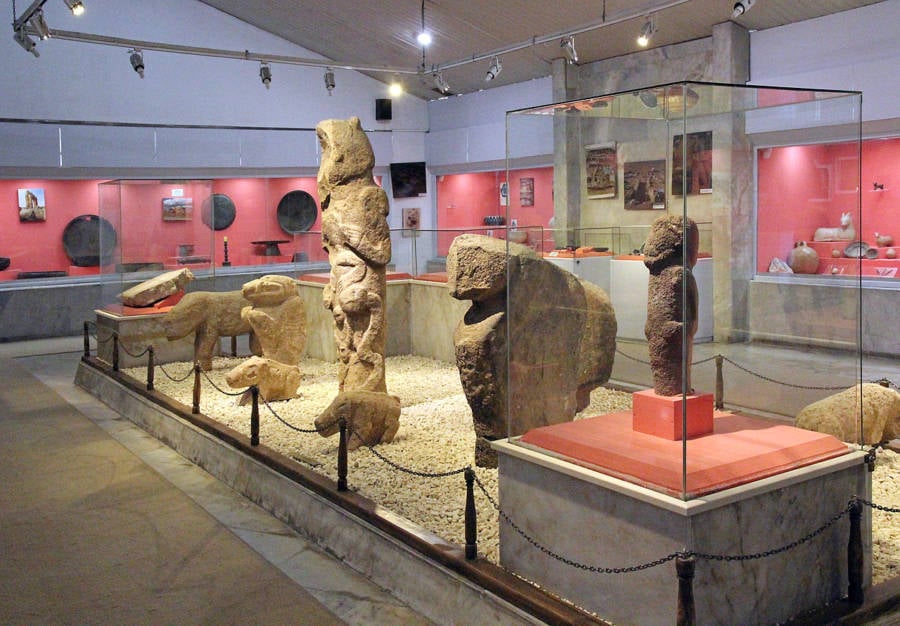 Wikimedia CommonsSculptures from Gobekli Tepe on display in a museum in Urfa, Turkey. May 13, 2012.This is more than just an old temple. It’s a discovery that forces us to seriously rethink some of the biggest ideas about how human civilization began.Before, it was always assumed that civilization began with agriculture. People settled into farming communities first, we believed, and then worked together to build the massive temples and buildings that would make up humanity’s first cities.Gobekli Tepe, though, was built 500 years before its people built their first farms. That might mean that our whole concept of how human civilization began needs to be rethought. Here, at least, people seem to have congregated and worked together to build a temple before even making their first farms.Perhaps culture came before agriculture. That’s what some people think Gobekli Tempe represents. The force that gave birth to civilization wasn’t necessity or survival – it was something spiritual.
„Gobekli schimbă totul”, spune Ian Hodder, antropolog la Universitatea Stanford.
Nu este o exagerare. De când Gobekli Tepe a fost descoperit, în 1994, acesta a schimbat tot ceea ce credeam că știm despre istoria umană. Gekekli Tepe este un templu masiv, antic, găsit în Turcia, construit din stâlpi de piatră organizați în structuri concentrice. Stâlpii sunt decorați cu sculpturi complexe cu lei, scorpioni și vulturi care spiralează de-a lungul lor, și sunt chiar mai mult decât niște simple opere de artă. Ei sunt baza unori structuri din blocuri de piatră care au o greutate de peste 10 tone. Lucrările de artă și inginerie sunt incredibile. Însăși faptul au putut să ridice pietre de 10 tone și să le așeze deasupra unei fundații suficient de puternice pentru a le susține este un lucru incredibil. Chiar și astăzi, o asemenea manoperă ar pune serioase probleme inginerilor. Iar asta a fost acum 11.500 de ani – fiind, de fapt, cel mai vechi templu, descoperit până acum, din lume.
Să punem asta în perspectivă. Stonehenge a fost construită în 3000 î.Hr., iar cele mai vechi semne de scriere umană au fost create în Sumer în 3.300 î.Hr. Aceasta înseamnă că Gobekli Tepe este chiar mai vechi decât limba scrisă. Mai mult timp a trecut de la construcția Gobekli Tepe la invenția cuvântului scris decât de la Sumer până în zilele noastre. Există, cu siguranță, câteva urme ale oamenilor care cultivă culturi înainte de 9 500 î.Hr., dar este îndoielnic că există comunități cu drepturi depline, tip fermă.
În conformitate, oamenii care au construit Gobekli Tepe au fost ceea ce am numi oameni de peșteră. Vânători și culegători care lucrau cu unelte din piatră. Și au reușit să construiască ceva care ar trebui să fie imposibil…
Arheologii care au găsit Gobekli Tepe pentru prima dată, în anii ’60, nu credeau că ar fi altceva decât un cimitir medieval. Găsiseră pe un deal dale rupte de calcar și nu s-au deranjat să privească mai departe, considerând că, desigur, nu va fi nimic altceva decât câteva oase puse la păstrare cu câteva secole mai înainte.
Abia în 1994 a apărut adevărul. Klaus Schmidt, un arheolog german, a vizitat situl și și-a dat seama imediat că se află ceva masiv ascuns sub acel deal. „Într-un minut după ce am văzut-o, știam că am două opțiuni”, avea să spună mai târziu Schmidt: „pleacă și nu mai spune nimănui sau petrece-ți restul vieții săpând aici.”, a mai ronțăit mucalit în barbă. A decis să rămână și de atunci lucrează la acest site. A meritat. Datarea cu carbon radioactiv a confirmat faptul că acest templu a fost construit cu adevărat acum 11.500 de ani, ceea ce îl face cu ușurință una dintre cele mai semnificative descoperiri arheologice din istoria recentă.
„Este greu să spun ceva sigur despre destinația Gobekli Tepe.” Schmidt este totuși convins că a fost construit ca un templu.
Nu există vatra de gătit, case, gropi de gunoi sau ferme care să sugereze că cineva s-a stabilit vreodată și a început un oraș în jurul său. În schimb, se pare că oamenii care l-au folosit erau în continuă mișcare. Erau vânători nomazi care nu puteau sta mult timp într-un singur loc.
„Este un reper”, spune Jens Notroff, un arheolog care lucrează pe șantier. „În acel moment, oamenii trebuiau să se întâlnească regulat pentru a păstra pool-ul genelor proaspăt și pentru a schimba informații … Nu s-a întâmplat nici un accident acolo. „Se făceau sărbători grandioase. Asta știm sigur pentru că au lăsat în urmă nenumărate oase de animale. Animalele pe care le-au mâncat erau totuși animale sălbatice precum gazele, căprioare, păsări, etc.. Erau animale vânate și duse la fața locului pentru o întâlnire care trebuie că avea o semnificație profundă, spirituală.
Se pare că se îmbătau la aceste întâlniri. Borcanele masive, de piatră, găsite în templu, sunt suficient de mari pentru a conține peste 40 de galoane de lichid. Nu există nici o modalitate de a ști sigur, dar arheologii bănuiesc că lichidul era un fel de bere.
Oamenii veneau de la distanțe incredibile pentru a vizita Gobekli Tepe.
Potrivit lui Schmidt, oamenii din Israel și chiar din Egiptul modern ar fi făcut pelerinajul până la Gobekli Tepe – o călătorie care, dacă ar avea dreptate, le-ar fi impus să călătorească peste 1.500 de kilometri.
Pentru ca cineva să călătorească atât de departe, ar fi trebuit să fie o persoană importantă a comunității, cel mai probabil: preotul.. Aceasta este o parte a motivului pentru care echipa arheologică este convinsă că acesta a fost un templu antic și că sculpturile pe stâlpi sunt expresia din epoca de piatră asupra zeilor. „Cred că aici suntem față în față cu cele mai timpurii reprezentări ale zeilor „, spune Schmidt. „Nu au ochi, nici guri, nici fețe. Dar au brațe și au mâini. În opinia mea, oamenii care i-au sculptat și-au pus aceleași întrebări ca și noi: Ce este acest univers? De ce suntem aici?”
Se presupunea că civilizația a început odată cu agricultura. Oamenii s-au instalat mai întâi în comunități agricole, au cultivat pământul și apoi au lucrat împreună pentru a construi templele și clădirile masive care au alcătuit primele orașe ale umanității.
Gobekli Tepe, însă, a fost construit cu 500 de ani înainte ca oamenii săi să-și construiască primele ferme. Aceasta ar putea însemna că întregul nostru concept despre cum a început civilizația umană ar trebuie să fie regândit. Aici, se pare, oamenii par să se fi reunit și au lucrat împreună pentru a construi un templu chiar înainte de a-și face primele ferme. Poate că cultura a venit înainte de agricultură. Asta cred unii arheologi că reprezintă Gobekli Tempe.
Forța care a dat naștere civilizației nu a fost doar necesitatea sau supraviețuirea – a fost o nevoie spirituală.

 Mihail stories