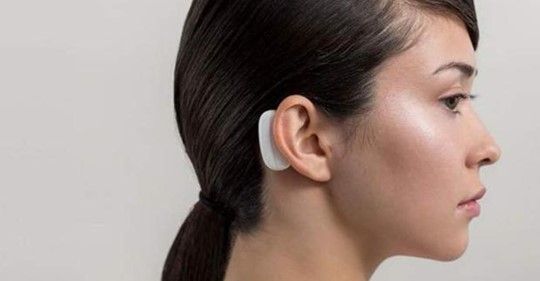
When Elon Musk bought Neuralink , a company that wants to develop the technology to connect our minds to the internet, most people thought it was another one of their „crazy ideas.” Later, the project was added to a silence of two years that has not been broken until this month, in which the controversial businessman also owner of the pioneering Tesla, SpaceX or Hyperloop has given a press conference to tell the world about his intentions. „It won’t be all of a sudden, but Neuralink will devise an artificial neural cord that can take control of people’s brains», He explained at the event. Using a computer only with the thought or any connected device, such as the television, the fridge and, of course, the mobile phone, only with a thought. That is the true nature and ambition of Neuralink.But at the moment only the first steps are being taken: the team has just released a study on the Biorxirv prepress page (that is, not yet peer-reviewed ) explaining how a „threading” interface works ” stitched »to the human brain and intended to help patients with amputated limbs move their robotic prostheses with thought alone.
A brain sewing machine
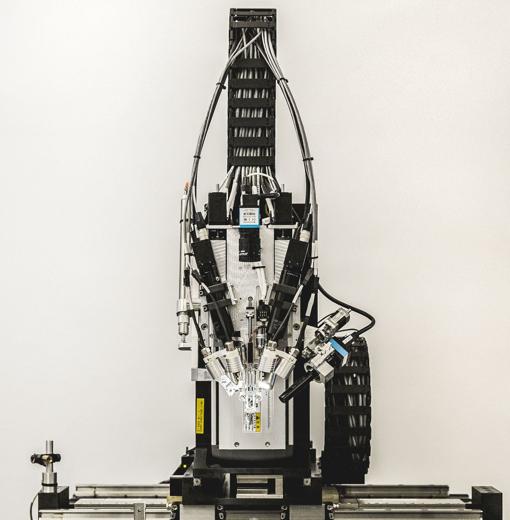
The technology consists of two parts: on the one hand, the aforementioned flexible threads, thinner than human hair , and which carry the electrodes that collect brain activity inside. On the other, the „sewing machine” that weaves these threads to the brain at the rate of six threads (192 electrodes) per minute . The combination of both provides a wiring that has as its main advantage that it avoids blood vessels, which reduces the negative aspects in case of inflammatory responses.
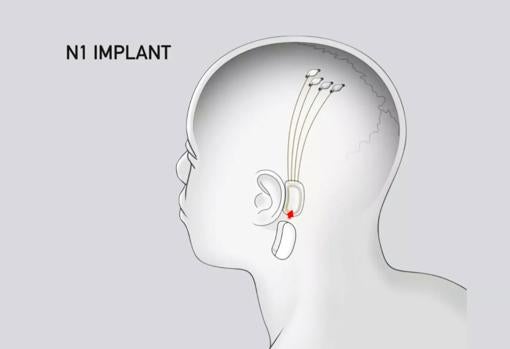
It is not a new idea, as similar interfaces have already been developed and are being tested, but Neuralink is much less invasive and harmful than previous systems. The idea is that the electrodes are connected to the brain through laser technology, and that externally the wires end in a kind of switch that is placed behind the ear (similar to a hearing aid) that through a Bluethooth or USB connection can connect with our mobile, which will have an application to manage the entire program.https://www.youtube.com/embed/r-vbh3t7WVI
Implantation in humans
The presentation stated that, for the moment, the system has been tested on rats with a high level of success and that they want to start testing on people in the second half of 2020 . In its early stages, this technology will focus on patients with robotic limbs, but it is intended to be expanded for patients who have lost their speech or hearing, to end up making commercial interfaces that allow us to use our mobile or computer with just our minds, Matrix mode (in fact, the film has been an inspiration to its engineers). Can Neuralink be the beginning of a new revolution?
Când Elon Musk a cumpărat Neuralink, o companie care dorește să dezvolte tehnologia pentru a ne conecta mințile la internet, majoritatea oamenilor au crezut că este o alta dintre „ideile lui trăznite”. Ulterior, proiectul a intrat într-o silențio stampa de doi ani, care nu a fost ruptă până în această lună, în care controversatul om de afaceri, de asemenea, proprietarul pionierilor Tesla, SpaceX sau Hyperloop a avut o conferință de presă în care și-a precizat intențiile. „Nu va fi dintr-o dată, dar Neuralink va concepe un cordon neuronal artificial”, a explicat el la eveniment. Folosind un computer sau orice dispozitiv conectat, cum ar fi televizorul , frigiderul și, bineînțeles, telefonul mobil, doar cu gândul. Aceasta este adevărata natură și ambiția Neuralink. Dar, în acest moment, doar primii pași sunt făcuți: echipa tocmai a lansat un studiu pe pagina de prepress Biorxirv explicând modul în care o „threading ” interfață funcționează cusută la creierul uman și destinată pentru a ajuta pacienții cu membrele amputate de a se folosi de protezele lor robotice doar folosindu-și propria gândire.
Tehnologia este formată din două părți: pe de o parte, firele flexibile, mai subțiri decât părul uman, care duc la electrozii care colectează activitatea creierului din interior. Pe de altă parte, „mașina de cusut” care țese aceste fire pe creier cu viteza de șase fire (192 electrozi) pe minut. Combinația ambelor oferă un cablaj care are ca principal avantaj faptul că evită vasele de sânge, ceea ce reduce aspectele negative în cazul răspunsurilor inflamatorii. Nu este o idee nouă, deoarece interfețele similare au fost deja dezvoltate și sunt testate, dar Neuralink este mult mai puțin invaziv și dăunător decât sistemele anterioare. Ideea este că electrozii sunt conectați la creier prin intermediul tehnologiei laser și că, în exterior, firele se termină într-un fel de comutator care este plasat în spatele urechii (similar cu un aparat auditiv) care printr-o conexiune Bluethooth sau USB se poate conecta cu un mobil, care va avea o aplicație pentru gestionarea întregului program.
În expunere Musk a declarat că, pentru moment, sistemul a fost testat pe șobolani cu un nivel ridicat de succes și că vor să înceapă testarea pe oameni în a doua jumătate a anului 2020. În fazele sale incipiente, această tehnologie se va concentra pe pacienții cu membre robotice, dar este destinată extinderii pentru pacienții care și-au pierdut vorbirea sau auzul, pentru a ajunge la crearea de interfețe comerciale care să ne permită să folosim mobilul sau computerul nostru doar cu mintea, modul Matrix (de fapt, filmul a fost o inspirație pentru inginerii săi).
Neuralink poate fi începutul unei noi revoluții?

 Mihail stories