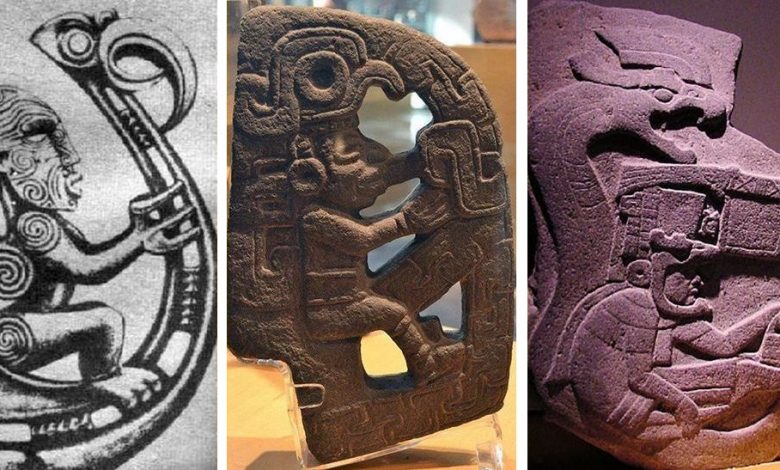
HOW IS IT POSSIBLE THAT THE ANCIENT OLMEC, AZTECS, EGYPTIANS, AND CULTURES AS THOSE IN NEW ZEALAND SHARE DEPICTIONS OF THEIR GODS—WHO CAME DOWN FROM HEAVEN—WITH MINDBOGGLING SIMILARITY?THE HISTORY OF THE DEVELOPMENT OF CIVILIZATION ON EARTH IS FAR FROM UNDERSTOOD.
History books have been rewritten in the past, and will continue to do so with each new discovery on Earth that pushes are understanding of mankind and its origins further into the shadows of doubt.
History is complex, and civilizations on Earth are even so. Evidence of complex societies existing on Earth thousands of years ago is nothing short of extraordinary, and evidence of their level of development speaks for themself. We don’t need to invoke aliens and extraterrestrial visitations when trying to explain how ancient cultures around the globe achieved the unimaginable thousands of years ago.
Mankind is more than capable. Humankind has no limits. And it is because of this why we have still not fully understood our ancestors.
Many experts in the past have given inadequate credit to ancient civilizations. Until a few years ago, it was thought impossible for ancient cultures existing around 13,000 years ago to have built megalithic temples, to have quarried multi-ton stones, and to have erected some of the most sophisticated structures in the history of humankind.This all changed, for example, when experts stumbled across the ruins of Gobekli Tepe in the 1990s and realized that already between 12,000 and 13,000 years ago, there were complex societies on Earth.
What if I told you that all ancient cultures were somehow connected thousands of years ago?
Have you ever wondered why there are so many similarities among ancient cultures around the globe?
Mainstream scholars maintain how cultures in Africa, America, Europe, and Asia weren’t interconnected in ancient times, and that it was impossible for them to have made contact.
Despite these claims, numerous archeological discoveries suggest otherwise, offering conclusive evidence that significantly contradicts mainstream views on our history.
Take, for example, ancient monuments scattered across the globe.
Numerous ancient sites in South America display incredible similarities in design and construction to monuments erected halfway across the world, in Africa and even Asia.
Are these similarities a mere coincidence? Or is there a possibility that all of these ancient cultures were interconnected somehow?
How is it possible that the ancient Olmecs, Aztecs, Egyptians, and cultures as those in New Zealand share depictions of their gods—who came down from heaven—with mindboggling similarity?Is this just another example of random cultural spread? Or is it possible there is more to it than we are willing to accept?
Ancient Olmecs and the La Venta Stele 19
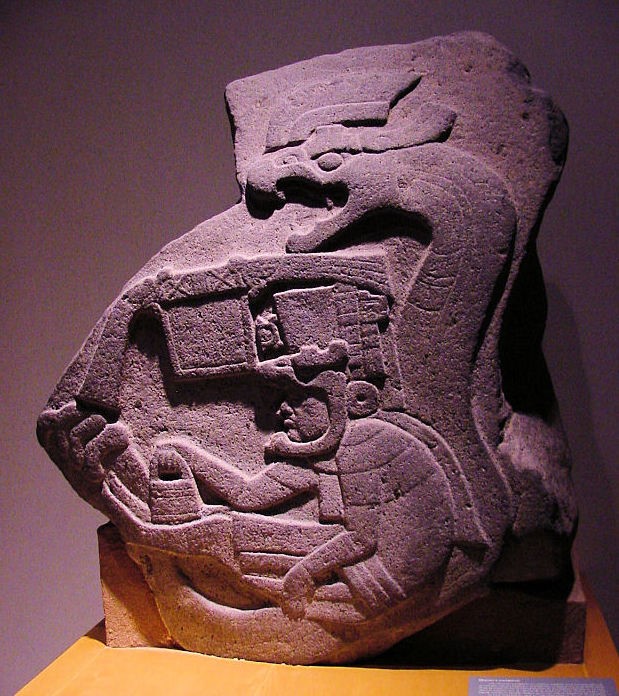
A photo of La Venta Stela 19, the earliest known representation of the Feathered Serpent in Mesoamerica. Image Credit: Wikimedia Commons.
‘La Venta’ stele 19 offers the earliest known representation of the Feathered Serpent in Mesoamerica. The feathered serpent was known across ancient cultures in Mexico as either Kukulkan or Quetzalcoatl. This ancient deity is said to have arrived from the heavens bringing great knowledge to ancient cultures.
La Venta is an ancient archaeological site that belonged to the ancient Olmec Civilization. Curiously, the Olmecs were one of the first civilizations to develop in the Americas.
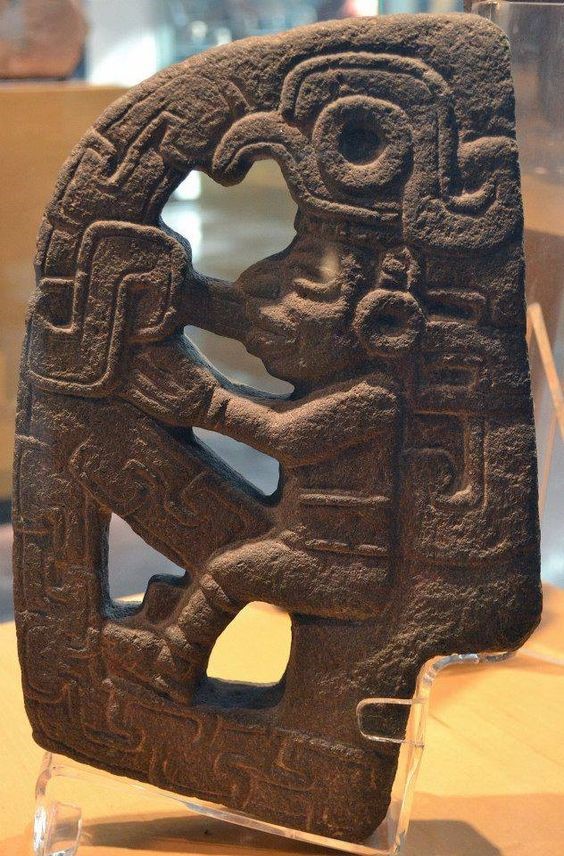
Another depiction of a deity inside of what appears to be a kind of machine? Image credit: Museo Nacional de Antropología – INAH
‘La Venta’ stele 19 offers a curious representation of the feathered serpent. However, interpretations of what we are looking at can vary. An interesting alternative explanation could be the following: A humanoid figure sitting in some kind of ‘vehicle’ or ‘chair,’ manipulating some sort of device.
At first, this may not sound extraordinary or weird.
However, it becomes strange when you find nearly identical representations of gods, halfway around the world in New Zealand.
The Maori legend, and the God Pourangahua
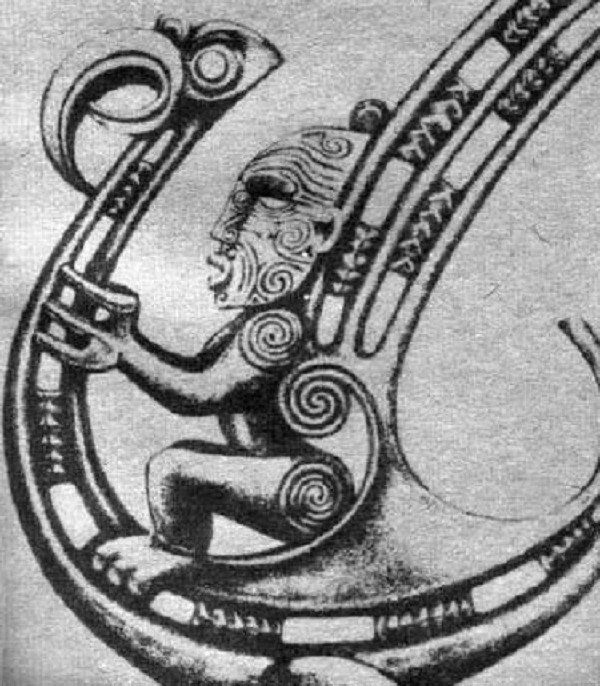
Image Credit: Biblioteca Pleiades
According to the Maori legend, the God Pourangahua flew on his magic’ bird’ from his legendary dwelling Hawaiki to New Zealand.
Curiously, according to legend, this ancient God came from heaven, riding a ‘silver bird.’
In fact, if we take a look at one of the oldest Maori prayers, we will find its attribution to the deity Pourangahua.
“I come, and unknown Earth lies below my feet. I come, and new heaven turns above me. I come on to this Earth, and it is a peaceful resting-place for me. O spirit of the planets! The stranger humbly offers you his heart as nourishment.”
If we compare the depiction of the feathered serpent in ancient Mesoamerica folklore to the God Pourangahua, we find a mysterious connection: both are represented nearly identically.
How is this possible? A mere coincidence? But there are are more fascinating examples that are too great a coincidence.
Let’s travel from ancient Maori legends to the lands of ancient Egypt.
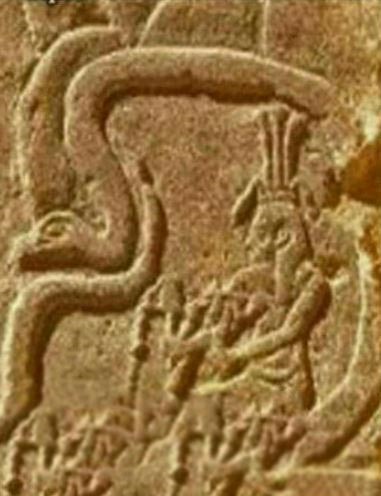
Another ancient God depicted in a sort of flying’ snake. Image Credit: Pinterest.
Ancient Egypt is a treasure trove whose history has been written down in stone. There, we find a mysterious representation of the ancient Egyptian God Hapi. When I say mysterious, that’s because of the uncanny similarities to other deities around the globe.
Referred to as the “father of the gods,” Hapi was the God of the annual flooding of the Nile in ancient Egyptian religion. This ancient Egyptian God symbolized fertility. This ancient Egyptian God also was usually given blue or green skin, which, according to scholars, represents the water.
Take a look at how he is sometimes depicted; Once again, we have a strange similarity to the feathered serpent in Mesoamerica, and the God Pourangahua from ancient Maori folklore.
BACK TO MESOAMERICA
Another interesting depiction is that of ancient Maya King K’inich Janaab’ Pakal.
Carved lid of the tomb of Kʼinich Janaab Pakal I is curious, to say the least. If we look at an alternative explanation to what the lid depicts, we can say that the ancient Maya King appears to be sitting in some sort of “device”, manipulating some sort of controls.
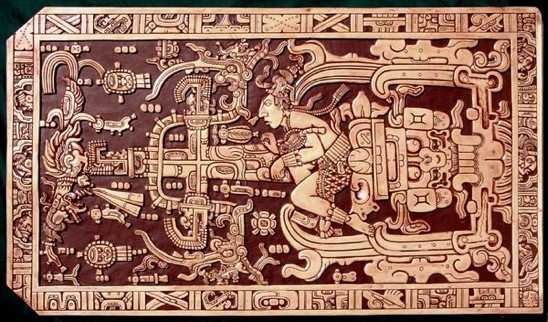
The carved lid of King Pakal is one of the most talked-about subjects when it comes to the ancient alien theory.
Ancient alien theorists propose that it depicts King Pakal in some kind of spaceship during takeoff, and they argue that his hands appear to be manipulating some sort of machinery, his foot is located on a pedal while he is breathing through some sort of breathing apparatus. The theory about Pakal’s spaceship was first proposed by Erich von Däniken in his book Chariots of the Gods. Once again, we see a depiction of a figure inside of some sort of machine.
Despite the fact that some invoke extraterrestrial explanations when trying to understand the odd depictions of King Pakal, his large stone sarcophagus lid is a unique piece of Classic Maya Art iconography whose central idea is wrapped around the symbolism of the world trees, the sun, the moon, and stars. The central image on the sarcophagus lid is said to depict a cruciform world tree, and beneath the King is an illustration of a two-headed serpent.
ESTE POSIBIL CA VECHII OLMEC, AZTECI, EGIPTENI ȘI CULTURI CA CEI DIN NOUA ZEELANDĂ SĂ ÎMPĂRTĂȘEASCĂ REPREZENTĂRI ALE ZEILOR LOR — CARE AU COBORÂT DIN CER — CU ASEMĂNARE ULUITOARE? ISTORIA DEZVOLTĂRII CIVILIZAȚIEI PE PĂMÂNT ESTE DEPARTE DE A FI ÎNȚELEASĂ.
Cărțile de istorie au fost rescrise în trecut și vor continua să facă acest lucru cu fiecare nouă descoperire de pe Pământ care împinge înțelegerea omenirii și originile ei mai departe de umbrele îndoielii.
Istoria este complexă, iar civilizațiile de pe Pământ sunt chiar așa. Dovezile societăților complexe existente pe Pământ cu mii de ani în urmă nu sunt deloc extraordinare și dovezile ale nivelului lor de dezvoltare vorbesc de la sine. Nu trebuie să invocăm extratereștri și vizite extraterestre atunci când încercăm să explicăm cum culturile antice de pe glob au atins inimaginabilul cu mii de ani în urmă.
Omenirea este mai mult decât capabilă. Omenirea nu are limite. Și din această cauză nu i-am înțeles încă pe strămoșii noștri.
Mulți experți din trecut au acordat un credit inadecvat civilizațiilor antice. Până acum câțiva ani, se credea imposibil ca culturile antice, existente în jurul a 13.000 de ani, să fi construit temple megalitice, să aibă cariere de piatră în care să debiteze blocuri de piatră de zeci de tone,și să fi ridicat unele dintre cele mai sofisticate structuri din istoria omenirii. Asta s-a schimbat, de exemplu, atunci când experții au dat peste ruinele Gobekli Tepe în anii 1990 și au realizat că deja între 12.000 și 13.000 de ani în urmă, pe Pământ existau societăți complexe.
Dar dacă v-aș spune că toate culturile antice au fost cumva conectate acum mii de ani?
V-ați întrebat vreodată de ce există atât de multe asemănări între culturile antice de pe glob?
Cercetătorii susțin că culturile din Africa, America, Europa și Asia nu erau interconectate în timpuri străvechi și că le era imposibil să fi luat contact.
În ciuda acestor afirmații, numeroase descoperiri arheologice sugerează altfel, oferind dovezi concludente care contrazic în mod semnificativ opiniile mainstream despre istoria noastră.
Luați, de exemplu, monumente antice împrăștiate pe tot globul.
Numeroase situri antice din America de Sud prezintă asemănări incredibile în ceea ce privește proiectarea și construcția monumentele ridicate pe tot pământul, în Africa și chiar în Asia.
Aceste asemănări sunt o simplă coincidență? Sau există posibilitatea ca toate aceste culturi străvechi să fie interconectate cumva?
Cum este posibil ca olmecii, aztecii, egiptenii și culturile antice ca cele din Noua Zeelandă să împărtășească reprezentări ale zeilor lor – care au coborât din cer – cu atâta similitudine de gândire? Este doar un alt exemplu de răspândire culturală aleatorie? Sau este posibil să existe mai mult decât suntem dispuși să acceptăm?
Stele 19 „La Venta” oferă cea mai veche reprezentare cunoscută a șarpelui cu pene în Mesoamerica. Șarpele cu pene a fost cunoscut în culturile antice din Mexic sub numele de Kukulkan sau Quetzalcoatl. Se spune că această zeitate străveche a sosit din ceruri aducând cunoștințe mari culturilor antice.
La Venta este un vechi sit arheologic care a aparținut vechii civilizații Olmec. Curios, olmecii au fost una dintre primele civilizații care s-au dezvoltat în America.
Stele 19 „La Venta” oferă o reprezentare curioasă a șarpelui cu pene. Cu toate acestea, interpretările a ceea ce privim pot varia. O explicație alternativă interesantă ar putea fi următoarea: o figură umanoidă care stă într-un fel de „vehicul” sau „scaun”, manipulând un fel de dispozitiv.
La început, acest lucru poate să nu pară extraordinar sau ciudat.
Cu toate acestea, devine ciudat când găsești reprezentări aproape identice ale zeilor tocmai în Noua Zeelandă.
Conform legendei Maori, Zeul Pourangahua a zburat cu pasărea sa magică din legendara sa locuință Hawaiki în Noua Zeelandă.
Curios, potrivit legendei, acest Dumnezeu străvechi a venit din cer, călărind o „pasăre de argint”.
De fapt, dacă aruncăm o privire la una dintre cele mai vechi rugăciuni maori, vom găsi atribuirea sa față de zeitatea Pourangahua.
„Vin și Pământul necunoscut se află sub picioarele mele. Vin și cerul nou se întoarce deasupra mea. Vin pe acest Pământ și este un loc liniștit de odihnă pentru mine. O spiritul planetelor! Străinul îți oferă cu umilință inima. ”
Dacă comparăm reprezentarea șarpelui cu pene din folclorul antic Mesoamerica cu Dumnezeul Pourangahua, vom găsi o legătură misterioasă: ambele sunt reprezentate aproape identic.
Cum este posibil acest lucru? O simplă coincidență? Există însă exemple mai fascinante, care sunt o coincidență prea mare.
Să călătorim din legendele maori străvechi în țările Egiptului antic.
Egiptul Antic este un tezaur a cărui istorie a fost scrisă în piatră. Acolo, găsim o reprezentare misterioasă a vechiului zeu egiptean Hapi. Când spun misterios, asta se datorează similitudinilor neobișnuite cu alte zeități de pe glob.
Denumit „tatăl zeilor”, Hapi era Dumnezeul inundațiilor anuale ale Nilului în religia egipteană antică. Acest vechi zeu egiptean simboliza fertilitatea. Acestui zeu antic egiptean i se oferea de obicei piele albastră sau verde, care, potrivit savanților, reprezintă apa.
Aruncați o privire la cum este înfățișat uneori; Încă o dată, avem o asemănare ciudată cu șarpele cu pene din Mesoamerica și Dumnezeul Pourangahua din folclorul maor antic.
ÎNAPOI LA MESOAMERICA
O altă ilustrare interesantă este cea a vechiului rege maya Kinich Janaab ”Pakal.
Capacul sculptat al mormântului lui Kʼinich Janaab Pakal I este cel puțin curios. Dacă ne uităm la o explicație alternativă la ceea ce înfățișează capacul, putem spune că vechiul rege Maya pare să stea într-un fel de „dispozitiv”, manipulând un fel de controale.
Capacul sculptat al regelui Pakal este unul dintre cele mai discutate subiecte atunci când vine vorba de vechea teorie extraterestră.
Teoreticienii străini antici propun să-l înfățișeze pe regele Pakal într-un fel de navă spațială în timpul decolării și susțin că mâinile lui par să manipuleze un fel de utilaj, piciorul este așezat pe o pedală în timp ce respiră printr-un fel de aparat respirator. Teoria despre nava spațială a lui Pakal a fost propusă pentru prima dată de Erich von Däniken în cartea sa „Chariots of the Gods”. Încă o dată, vedem o reprezentare a unei figuri în interiorul unui fel de mașină.
În ciuda faptului că unii invocă explicații extraterestre atunci când încearcă să înțeleagă înfățișările ciudate ale regelui Pakal, capacul său mare de sarcofag din piatră este o piesă unică a iconografiei clasice Maya Art a cărei idee centrală este înfășurată în jurul simbolismului copacilor lumii, al soarelui, al luna și stelele. Imaginea centrală de pe capacul sarcofagului se spune că înfățișează un copac mondial cruciform, iar sub Rege este o ilustrare a șarpelui cu două capete.

 Mihail stories
.jpg)