NASA Is Going To Send A Submarine To Saturn’s Sea-Covered Titan
The majority of Earth is covered in an ocean of liquid water, but the other worlds in our Solar System are a whole lot different. Most don’t have any kind of liquid on their surface, and while we know that there is definitely a liquid ocean under the thick ice of Enceladus, it might pose a big challenge to explore.
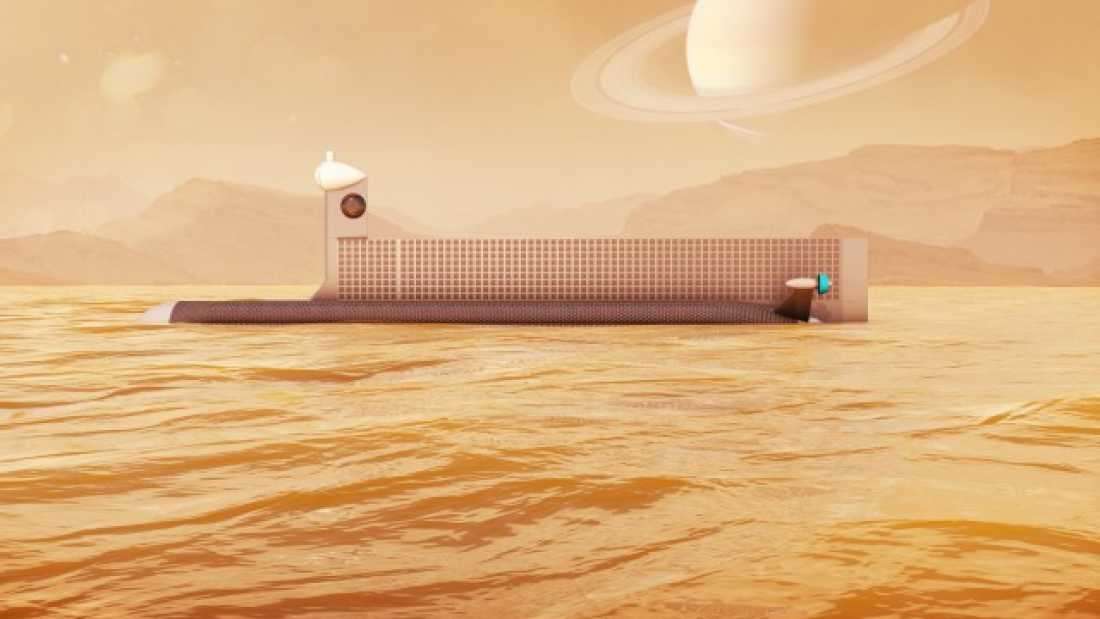
One of Saturn’s other moons, Titan, is one of the very few objects in the Solar System with liquid right out in the open, and NASA is targeting its seas for a future mission that will send a submarine to explore what lies below.
The biggest challenge for NASA engineers is dealing with the fact that the massive bodies of liquid aren’t water at all, but hydrocarbons such as super-cooled methane. A new paper describing the ongoing research into the potential makeup of the seas, and how NASA’s submarine would need to be designed in order to actually survive in them, was just published in the journal Fluid Phase Equilibria.
“NASA is designing an unmanned submarine to explore the hydrocarbon rich seas of Saturn’s moon Titan,” the researchers write. “Titan is the only known celestial body in our solar system other than Earth with stable liquid seas on its surface. The thermodynamic properties of Titan’s seas have not been well characterized. This work investigates the solubility of nitrogen in varying liquid methane-ethane compositions and the effects of dissolved nitrogen on the density of the sea.”
The team, made up of scientists from the Hydrogen Properties for Energy Research (HYPER) Laboratory at Washington State University, simulated the incredibly frigid temperatures and intense pressure that a vehicle would have to endure while exploring Titan’s seas. They found that observing and recording visual data would be a huge hurdle, as most camera technology simply wouldn’t survive the harsh conditions.
They got around this by using a tool called a borescope, which uses a long, thick cord or rigid tube. The tube acts like an extended optical relay system, and as light enters it travels down the tube before it strikes the objective lens that turns it into an actual image that can be viewed through the eyepiece or, in this case, captured, recorded, and relayed back to Earth. Because the lens itself is separated from the tip of the optical relay it can be protected from the harsh conditions outside the submarine.
There’s still a lot of work to be done before NASA can move forward with its planned mission, but with an actual launch date still two decades away there’s plenty of time to get it right. At least now we know it’ll have functional eyes.

NASA va trimite un submarin către titan, satelitul acoperit de mare al lui Saturn
Mare parte a Pământului este acoperită de un ocean de apă lichidă, dar celelalte lumi din sistemul nostru solar sunt foarte diferite. Majoritatea nu au niciun fel de lichid la suprafață și, deși știm că există cu siguranță un ocean lichid sub gheața groasă a lui Enceladus, ar putea reprezenta o mare provocare de explorat
Una dintre celelalte luni ale lui Saturn, Titan, este unul dintre puținele corpuri din sistemul solar cu lichid chiar în aer liber, iar NASA îi țintește mările pentru o viitoare misiune în care va trimite un submarin să exploreze ceea ce se află în adânc.
Cea mai mare provocare pentru inginerii NASA constă în faptul că corpurile masive de lichid nu sunt deloc apă, ci hidrocarburi precum metanul super-răcit. O nouă lucrare care descrie cercetările aflate în desfășurare în ceea ce privește structura potențială a mărilor și modul în care ar trebui proiectat submarinul NASA pentru a supraviețui efectiv în ele, tocmai a fost publicată în revista Fluid Phase Equilibria.
„NASA proiectează un submarin fără pilot pentru a explora mările bogate în hidrocarburi ale lunii Titan a lui Saturn”, scriu cercetătorii. „Titanul este singurul corp ceresc cunoscut din sistemul nostru solar, altul decât Pământul, cu mări lichide stabile la suprafață. Proprietățile termodinamice ale mărilor lui Titan nu au fost bine caracterizate. Această lucrare investighează solubilitatea azotului în diferite compoziții lichide metan-etan și efectele azotului dizolvat asupra densității mării. ”
Echipa, formată din oameni de știință de la laboratorul Hydrogen Properties for Energy Research (HYPER) de la Universitatea de Stat din Washington, a simulat temperaturile incredibil de scăzute și presiunea intensă pe care ar trebui să o suporte un vehicul în timp ce explorează mările Titanului. Au descoperit că observarea și înregistrarea datelor vizuale ar fi un obstacol uriaș, deoarece majoritatea tehnologiei camerelor pur și simplu nu ar supraviețui condițiilor dure.
Au ocolit acest lucru folosind un instrument numit borescop, care folosește un cablu lung sau gros sau un tub rigid. Tubul acționează ca un sistem de releu optic extins și, pe măsură ce intră lumina, se deplasează pe tub înainte de a atinge obiectivul obiectiv care îl transformă într-o imagine reală care poate fi vizualizată prin ocular sau, în acest caz, capturată, înregistrată și reluat înapoi pe Pământ. Deoarece obiectivul în sine este separat de vârful releului optic, acesta poate fi protejat de condițiile dure din afara submarinului.
Mai sunt multe lucruri de făcut înainte ca NASA să poată merge mai departe cu misiunea sa planificată, dar cu o dată de lansare efectivă, care se află încă la două decenii distanță, există suficient timp pentru a o face corectă. Cel puțin acum știm că va avea ochi funcționali.

 Mihail stories