
Toamnă gri…
Tot ceea ce ne putem imagina este real
In a complex system of caves in Mexico, an amazing discovery has been made close to the boundaries of Puebla and Veracruz. Jada stones have been found and they have engravings on them that seemingly show aliens and UFOs. The stones might date back to Mayan times and this may be confirmation that contact with aliens and humans was made during ancient times. The discovery was made in March 2017 but it was only a few days ago when the first images of the strange engraved stones emerged. ENCOUNTER BETWEEN THE MAYAN CIVILIZATION AND ALIENS? The stones were found by a group of treasure seekers, Manuel Rangel Vigueras, the Master Detector and Jose Aguayo the JAC Detector.
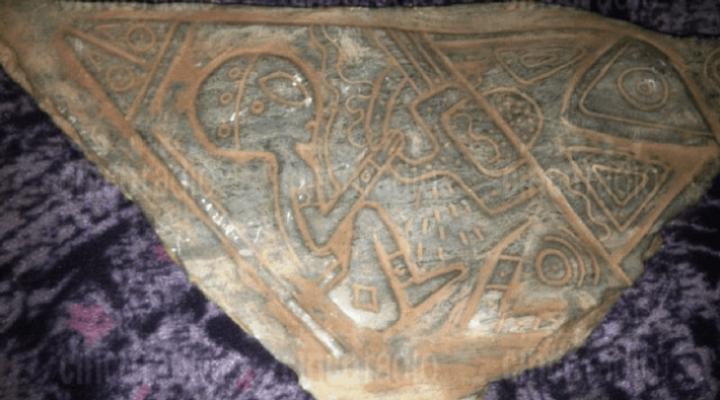
They shared an expedition and accidentally found a carved stone inside a cave three months ago which had alien forms. To find the cave the team had to walk for many hours going through undergrowth before they reached three private caves that were between Puebla and Veracruz. Surprising discoveries were made in two of the caves and in one of them, they found several stones with engravings that suggest there had been a relationship between alien life and humans. In the other cave, they found metal and the treasure seekers believe that it could be gold. One of the stones shows what seems to be the upper part of a spacecraft and also seen on the stones is something that seems to represent an alien. There are also many symbols on the stones that have yet to be deciphered. Local people believe that caves are located close to a place where an alien spacecraft might have become trapped or it could have become embedded in the cave. This is the legend that made the group begin to search and they got the help of the landowner and made their first visit three months ago. Not only did they come across the cave but they also found the engraved stones which feature pictures of figures that are non-human. Jose Aguayo said that the INAH could not say anything due to the fact that it is not archaeology. The explorers said that after they had looked at the cave using devices but they had not found anything and they were getting ready to leave the caves. However, one of the team members had an accident and slipped and he was sunk in the water and sand in the Curva del River. It was when they rescued the team member and began to untangle him that they made the discovery. He went on to say that the discovery would change his life and it was the first of the carved stones that represented an encounter between man and an alien race. Later on, they found more stones and these showed a spacecraft along with a being that did not look human and what looked to be corn, along with other symbols. The explorers said that the discovery reveals an encounter between the Mayan or Aztec civilization and aliens from another world.
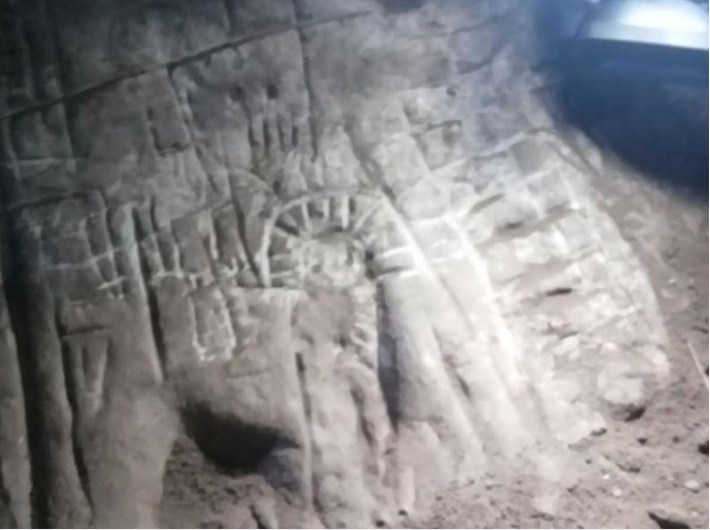
They said that they had a theory that there were those who were shipwrecked in the cosmos and then rescued and before they left they had left indelible proof of their stay in remote caves hidden from view. The engraved stones are said to be numerous and they have engraved designs that are varied but all seem to show a UFO along with aliens and a tribal leader with what looks to be a sheaf of wheat in his hand. The researchers also found pictograms on the walls of the cave, which also suggest that there was an ancient alien encounter. There is going to be more studies made to find out if the stones are real or fake. If they are found to be real it could be proof that aliens do exist and they have visited Earth a long time ago.
Într-un sistem complex de peșteri din Mexic, aproape de granițele Puebla și Veracruzo a fost făcută o descoperire uimitoare. Au fost găsite pietre Jada care au gravuri pe ele ce imaginează extratereștri și OZN-uri. Pietrele ar putea fi din epoca mayașă și aceasta poate fi o confirmare a faptului că contactul extratereștrilor cu oamenii a fost făcut în timpurile străvechi. Descoperirea a fost făcută în martie 2017, dar abia acum câteva zile au apărut primele imagini ale ciudatelor pietre gravate. ÎNTÂLNIRE ÎNTRE CIVILIZAȚIA MAYA ȘI STRĂINI? Pietrele au fost găsite de un grup de căutători de comori, Manuel Rangel Vigueras (Master Detector) și Jose Aguayo (JAC Detector).
Au plecat împreună într-o expediție și au găsit accidental o piatră sculptată în interiorul unei peșteri în urmă cu trei luni, care avea picturi cu extratereștri. Pentru a găsi peștera, echipa a trebuit să meargă multe ore trecând prin tufișuri înainte de a ajunge la trei peșteri private care se aflau între Puebla și Veracruz. Descoperiri surprinzătoare au fost făcute în două dintre peșteri și într-una dintre ele, au găsit mai multe pietre cu gravuri care sugerează că a existat o relație între viața extraterestră și oameni. În cealaltă peșteră, au găsit metal și căutătorii de comori cred că ar putea fi aur. Una dintre pietre arată ceea ce pare a fi partea superioară a unei nave spațiale și, de asemenea, gravat pe piatră este ceva care pare să reprezinte un extraterestru. Există, de asemenea, multe simboluri care nu au fost încă descifrate. Localnicii cred că peșterile sunt situate aproape de un loc în care o navă spațială extraterestră ar fi putut fi ascunsă. Aceasta este legenda care a făcut ca grupul să înceapă să caute, au primit acordul proprietarului terenului și au făcut prima lor vizită acum trei luni. Nu numai că au dat peste peșteră, dar au găsit și pietrele gravate care prezintă imagini cu figuri care nu sunt umane. Jose Aguayo a spus că INAH nu a putut spune nimic din cauza faptului că nu este arheolog. Exploratorii au spus că după ce s-au uitat la peșteră folosind dispozitive, dar nu au găsit nimic și se pregăteau să părăsească peșterile. Cu toate acestea, unul dintre membrii echipei a avut un accident și a alunecat și a fost scufundat în apă și nisip în râul Curva del. Atunci când l-au salvat pe membru al echipei, au făcut descoperirea. El a continuat spunând că descoperirea îi va schimba viața și că prima dintre pietrele sculptate a reprezentat o întâlnire între om și o rasă extraterestră. Mai târziu, au găsit mai multe pietre și acestea au arătat o navă spațială împreună cu o ființă care nu arăta umană și ceea ce părea a fi porumb, împreună cu alte simboluri. Exploratorii au spus că descoperirea dezvăluie o întâlnire între civilizația maya sau aztecă și extratereștrii din altă lume.
Ei au spus că au avut o teorie conform căreia au fost naufragiați în cosmos și apoi salvați și, înainte de plecare, au lăsat dovezi de neșters ale șederii lor în peșterile îndepărtate, ascunse de vedere. Se spune că pietrele gravate sunt numeroase și au desene gravate variate, dar toate par să arate un OZN împreună cu extratereștrii și un lider tribal cu ceea ce pare a fi un snop de grâu în mână. Cercetătorii au găsit, de asemenea, pictograme pe pereții peșterii, care sugerează, de asemenea, că a existat o întâlnire străină străveche. Se vor face mai multe studii pentru a afla dacă pietrele sunt reale sau false. Dacă se descoperă că sunt reali, ar putea fi dovada faptului că extratereștrii există și au vizitat Pământul cu mult timp în urmă.
Fericire pe țigani. Estimarea fierului vechi din termoficarea Bucureștiului este de 78000 de tone. 4000 de km de țevi, a doua din lume după Moscova.

It was found along the side of a road in a remote Australian gold rush town. In the old days, Wedderburn was a hotspot for prospectors – it occasionally still is – but nobody there had ever seen a nugget quite like this one.
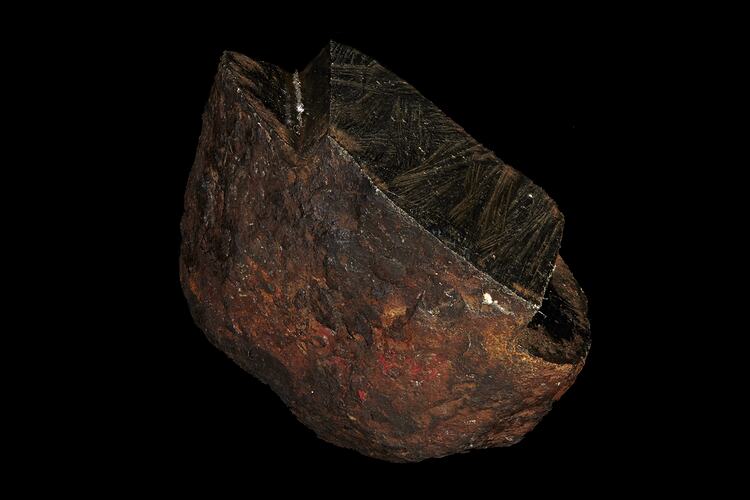
The Wedderburn meteorite, found just north-east of the town in 1951, was a small 210-gram chunk of strange-looking space rock that fell out of the sky. For decades, scientists have been trying to decipher its secrets, and researchers just decoded another.In a study published in August this year, led by Caltech mineralogist Chi Ma, scientists analysed the Wedderburn meteorite and verified the first natural occurrence of what they call ‘edscottite‘: a rare form of iron-carbide mineral that’s never been found in nature.
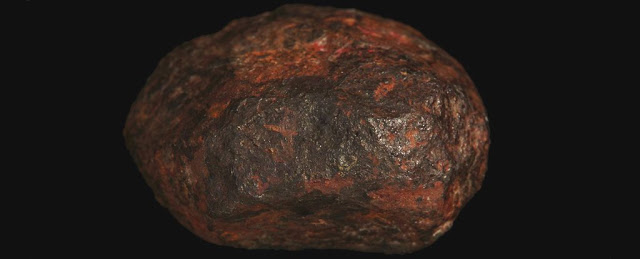
The mineral was likely forged in the molten core of an ancient planet long since destroyed.theage.com.au
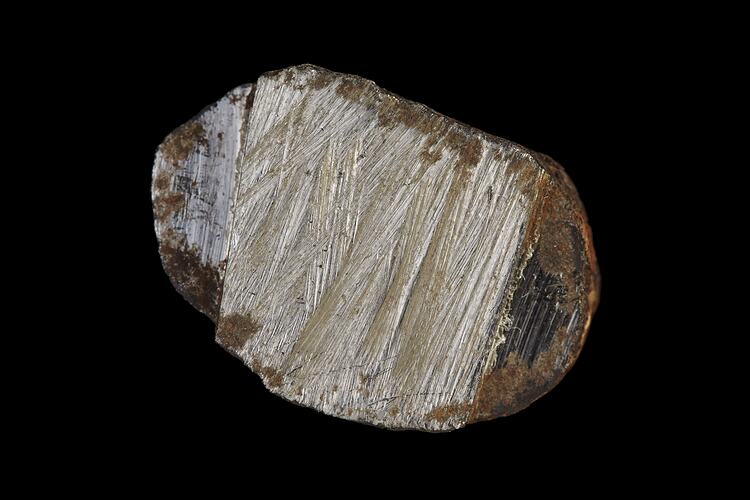
Since the Wedderburn meteorite’s spacey origins were first identified, the distinctive black-and-red rock has been examined by numerous research teams – to the extent that only about one-third of the original specimen still remains intact, held within the geological collection at Museums Victoria in Australia.The rest has been taken away in a series of slices, extracted to analyse what the meteorite is made from. Those analyses have revealed traces of gold and iron, along with rarer minerals such as kamacite, schreibersite, taenite, and troilite. Now we can add edscottite to that list.The edscottite discovery – named in honour of meteorite expert and cosmochemist Edward Scott from the University of Hawaii – is significant because never before have we confirmed that this distinct atomic formulation of iron carbide mineral occurs naturally.
Such a confirmation is important, because it’s a pre-requisite for minerals to be officially recognised as such by the International Mineralogical Association (IMA).A synthetic version of the iron carbide mineral has been known about for decades – a phase produced during iron smelting.But thanks to the analysis by Chi Ma and UCLA geophysicist Alan Rubin, edscottite is now an official member of the IMA’s mineral club, which is more exclusive than you might think.”We have discovered 500,000 to 600,000 minerals in the lab, but fewer than 6,000 that nature’s done itself,” Museums Victoria senior curator of geosciences Stuart Mills, who wasn’t involved with the new study, told The Age.As for how this sliver of natural edscottite ended up just outside of rural Wedderburn can’t be known for sure, but according to planetary scientist Geoffrey Bonning from Australian National University, who wasn’t involved with the study, the mineral could have formed in the heated, pressurised core of an ancient planet.Long ago, this ill-fated, edscottite-producing planet could have suffered some kind of colossal cosmic collision – involving another planet, or a moon, or an asteroid – and been blasted apart, with the fragmented chunks of this destroyed world being flung across time and space, Bonning told The Age.
Millions of years later, the thinking goes, one such fragment landed by chance just outside Wedderburn – and our understanding of the Universe is the richer for it.The findings are reported in American Mineralogist.
A fost găsit pe marginea unui drum într-un oraș îndepărtat din Australia, fieful de atunci al căutătorilor de aur. Pe vremuri, Wedderburn era un punct fierbinte pentru prospectori – ocazional încă mai este – dar nimeni de acolo nu mai văzuse vreodată o pepită de genul acesta.
Meteoritul Wedderburn, găsit chiar în nord-estul orașului în 1951, e o mică bucată de piatră (210 grame) cu aspect ciudat care, se pare, a căzut din cer. De zeci de ani, oamenii de știință au încercat să-i descifreze secretele, iar cercetătorii tocmai au decodat altul.
Într-un studiu publicat în luna august a acestui an, condus de mineralogistul Caltech Chi Ma, oamenii de știință au analizat meteoritul Wedderburn și au verificat prima apariție naturală a ceea ce ei numesc „edscottit”: o formă rară de mineral din carbură de fier care nu a fost găsită niciodată în natură.
De când au fost identificate pentru prima dată originile spațiole ale meteoritului Wedderburn, roca în culori distinctive de negru și roșu a fost examinată de numeroase echipe de cercetare – în măsura în care doar aproximativ o treime din exemplarul original rămâne încă intact, deținut în colecția geologică de la Muzeele Victoria în Australia.
Restul a fost luat într-o serie de felii, extrase pentru a analiza din ce este făcut meteoritul. Aceste analize au dezvăluit urme de aur și fier, împreună cu minerale mai rare, cum ar fi kamacita, schreibersita, taenita și troilita. Acum putem adăuga edscottite la lista respectivă.
Descoperirea edscottitei – numită în cinstea expertului în meteoriti și cosmochimist Edward Scott de la Universitatea din Hawaii – este semnificativă deoarece niciodată nu am confirmat că această formulare atomică distinctă a mineralului din carbură de fier apare în mod natural.
O astfel de confirmare este importantă, deoarece este o condiție prealabilă pentru ca mineralele să fie recunoscute oficial ca atare de către Asociația Internațională Mineralogică (IMA).
O versiune sintetică a mineralului din carbură de fier este cunoscută de zeci de ani – o fază produsă în timpul topirii fierului.
Dar, datorită analizei efectuate de Chi Ma și geofizicianul UCLA Alan Rubin, edscottita este acum membru oficial al clubului de minerale al IMA, care este mai exclusivist decât ai putea crede.
„Am descoperit între 500.000 și 600.000 de minerale în laborator, dar mai puțin de 6.000 pe care natura le-a făcut singură”, a declarat The Age curatorul senior al geoștiințelor din Museums Victoria, Stuart Mills, care nu a fost implicat în noul studiu.
În ceea ce privește modul în care această bucată de edscottită naturală a ajuns chiar în afara zonei rurale Wedderburn, nu se poate ști cu siguranță, dar, potrivit omului de știință planetar Geoffrey Bonning de la Universitatea Națională Australiană, care nu a fost implicat în studiu, mineralul s-ar fi putut forma în miezul încălzit și presurizat al unei planete antice.
Cu mult timp în urmă, această nefericită planetă producătoare de edscottite ar fi putut suferi un fel de coliziune cosmică colosală – implicând o altă planetă, sau o lună sau un asteroid – și ar fi fost distrusă, bucățile fragmentate ale acestei lumi distruse fiind aruncate peste timp și spațiu, a spus Bonning pentru The Age.
Milioane de ani mai târziu, un astfel de fragment a aterizat întâmplător chiar în afara Wedderburn – și înțelegerea noastră despre Univers este cu atât mai bogată pentru el.
Descoperirile sunt raportate în American Mineralogist.
Probabil este vorba despre Tiamat, planeta dintre Marte și Jupiter, care a fost distrusă în timpul războiului dintre heruvimii lui Lucifer și cei ai lui Dumnezeu la care face referire biblia (n.tr.)


Poate fi citit aici: https://helionsf.ro/
Dopajul cu sânge creşte abilitatea sângelui de a transporta oxigen. Această metodă poate duce la creşterea capacității aerobice a persoanei (VO2max). Dopajul cu sânge reprezintă una dintre multele metode ilegale de a creşte rezistenţa sportivilor.
Acest tip de dopaj se realizează prin intermediul transfuziilor de sânge ori prin utilizarea unor medicamente care cresc numărul de globule roşii din sânge (hemoglobina). Atunci când fac transfuzie de sânge, atleţii pot folosi propriul sânge ori pot utiliza sânge donat de o altă persoană.
Atunci când sângele este extras din organism şi folosit pentru transfuzie, până la patru componente ale acestuia (globulele roşii (eritrocitele), plasma, trombocitele şi factorul antihemfilic crioprecipitat – AHF) sunt înlăturate şi apoi îngheţate. În mod obişnuit globulele roşii sunt reintroduse odată cu sângele în organism, în scopul creşterii abilităţii de a transporta oxigen.
De ce nu este folosită această metodă în cazul pacienților covid în stare gravă?
 Mihail stories