The box Universe theory describes “now” as an arbitrary place in time and states that the past, the future and the present all exist simultaneously.
Massachusetts Institute of Technology professor of philosophy Dr. Bradford Skow suggests that if we “look down” on the universe as if we were looking at a piece of paper, we would see time spanning all directions, exactly the same way that we see space at some point.
So what does this really mean? Well, this suggests that time as we know it is incorrect, in other words, it is not linear as we have always thought. In fact, everything around us is always present.
Dr. Skow is not the first scientist to question the way we all perceive time.
In 1915, Einstein introduced a theory of unified space and time. In his general theory of relativity, he proposes that space-time takes shape in a multiple or continuous way. And that if viewed, you’ll see both as a four-dimensional vector space. And this vector is known as the “block theory.”
“The distinction between past, present and future is only a stubbornly persistent illusion.”
The author argues that he “wouldn’t want to believe in that unless I saw good arguments for it.”
“I was interested in seeing what kind of view of the universe you would have if you took these metaphors about the passage of time very, very seriously,” Skow says.
Dr. Skow further details:
“The block universe theory says you’re spread out in time, something like the way you’re spread out in space. We’re not located at a single time.”
Dr. Skow agrees that while things change and we see time as if it were passing, Dr. Skow believes that we are in a ‘scattered conditions’ and that different parts of time may be dotted around the infinite universe.
Time Travel
Once you try to wrap your head around this theory, you’ll begin to realize that it could also change the way we think of time travel.
If this theory is real, then we can’t simply travel time and change it. If everything is happening simultaneously — your past, present, future laid out in space — then it would be impossible to create “grandfather paradoxes.”
Instead, you will only travel through time and experience it as it is and as it always would be.
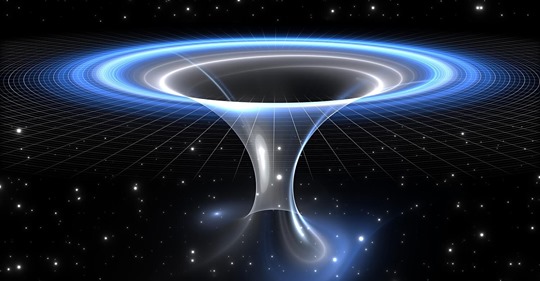
An illustration of the hypothetical box universe, Source: ABC Science
Dr. Kristie Miller, who is the joint director for the Centre for Time at the University of Sydney, explained the theory in a piece published by ABC Science. Miller described how all moments that exist are relative to each other within three spatial dimensions and a single time dimension.
The block universe theory is also known in some scientific circles as Eternalism, in which the past, present, and future all co-exist ‘now’. This is opposed to Presentism, which states that the past doesn’t exist anymore and is constantly disappearing thanks to that pesky notion of ‘present’ time.
Teoria Universului din titlu descrie „acum” ca un loc arbitrar în timp și afirmă că trecutul, viitorul și prezentul există toate simultan.
Profesorul de filozofie al Institutului de Tehnologie din Massachusetts, Dr. Bradford Skow sugerează că, dacă „privim în jos” spre univers ca și cum am privi o bucată de hârtie, am vedea timpul cuprinzând toate direcțiile, exact la fel cum vedem spațiul la un moment dat.
Deci, ce înseamnă asta cu adevărat? Ei bine, acest lucru sugerează că timpul nu este liniar așa cum am crezut întotdeauna. De fapt, totul în jurul nostru este întotdeauna prezent.
Dr. Skow nu este primul om de știință care pune la îndoială modul în care percepem cu toții timpul.
În 1915, Einstein a introdus o teorie a spațiului și timpului unificat. În teoria sa generală a relativității, el propune că spațiul-timp se concretizează într-un mod multiplu sau continuu. Și, dacă este vizualizat, le veți vedea atât ca un spațiu vectorial în patru dimensiuni. Și acest vector este cunoscut sub numele de „teoria blocurilor”.
Autorul susține că „nu ar vrea să creadă în asta decât dacă au fost aduse argumente bune pentru asta”.
„M-a interesat să văd ce fel de viziune asupra universului ai avea dacă ai lua aceste metafore despre trecerea timpului foarte, foarte în serios”, spune Skow.
Dr. Skow detalii suplimentare:
„Teoria universului bloc spune că ești răspândit în timp, ceva precum felul în care ești răspândit în spațiu. Nu suntem localizați o singură dată. ”
Dr. Skow este de acord că, în timp ce lucrurile se schimbă și vedem timpul ca și cum ar trece, Dr. Skow consideră că ne aflăm într-o „condiție împrăștiată” și că diferite părți ale timpului pot fi punctate în jurul universului infinit.
După ce încercați să vă convingeți de această teorie, veți începe să vă dați seama că ar putea schimba și modul în care gândim călătoriile în timp. Dacă această teorie este reală, nu putem pur și simplu să călătorim timpul și să-l schimbăm. Dacă totul se întâmplă simultan – trecutul tău, prezentul, viitorul prevăzut în spațiu – atunci ar fi imposibil să se creeze „paradoxuri bunicilor”.
În schimb, veți călători doar în timp și veți experimenta așa cum este și așa cum ar fi întotdeauna.
Dr. Kristie Miller, care este directorul Centrului pentru timp de la Universitatea din Sydney, a explicat teoria într-un articol publicat de ABC Science. Miller a descris modul în care toate momentele care există sunt relative între ele în cadrul a trei dimensiuni spațiale și a unei singure dimensiuni de timp.
Teoria universului bloc este, de asemenea, cunoscută în unele cercuri științifice sub numele de Eternalism, în care trecutul, prezentul și viitorul coexistă „acum”. Aceasta se opune Prezentismului, care afirmă că trecutul nu mai există și dispare în mod constant datorită acestei noțiuni nefaste de timp „prezent”.




 Mihail stories