Când l-au dezgropat de șapte ani era frumos, trupeș, cu obrajii trandafirii și parcă râdea.
Unii și-au făcut cruce, iar babele au scuipat în sân.
Neamurile au sărit la popi să-l canonizeze de sfânt ca să ia fiecare câte-o bucățică că-s vremuri căcăcioase…
Ăștia nu și nu. Și dă-i ceartă.
Pân’ la urmă popii au câștigat procesul pre când au adus o comisie de doftori care au declarat, sub jurământ, că mortului i se trage, de fapt, de la sfertul de chil de parizer pe care-l mâncase zilnic, timp de 40 de ani, la birou în pauza de prânz.
Vivat parizerul !
Te faci frate cu dracu’ și lași neamurile fără moaște.
The new sources pop on and off in the sky, giving scientists more chances to watch them – and learn their secrets.
An artist’s illustration of a neutron star, a proposed source for fast radio bursts.
Casey Reed – Penn State University/Wikimedia Commons
Fast radio bursts are one of the most puzzling phenomena in astrophysics. But a new discovery of eight new sources for them might help scientists figure out what’s causing these intense outbursts of energy coming from distant galaxies.
The newly discovered bursts are from repeating sources, meaning they were observed to burst multiple times. Previously, only two repeating fast radio bursts had been observed. The new observations suggest that repeating bursts are more common than previously thought.
“It was certainly on the table that [repeaters] were pretty uncommon and you weren’t going to see many of them,” said Deborah Good, a co-author on the study and Ph.D. student at the University of British Columbia. “Having another eight sources is a good sign that it’s not terribly rare to have a repeater.”
Fast radio bursts are intense flashes of electromagnetic energy that last just fractions of a second. Finding repeaters is valuable to understanding their nature. Currently, fast radio bursts, which originate outside the Milky Way, are thought to be caused by some type of compact object — like a neutron star, pulsar, or black hole — but scientists aren’t sure exactly what mechanism drives the bursts.
“Anything you come up with for a model for fast radio bursts needs to either explain why repeaters and one-offs are totally different objects, or more likely needs to be able to easily explain the burst happening again and again,” Good said.
The bursts were captured by the Canadian Hydrogen Intensity Mapping Experiment, or CHIME for short, a telescope near Penticton in British Columbia, Canada. The experiment continually maps the sky in radio frequencies, typically observing the entire northern sky each day. The telescopes gather far more information than can be analyzed or even stored, so automated computer algorithms continually scan the data to look for interesting events.
The eight new events, reported in a new paper submitted to the Astrophysical Journal Letters and published on the preprint site arXiv, were seen in observations from August 2018 to March 2019 when CHIME was just beginning its main science campaign.
After analyzing the data, the scientists noticed a unique structure in the signal of some of the repeaters. Over the duration of the burst, the signal’s frequency decreased slightly, similar to what had been seen in the two previous repeaters. Why this happens, and if it’s something that’s unique to repeating fast radio bursts, is still unclear.
“It may be the case that only repeaters have this structure, but it’s not the case that all repeaters have that structure,” Good said. “It’s still an open question.”
It’s possible a different source or mechanism is responsible for the drifting signal in these repeaters but its still to early to say. Within the scientific community there is still debate over whether one-off sources are distinct or if they are simply repeaters that haven’t yet been observed to repeat.
“We still don’t have enough repeating fast radio bursts localized to host galaxies to say something about either of [the leading] theories, but as we find more repeaters and pinpoint their locations within their host galaxies, we will start to be able to distinguish between different theories,” said Emily Petroff, astronomer at the Anton Pannekoek Institute, University of Amsterdam, who was not involved with the new study.
Misterioase semnale izbucnesc și-apoi se sting pe cer, oferind oamenilor de știință mai multe șanse de a le urmări – și de a afla secretele lor.
Exploziile radio rapide reprezintă unele dintre cele mai ciudate fenomene din astrofizică. Dar o nouă descoperire de opt surse noi i-ar putea ajuta pe oamenii de știință să-și dea seama ce provoacă aceste izbucniri intense de energie provenite din galaxii îndepărtate.
Emisiile recent descoperite provin din surse repetitive, ceea ce înseamnă că au fost observate de mai multe ori. Anterior, au fost observate doar două explozii de radio rapide repetate. Noile observații sugerează că exploziile repetate sunt mai frecvente decât se credea anterior.
„Cu siguranță, acestea (emisiile repetitive) au fost destul de neobișnuite și nu ai întotdeauna norocul de așa ceva”, a declarat Deborah Good, coautoare a studiului și doctorat. student la Universitatea din Columbia Britanică. „Să ai deodată opt surse de semnal ne bucură mai ales confirmând că nu este extrem de rar să ai un repetitor.”
Exploziile radio rapide sunt sclipiri intense de energie electromagnetică care durează doar fracțuni de secundă. Descoperirea repetatoarelor este valoroasă pentru a le înțelege natura. În prezent, exploziile de radio rapide, care sunt originare din afara Calea Lactee, sunt considerate a fi cauzate de un anumit tip de obiect compact – cum ar fi o stea cu neutroni, pulsar sau gaură neagră -, dar oamenii de știință nu sunt siguri cu exactitate ce mecanism antrenează exploziile.
„Oricine vine cu un model pentru explozii rapide de radio trebuie să explice de ce sunt repetatoarele obiecte atât de diferite, sau măcar să fie în măsură să explice cum se produc aceste explozii din nou și din nou”, a spus Good.
Izbucnirile au fost capturate de către the Canadian Hydrogen Intensity Mapping Experiment, sau de scurt timp CHIME, un telescop din apropierea Penticton din Columbia Britanică, Canada. Experimentul scanează continuu cerul în frecvențele radio, observând de obicei întregul cer nordic în fiecare zi. Telescoapele adună mult mai multe informații decât pot fi analizate sau chiar stocate, astfel încât algoritmii computerizați automat selectează continuu datele pentru a căuta evenimente interesante.
Cele opt noi evenimente, raportate într-o nouă lucrare depusă la Astrophysical Journal Letters și publicate pe site-ul preprint arXiv, au fost văzute în observațiile din august 2018 și până în martie 2019, când CHIME abia își va începe principala sa campanie științifică.
După analizarea datelor, oamenii de știință au observat o structură unică în semnalul unora dintre repetitoare. Pe durata exploziei, frecvența semnalului a scăzut ușor, similar cu cele observate în cele două repetoare anterioare. De ce se întâmplă acest lucru și dacă este ceva unic pentru a repeta explozii rapide de radio, nu este încă clar.
„Poate fi cazul că numai repetitoarele au această structură, dar nu este cazul în care toate repetitoarele au această structură”, a spus Good. „Este încă o întrebare deschisă.”
Este posibil ca o sursă sau un mecanism diferit să fie responsabil pentru semnalul în derivă din aceste repetoare, dar este încă prea timpuriu să spunem. În cadrul comunității științifice există încă dezbateri dacă sursele unice sunt distincte sau dacă sunt pur și simplu repetitori care nu au fost încă observați încă.
„Încă nu avem localizate suficiente astfel de rafale rapide pentru a spune ceva despre una dintre teoriile [fruntașe], dar, pe măsură ce vom găsi mai mulți repetitori și să le identificăm locațiile din galaxiile gazdă, vom începe apoi să putem distinge între diferite teorii ”, a declarat Emily Petroff, astronom la Institutul Anton Pannekoek, Universitatea din Amsterdam, care nu a fost implicată în noul studiu.
Japan’s Hayabusa 2 mission to asteroid Ryugu has reached one of its final milestones, if not its climax. The sample-return spacecraft has launched the Minerva-II2 rover at the asteroid. This is the last of four rovers that Hayabusa 2 is deploying on Ryugu.
Minerva-II2 is actually two components in one, and the launch procedure has distinct phases.
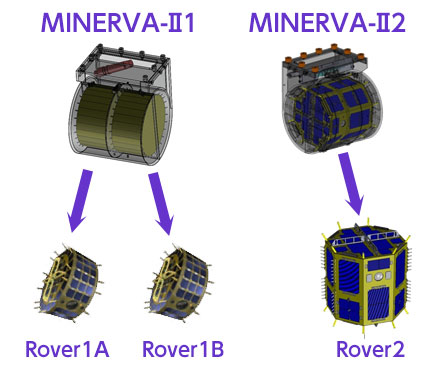
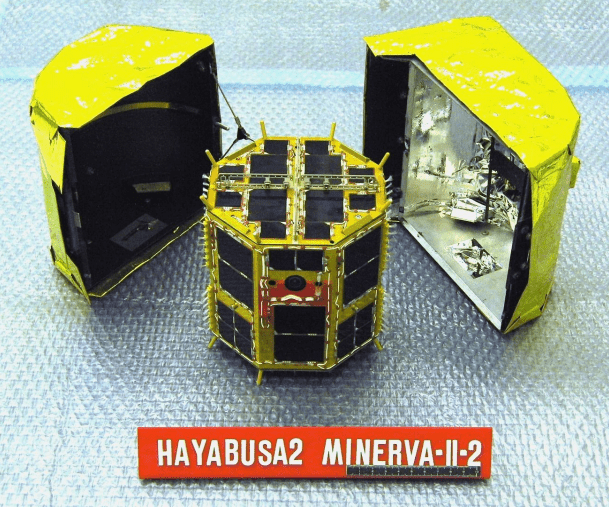
Minerva-II2 is an octagonal-prism shaped container that holds the actual rover, named Rover 2. The container only weights about 1 kg (2.2 lbs) and carries an accelerometer, a thermometer, and dual cameras. It also has both optical and ultraviolet LEDs.
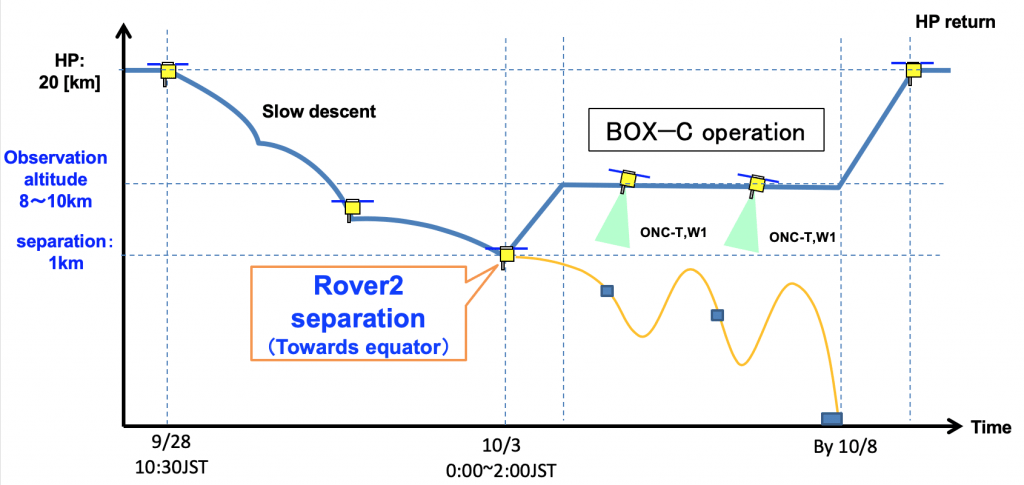
Hayabusa 2 launched Minerva-II2 on September 28th from an altitude of about 20km, and the container descended slowly. At 1 km altitude, Rover 2 separated from the Minerva-II2 container. At that point, Rover 2 continued on its way to Ryugu’s surface, while Hayabusa 2 followed it part way. Hayabusa 2 is now climbing to an observing height of about 10 km to watch Rover 2’s descent.
By October 8th, Rover 2 should land.
Minerva-II2 and Rover2’s descent profile. BOX-C operation refers to hovering by Hayabusa 2 extending vertically to enable observations at low-altitude. Image Credit: JAXA
Rover 2 is slightly different from the other rovers on Hayabusa 2. It was developed by a consortium of Japanese universities. It’s different from Minerva-II1 because its primary goal was to confirm navigation around a low-mass, low-gravity body like Ryugu. That’s why it was deployed from a much higher altitude then Minerva-II1, (1 km vs 50 meters) and that ‘s why Hayabusa is watching its long, slow descent from about 10 km (6.2 miles) away.
Hayabusa 2 carried two Minerva’s. Minerva-II1 carried two rovers, and Minerva-II2 carried only one. Image Credit: JAXA
The rover itself, Rover 2, was added as an ‘outreach payload’ for Japanese Universities, according to JAXA. But there might be a problem.
According to JAXA, Rover 2’s CPU might be experiencing problems, and may not be able to communicate data back to Hayabusa 2 from the surface of Ryugu. JAXA is deploying it anyway, since its descent to Ryugu is a significant part of its mission.
Minerva-II-2 will open up like this when it’s about 1 km above Ryugu, then it will deploy Rover 2 to the surface of the asteroid. Image Credit: JAXA
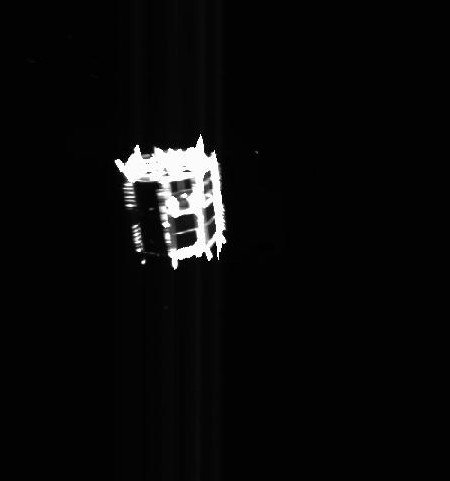
JAXA tweeted a picture of Minerva-II2 after separation. They also tweeted a photo of the team at mission control celebrating the moment.
Now it’s a waiting game. By October 8th we should know if Rover 2 landed successfully, and if it’s transmitting data properly. If it is, it’s another achievement in this important mission to understand ancient asteroids and what they can teach us about planet formation in the early Solar System.
The big prize is the asteroid samples, though. Hayabusa 2 is primarily a sample-return mission. Those samples have been collected, both surface and sub-surface, and they’ll be returned to Earth in December 2020.
Misiunea japoneză Hayabusa 2 cu destinație asteroidul Ryugu a atins una dintre etapele sale finale, dacă nu chiar punctul culminant. Nava spațială a lansat roverul Minerva-II2 spre asteroid. Acesta este ultimul rover pe care Hayabusa 2 îl lansează cu destinația Ryugu.
Minerva-II2 are în componență două piese distincte, iar procedura de lansare are două faze diferite.
Minerva-II2 este un container în formă de prismă octogonală care deține rover-ul propriu, numit Rover 2. Containerul cântărește doar aproximativ 1 kg și poartă un accelerometru, un termometru și camere duale. De asemenea, are LED-uri în spectrul optic și ultraviolet.
Hayabusa 2 a lansat Minerva-II2 pe 28 septembrie de la o altitudine de aproximativ 20 km, iar containerul a coborât încet. La 1 km altitudine, Rover 2 s-a separat de containerul Minerva-II2. În acel moment, Rover 2 a continuat drumul spre suprafața lui Ryugu. Hayabusa 2 urcă acum până la o înălțime de aproximativ 10 km pentru a urmări coborârea lui Rover 2.
Până pe 8 octombrie, Rover 2 ar trebui să aterizeze.
Rover 2 este ușor diferit de celelalte rover de pe Hayabusa 2. El a fost dezvoltat de un consorțiu de universități japoneze. Este diferit de Minerva-II1, deoarece obiectivul său principal era să confirme navigarea în jurul unui corp cu masă redusă, cu o gravitație scăzută, precum Ryugu. Acesta este motivul pentru care a fost ejectat de la o altitudine mult mai mare decât Minerva-II1 (1 km față de 50 de metri) și de aceea Hayabusa urmărește coborârea lungă și lentă de la aproximativ 10 km (6,2 mile).
Rover în sine, Rover 2, a fost adăugat ca o „sarcină utilă de informare” pentru universitățile japoneze, potrivit JAXA. Dar ar putea exista o problemă.
Potrivit JAXA, este posibil ca CPU-ul Rover 2 să aibă probleme și să nu poată comunica date înapoi la Hayabusa 2 de pe suprafața Ryugu. JAXA îl desfășoară oricum, deoarece descendența sa către Ryugu este o parte semnificativă a misiunii sale.
Acum este un joc de așteptare. Până la 8 octombrie, ar trebui să știm dacă Rover 2 a aterizat cu succes și dacă transmite corect datele. Dacă da, atunci aceasta este o altă realizare în această misiune importantă de a înțelege asteroizii antici și ce ne pot învăța despre formarea planetei în sistemul solar timpuriu.
Marele premiu vor fi mostrele culese de pe asteroid. Hayabusa 2 este în primul rând o misiune de retur-probă. Eșantioanele respective au fost colectate atât la suprafață, cât și din adâncime și vor fi returnate pe Pământ în decembrie 2020.
Wang Zheng of China was named winner of the Insight Investment Astronomy Photographer of the Year 2019 in the category Skyscapes with a mystical image of the night sky as a meteor falls.
Data from the Cassini mission has revealed organic compounds in plumes ejected from Enceladus similar to those involved in the development of life on Earth.
Organic compounds have been discovered in plumes bursting through the surface crust of Saturn’s icy moon Enceladus. The discovery is the latest boost in the search for conditions that could support life beyond Earth.
Enceladus is known to have a liquid water ocean hidden below its frozen crust, and hydrothermal vents regularly eject liquid water, ice and material from the moon’s core out into space.
The newly-discovered molecules have been identified as nitrogen and oxygen-bearing compounds.
Similar compounds are involved in chemical reactions on Earth that produce amino acids: the building blocks of life.
Data collected by Cassini throughout the mission will continue to be analysed by scientists for years to come.
A diagram showing the process by which material is ejected from below the surface of Saturn’s moon Enceladus. Credit: NASA/JPL-Caltech
“If the conditions are right, these molecules coming from the deep ocean of Enceladus could be on the same reaction pathway as we see here on Earth,” says Nozair Khawaja, who led the team behind the research, based at the Free University of Berlin.
“We don’t yet know if amino acids are needed for life beyond Earth, but finding the molecules that form amino acids is an important piece of the puzzle.”
The team analysed data from Cassini’s Cosmic Dust Analyzer (CDA), which detected ice grains in plumes emitted from the moon.
Mass spectrometer measurements were then used to analyse the organic material in the sample and define its composition.
The organics had originally dissolved in the ocean below Enceladus’s surface before evaporating, condensing and freezing onto ice grains within fractures in the moon’s crust.
A rising plume then blew the ice grains into space, where they were analysed by the CDA.
“Here we are finding smaller and soluble organic building blocks,” says study co-author Jon Hillier, “potential precursors for amino acids and other ingredients required for life on Earth.”
Datele din misiunea Cassini au scos la iveală compuși organici în jeturile ejectate din Enceladus similare cu cele implicate în dezvoltarea vieții pe Pământ.
Foto: O ilustrație care arată nava spațială Cassini care se scufundă printre jeturi pe luna lui Saturn Enceladus. Credit: NASA / JPL-Caltech
Compușii organici au fost descoperiți în jeturile care au izbucnit prin crusta de suprafață a lunii glaciare Enceladus a lui Saturn. Descoperirea este cel mai recent impuls în căutarea condițiilor care ar putea susține viața dincolo de Pământ.
Se știe că Enceladus are un ocean cu apă lichidă ascunsă sub scoarța înghețată, iar găurile de evacuare hidrotermale evacuează regulat apa lichidă, gheața și materialul din miezul lunii în spațiu.
Moleculele recent descoperite au fost identificate ca fiind compuși de azot și oxigen.
Compuși similari sunt implicați în reacțiile chimice de pe Pământ care produc aminoacizi: blocurile de viață.
Nava spațială Cassini a petrecut 13 ani orbitând pe Saturn, studiind planeta și lunile sale, iar una dintre cele mai îndrăznețe manevre ale sale a fost a series of dives through the plumes on Enceladus.
Datele colectate de Cassini pe tot parcursul misiunii vor continua să fie analizate de oamenii de știință și în anii următori.
Foto: O diagramă care arată procesul prin care materialul este evacuat de sub suprafața lunii Saturn Enceladus. Credit: NASA / JPL-Caltech
„Dacă condițiile sunt corecte, aceste molecule care provin din oceanul profund al Enceladului ar putea să fi urmat aceleași reacții chimice cu cele pe care le obținem aici pe Pământ”, spune Nozair Khawaja, care a condus echipa din spatele cercetării, cu sediul la Free University of Berlin .
„Încă nu știm dacă aminoacizii sunt necesari pentru viață dincolo de Pământ, dar găsirea moleculelor care formează aminoacizi este o componentă importantă a puzzle-ului.”
Echipa a analizat datele de la analizorul de praf cosmic Cassini (CDA), care a detectat boabe de gheață în jeturile emise de pe lună.
S-au utilizat apoi măsurători cu spectrometrul de masă pentru a analiza materialul organic din eșantion și pentru a defini compoziția acestuia.
Produsele organice s-au dizolvat inițial în ocean, sub suprafața lui Enceladus, înainte de a se evapora, condensa și îngheța pe grăunțele de gheață în crăpături ale scoarței lunare.
Un jet de materie a aruncat apoi grăunții de gheață în spațiu, unde au fost analizate de CDA.
„Aici găsim blocuri de construcții organice mai mici și solubile”, spune co-autorul studiului Jon Hillier, „potențiali precursori pentru aminoacizi și alte ingrediente necesare vieții pe Pământ”.
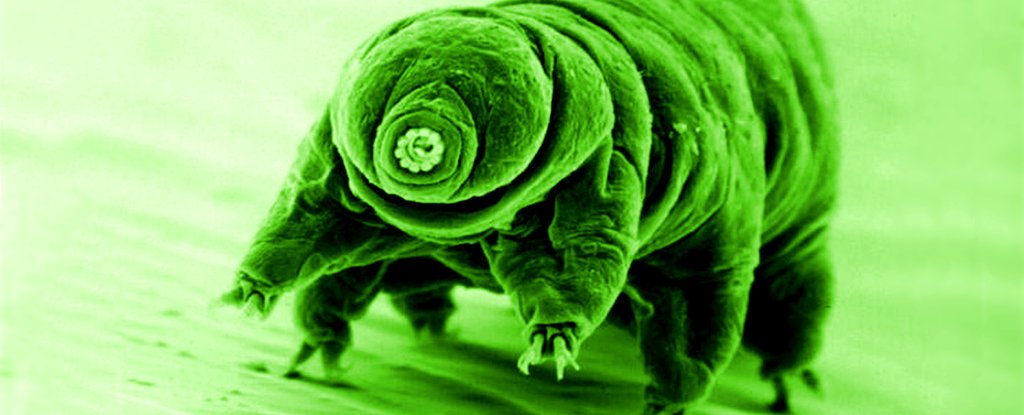
Weird and wonderful, the microscopic tardigrades are sometimes colloquially known as ‘water bears’ and ‘moss piglets’. In all fairness, though, no bear or piglet ever dreamt of doing the amazing things these uniquely gifted creatures are capable of.
Tardigrades are know for their incredible resilience, as they’re able to survive all manner of extreme conditions.
When the going gets tough, they basically transform into glass for decades at a time, perhaps even centuries. They tolerate temperature extremes, and even the cold vacuum of space does not faze them.
While we’re on that topic, tardigrades may also have just begun to colonise the Moon. It is an impressive achievement for something shorter than a millimetre.
Where do all these strange superpowers come from? The origin story of these aquatic organisms is a matter of ongoing scientific inquiry, but researchers think they’ve now at least solved the mystery of one of the water bear’s weirdest abilities.
A study in 2016 discovered that a protein unique to tardigrades called Dsup (damage suppressor) could suppress X-ray-induced DNA damage in human cells by approximately 40 percent.
„We were really surprised,” one of the researchers, Takuma Hashimoto from the University of Tokyo, told AFP at the time.
„It is striking that a single gene is enough to improve the radiation tolerance of human cultured cells.”
Such a degree of radiation tolerance is indeed striking, but how does it work? The answer remained unknown until just now – thanks to new findings made by scientists at the University of California, San Diego, who analysed Dsup to ascertain its molecular functions.
„We see that it has two parts, one piece that binds to chromatin and the rest of it forming a kind of cloud that protects the DNA from hydroxyl radicals.”
Hydroxyl radicals are particles that are generated in cells by ionising radiation. But tardigrades would also be exposed to these particles when the wet, mossy environments they dwell in become dry, triggering the water bears’ dormant survival state called anhydrobiosis.
According to the researchers, the cloud-like Dsup formation that protects against DNA damage from hydroxyl radicals might not be an adaptation catered to protect against radiation, but simply one that evolved to protect against the hydroxyl radicals produced in dry environments.
If they’re right about that, it confirms what the scientists behind the 2016 study also speculated.
„Tolerance against X-ray is thought to be a side-product of [the] animal’s adaption to severe dehydration,” lead researcher Takekazu Kunieda told Nature at the time.
Regardless of how and why the Dsup mechanism evolved, as we continue to improve our understanding of the tardigrade’s tricks, scientists say we might one day be able to leverage their amazing abilities for ourselves.
„In theory, it seems possible that optimised versions of Dsup could be designed for the protection of DNA in many different types of cells,” says Kadonaga.
„Dsup might thus be used in a range of applications, such as cell-based therapies and diagnostic kits in which increased cell survival is beneficial.”
Ciudate și minunate, tardigradele microscopice sunt uneori cunoscute și sub denumirea de „urși de apă” sau „purcei de mușchi”. Totuși, cu toată corectitudinea, nici un urs sau purcel nu a visat vreodată să facă lucrurile uimitoare de care sunt capabile aceste creaturi unice.
Tardigradele sunt cunoscute pentru rezistența lor incredibilă, deoarece pot supraviețui în orice fel de condiții extreme.
Când viața devine dificilă, ele practic se transformă into glass zeci de ani, poate chiar secole. Ele tolerează extremele de temperatură și, nici chiar vidul rece al spațiului nu le înfricoșează.
În timp ce suntem la această temă, este posibil ca tardigrades just begun to colonise the Moon. Este o realizare impresionantă pentru ceva mai scurt decât un milimetru.
De unde provin toate aceste superputeri ciudate? Povestea originii acestor organisme acvatice este matter of ongoing scientific inquiry, dar cercetătorii cred că au rezolvat acum cel puțin misterul uneia dintre cele mai ciudate abilități ale ursului de apă.
Unul dintre aspectele care fac ca tardigrades să pară atât de indestructibile este a built-in radiation shield of sorts.
Un studiu realizat în 2016 a descoperit că o proteină unică doar pentru tardigrades numită Dsup (supresor de daune) ar putea limita deteriorarea ADN-ului expus la raze X al celulelor umane cu aproximativ 40%.
„Am fost cu adevărat surprinși”, a declarat la AFP unul dintre cercetători, Takuma Hashimoto de la Universitatea din Tokyo.
„Este izbitor faptul că o singură genă este suficientă pentru a îmbunătăți toleranța la radiații a celulelor umane cultivate.”
Un astfel de grad de toleranță la radiații este într-adevăr izbitor, dar cum funcționează? Răspunsul a rămas necunoscut până la noile descoperiri făcute de oamenii de știință de la Universitatea din California, San Diego, care au analizat Dsup pentru a stabili funcțiile sale moleculare.
„Avem acum o explicație moleculară pentru modul în care Dsup protejează celulele de iradierea cu raze X”, says molecular biologist James Kadonaga.
„Vedem că are două părți, o bucată care se leagă de cromatină, iar restul formează un fel de nor care protejează ADN-ul de radicalii hidroxilici”.
Radicalii hidroxilici sunt particule care sunt generate de celule ca urmare a radiațiilor ionizante. Dar tardigrades ar fi, de asemenea, expuse la aceste particule atunci când mediile umede, musculoase în care locuiesc devin uscate, declanșând starea de supraviețuire latentă a urșilor de apă numită anhidrobiosis.
Potrivit cercetătorilor, formațiunea Dsup de tip cloud care protejează împotriva deteriorarii ADN-ului de către radicalii hidroxilici ar putea să nu fie o adaptare oferită pentru a proteja împotriva radiațiilor, ci pur și simplu una care a evoluat pentru a proteja împotriva radicalilor hidroxil produși în medii uscate.
Că au dreptate în acest sens, confirmă ceea ce au speculat și oamenii de știință aflați în spatele studiului din 2016.
„Toleranța împotriva razelor X este considerată a fi un produs secundar al [adaptării] animalului la deshidratarea severă”, a declarat la acea vreme cercetătorul principal Takekazu Kunieda.
Indiferent de cum și de ce a evoluat mecanismul Dsup, pe măsură ce continuăm să ne îmbunătățim înțelegerea trucurilor tardigradei, oamenii de știință spun că am putea într-o zi să folosim abilitățile ei uimitoare pe noi înșine.
„Teoretic, se pare că versiunile optimizate ale Dsup ar putea fi proiectate pentru protecția ADN-ului în multe tipuri diferite de celule”, spune Kadonaga.
„Dsup ar putea fi astfel utilizat într-o serie de aplicații, cum ar fi terapii bazate pe celule și kituri de diagnostic în care supraviețuirea crescută a celulelor este benefică.”
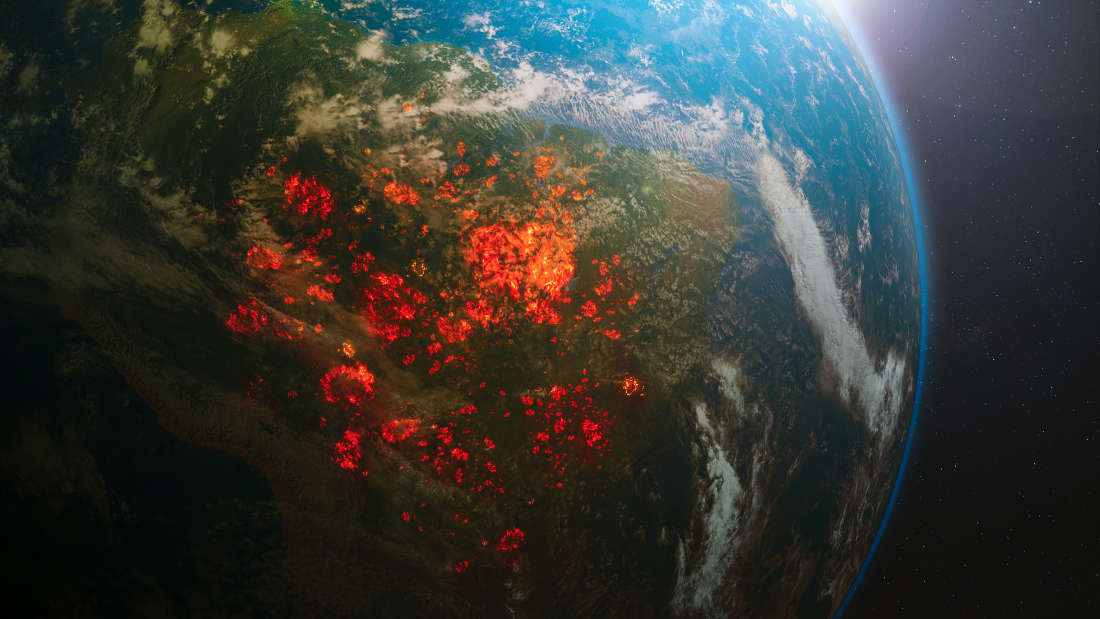
Last week, the Brazilian government announced a 60-day ban on starting new forest fires in the South American country. But according to Brazil’s National Space Research Institute (INPE), 3,859 new outbreaks were recorded in Brazil in the 48 hours following the ban coming into effect. Roughly 2,000 of those are in the Amazon rainforest.
While the far-right president of Brazil, Jair Bolsonaro, continues to claim that the number of fires is actually lower than it has been in previous years, research highlights a rise in deforestation. A study produced by the INPE in July showed that in June 2019 alone, the Amazon rainforest lost over 2,072 square kilometers (800 square miles) to deforestation, that’s an area bigger than the Los Angeles metropolitan area. This is an increase of 15 percent compared to the same period last year.
Bolsonaro claimed that the study was a lie, and was backed by his ministers despite the data being produced using a methodology that has been tested for decades. Since 2004 and before Bolsonaro took power, data like this helped law enforcement to reduce the amount of deforestation in the country. The head of the INPE, Ricardo Galvao, was then sacked by the government. This serves as yet another example of how the Brazilian government has made practicing science difficult in the country since they took office in January.
The burning ban has been seen as a move to appease international outcry about the Amazon’s fires, but as activist Tasso Azevedo, who runs the deforestation-monitoring group Mapbiomas, wrote in the newspaper O Globo, the worst may be yet to come.
Deforestation has continued to grow significantly over the past two months and it remains legal to indiscriminately chop down large swathes of the rainforest. Azevedo believes that once the ban ends, the chopped trees will be burned down by the many private organizations interested in turning the Amazon rainforest into something more profitable than a priceless habitat rich in biodiversity.
“What we are experiencing is a real crisis, which can turn into a tragedy that will feature fires much larger than the current ones if not stopped immediately,” Azevedo writes, calling for the ban to be extended until at least late November when the dry season ends.
Săptămâna trecută, guvernul brazilian a anunțat o interdicție de 60 de zile în a începe noi incendii forestiere în țara sud-americană. Dar, conform Institutului Național de Cercetare Spațială (INPE) din Brazilia, au fost înregistrate 3.859 de noi focare în Brazilia în cele 48 de ore de la intrarea în vigoare a interdicției. Aproximativ 2.000 dintre acestea se află în pădurea Amazon.
În timp ce președintele de extremă dreaptă al Braziliei, Jair Bolsonaro, continuă să afirme că numărul de incendii este de fapt mai mic decât a fost în anii precedenți, cercetările evidențiază o creștere a defrișărilor. Un studiu produs de INPE în iulie a arătat că numai în iunie 2019, pădurea Amazon a pierdut peste 2.072 de kilometri pătrați (800 de mile pătrate) pentru defrișare, adică o zonă mai mare decât zona metropolitană din Los Angeles. Aceasta reprezintă o creștere cu 15% față de aceeași perioadă a anului trecut.
Bolsonaro a susținut că studiul a fost o minciună și a fost susținut de miniștrii săi, în ciuda datelor care au fost produse folosind o metodologie testată în zeci de ani. Din 2004 și înainte ca Bolsonaro să preia puterea, astfel de date au ajutat forțele de ordine să reducă cantitatea de defrișare din țară. Șeful INPE, Ricardo Galvao, a fost apoi concediat de guvern. Acesta constituie încă un exemplu despre modul în care guvernul brazilian a îngreunat practicarea științei în țară de când a preluat funcția în ianuarie.
Interdicția de ardere a fost văzută ca o mișcare de a potoli criza internațională despre incendiile Amazonului, dar așa cum a declarat activistul Tasso Azevedo, care conduce grupul de monitorizare a defrișărilor-Mapbiomas, a scris în ziarul O Globo, cei mai rău abia acum ar putea să vină.
Deforestarea a continuat să crească semnificativ în ultimele două luni și rămâne legală tăierea marilor păduri tropicale. Azevedo consideră că, odată ce interdicția se va încheia, copacii vor fi arși de numeroasele organizații private interesate de transformarea pădurii tropicale Amazon în ceva mai profitabil decât un habitat neprețuit, bogat în biodiversitate.
„Ceea ce ne confruntăm este o adevărată criză, care se poate transforma într-o tragedie cu focuri mult mai mari decât cele actuale, dacă nu se oprește imediat”, scrie Azevedo, solicitând extinderea interdicției până cel puțin la sfârșitul lunii noiembrie când sezonul se încheie.









 Mihail stories